Answering the question: which wood blade for a chop saw delivers reliable, clean cuts across soft and hard woods? This guide highlights five top options, focusing on smooth finishes, durability, and compatibility with common chop saws. Ideal for DIYers, hobbyists, and professionals who need precise crosscuts, rips, or fine finishes. Each blade is evaluated for best-fit scenarios, from general purpose to fine finishing work.
| Product | Brand | Diameter | Kerf | Teeth | Best For |
|---|---|---|---|---|---|
| Diablo Fine Finish Saw Blade for Wood | Diablo | 10″ | .098″ | 60 Hi-ATB | Fine finishes on hardwoods and hardwood laminates |
| WEN BL1040 10-Inch 40-Tooth Carbide-Tipped | WEN | 10″ | 1/10″ | 40 | General purpose single-blade for soft and hard woods |
| WEN BL1248 12-Inch 48-Tooth | WEN | 12″ | 1/10″ | 48 | Heavy-duty crosscuts in larger projects |
| WORKPRO 10 Inch Woodworking Blade | WORKPRO | 10″ | 1.2–1.8 mm (approx. 0.05–0.07″) | 40 | General purpose, balanced cuts with reduced waste |
| FOXBC 12 Inch Combination Miter Saw Blade | FOXBC | 12″ | .102″ | 60 | Combines ripping and crosscutting for smooth finishes |
Here’s a quick snapshot: each blade has its own strengths, from heavy-duty ripping to fine finish work. Use this table to compare core specs at a glance and determine which blade aligns with your chop saw tasks—whether you’re trimming laminate, cutting soft pine, or tackling hardwood trim.
Diablo Fine Finish Saw Blade for Wood

Diablo’s D1060X is designed for ultra-smooth finishes with a 60-tooth Hi-ATB arrangement. The blade’s carbide tips are reinforced to withstand impact, making it suitable for demanding finish work on hardwoods and laminated stock. Best for professionals who require clean edges on ongoing finish projects. Caution: ATB teeth can shorten life if used aggressively on very dense woods.
WEN BL1040 10-Inch Carbide-Tipped Blade
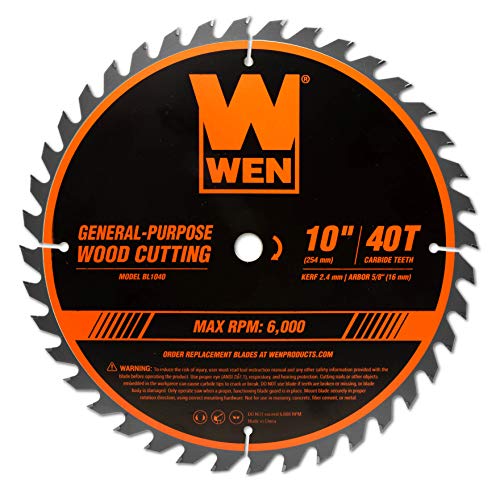
This 10-inch blade features a 5/8-inch arbor and an ultra-thin kerf of about 0.1 inch, designed for light-to-medium ripping and crosscutting. The carbide tips provide long wear life, making it a reliable general-purpose option for both softwoods and hardwoods. Best for users who want a budget-friendly, all-around blade with consistent performance. Limitation: fewer teeth than finer blades, so it won’t achieve the finest finishes on tricky stock.
WEN BL1248 12-Inch 48-Tooth Blade

The 12-inch blade delivers a 1-inch arbor and a 48-tooth count, combining power and precision for larger stock. With an ultra-thin kerf, it reduces waste and provides cleaner cuts in both hard and soft woods. Best for shop projects that require longer cuts with steady performance. Caution: larger diameter may not fit compact miter saws without proper clearance.
KuangBBBTools 8″ 40 Teeth Blade
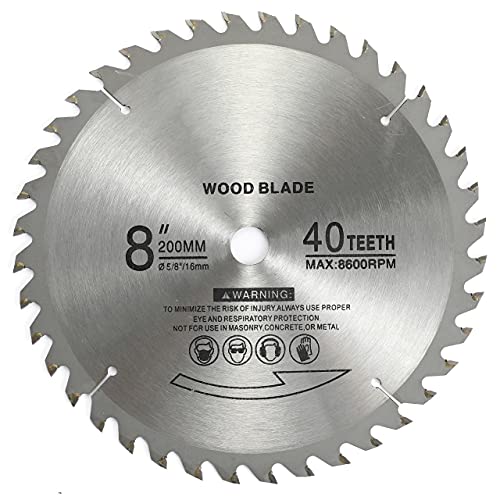
An 8-inch general-purpose blade with 40 carbide-tooth design and a 5/8-inch arbor, built for fast, smooth, crosscut and rip cuts in softwood and hardwood. Best for compact saws or smaller projects where weight and maneuverability matter. Limitation: smaller blade may struggle with deep cuts in dense stock.
WORKPRO 10 Inch 40T Blade

WORKPRO’s 10-inch blade with 40 teeth and a thin kerf provides smooth, precise cuts with reduced waste. Features laser-cut expansion slots to minimize vibration and noise, supporting consistent results on wood, plywood, trim, and laminates. Best for budget-conscious users needing reliable, general-purpose performance. Caution: not ideal for heavy-duty hardwoods over long sessions.
WEN BL1060 10-Inch 60-Tooth Fine-Finish Blade
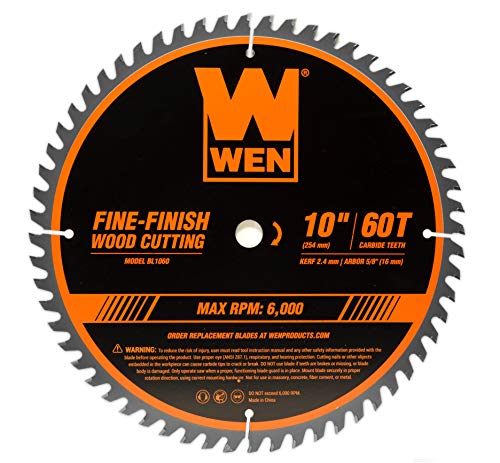
This blade combines a 60-tooth count with a 1/10-inch kerf for ultra-fine finishes on soft and hard woods. Best for fine trim and cabinet work where edge quality matters. Limitation: finer teeth mean slower cutting in very dense stock compared to 40-tooth blades.
Buying Guide: Key Considerations for Choosing a Wood Blade for Chop Saws
What blade geometry fits your project? A higher tooth count (like 60T) yields smoother finishes but cuts more slowly; a lower tooth count (40T) cuts faster and handles rougher work. Consider kerf width: thinner kerfs reduce waste and require less saw load, but they can bend more easily under heavy materials. Blade diameter should match your saw’s capacity, and arbor size must align with your tool.
What type of wood will you cut most often?
For softwoods and plywood, blades with more teeth provide smoother surfaces. For hardwoods, consider carbide-tipped blades with reinforced tips to resist chipping and heat buildup. If you frequently cut laminates, look for blades with ATB teeth and a fine kerf to minimize chipping.
How important is finish quality vs. speed?
Finish-focused work benefits from high-tooth-count blades designed for fine finishes. If speed is the priority, choose blades with fewer teeth and a slightly wider kerf that can cut more aggressively with less heat buildup.
Compatibility and safety considerations
Verify arbor size (commonly 5/8″ or 1″); ensure the blade diameter fits your miter or table saw. Use appropriate PPE and follow saw manufacturer guidelines for RPM ranges to prevent blade damage or accidents.
Maintenance and blade life
Carbide-tipped blades last longer and resist dulling on tougher woods. Routine cleaning and proper storage extend blade life. If you encounter resin buildup, use a non-abrasive cleaner to maintain teeth sharpness and cutting efficiency.
What’s the best choice for a common home shop?
A balanced blend of 40–48 teeth with a thin kerf is typically versatile for various tasks, offering clean cuts across most softwoods and many hardwoods. For fine finish projects, keep a dedicated 60-tooth blade on hand.
Frequently Asked Questions
- What blade is best for hardwoods? A carbide-tipped blade with a higher tooth count (like 60T) and a reinforced tip is generally best for avoiding chipping and heat buildup.
- Is a thinner kerf always better? A thinner kerf reduces material waste and saw load, but it can be more prone to deflection on very hard stock. Choose based on stock type and saw rigidity.
- Can I use any blade on a chop saw? Not every blade fits every saw. Check diameter, arbor size, and RPM compatibility before mounting.
- How do I extend blade life? Use clean wood, avoid cutting through metal or nails, store blades in a dry place, and clean resin buildup regularly.
- When should I use a 60T blade? Use a 60T blade for fine finish work on trim and cabinetry, or when cutting plywood with glued layers to reduce fuzz and splintering.
- What’s the advantage of a 12-inch blade? A larger diameter blade can cut deeper in a single pass and is suitable for bigger stock or longer crosscuts, provided your saw supports it.