Answering the question “tin snips straight cut” with practical, objective guidance. This article compares five top straight-cut tin snips that are well-suited for thin sheet metal, gutters, HVAC tasks, and DIY projects. Each pick is evaluated for cutting capacity, blade material, ergonomics, and ease of use. Best for beginners: straightforward, inexpensive options. Best for pros: high-leverage or Cr-V steel designs. Below, you’ll find clearly stated use cases, plus a concise buying table to help you choose quickly.
| Product | Best For | |
|---|---|---|
| HURRICANE 10 inch Aviation Tin Snips | General straight cuts | Low fatigue leverage, Cr-V blades |
| Crescent Wiss 9-3/4 Inch MetalMaster M3R | Precise straight cuts | Compound action for controlled cuts |
| HURRICANE 10 Inch Cr-Mo Aviation Snips | Heavy-duty straight cuts | High leverage for easier cuts |
| Warmtree 10 Inch Aviation Tin Snips | Budget-friendly metal cutting | Serrated blades for grip and control |
| Klein Tools 1202S | Professional straight cuts | Heat-treated serrated blades for durability |
HURRICANE 10 Inch Aviation Tin Snips
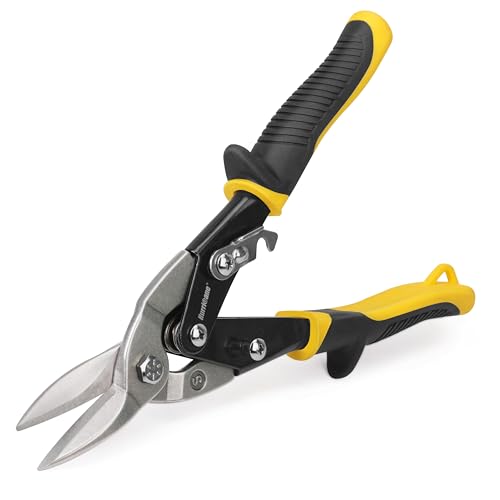
Best for: HVAC ducts, gutter work, and DIY metal projects requiring straight cuts. The blades are Cr-V steel with micro-serrations to grip metal and prevent slipping. The tool is designed to handle thin sheet materials up to 20-gauge cold rolled steel and 22-gauge stainless steel. It’s not intended for tight circles or hard metals. Choose this if you want reliable straight cuts with less hand fatigue, especially on soft metals.
Caution: Do not use on hardened steel, metal rods, or wire mesh as blade wear may increase and cuts may become inaccurate.
Crescent Wiss 9-3/4 Inch MetalMaster M3R

Best for: projects needing precise straight cuts or quick left/right adjustments. This snip uses precision cast molybdenum blades with conk-ground edges and serrations, offering good control on low-carbon steel up to 18 gauge. It’s ergonomic with a single-handed latch and is suitable for right- and left-handed users. It’s a strong choice when you value blade longevity and versatility in cut directions.
Limitation: not ideal for very thick metals beyond 18 gauge or hard materials that may dull the blades quickly.
HURRICANE 10 Inch Cr-Mo Aviation Snips

Best for: heavy-duty straight cuts on mild steel, aluminum, and PVC. It uses a high-leverage, dual-pivot system that reduces cutting force by up to 40%, making longer tasks easier. The blades are Cr-Mo steel, resistant to wear for longer tool life. Suitable for frequent use in sheet metal applications where clean, straight cuts are essential.
Limitation: not suitable for hard metals, tubes, or mesh; slight variation in results can occur between cuts.
Warmtree 10 Inch Aviation Tin Snips

Best for: budget-minded buyers needing straight cuts with dependable stainless-grade blades. The blades are Cr-V with serrated edges for stable material grip, enabling burr-free results on sheet metal, copper, aluminum, and even some plastics. This is a good entry-level option for occasional DIY tasks or smaller-scale projects.
Limitation: not designed for very thick metals; performance may vary with high-strength materials beyond 18 gauge.
Klein Tools 1202S Metal Shears

Best for: professionals requiring robust straight-cut capability with durable blades. The 1202S snips feature heat-treated serrated blades and are suited to 18 gauge steel and 22 gauge stainless steel. The design emphasizes long-term durability and reliable grip for frequent use in metalworking tasks.
Limitation: heavier than some budget options; choose this if you prioritize durability and consistent performance over lightness.
Buying Guide
What materials will you cut? For thin sheet metal (up to 20-gauge), most non-hardened steel snips perform well. For 18–20 gauge stainless or cold-rolled steel, prioritize high-leverage designs or Cr-V/Cr-Mo blades with serrations for grip.
How important is leverage vs. precision? High-leverage snips reduce the force needed but may feel heavier. Precision and serrated edges help when making tight curves or ensuring the cut stays on a marked line.
What about left- and right-curving cuts? If you frequently need curved cuts, consider a set or triple-style snips that cover straight, left, and right curves to avoid tool switching mid-project.
Ergonomics and grip matter. Look for non-slip handles, comfort grips, and safety latches to improve control and reduce hand fatigue on longer tasks.
Maintenance tips. Keep blades clean and lightly oiled to prevent rust and corrosion. Avoid cutting through hard metals or non-metal materials that can dull edges quickly.
Frequently Asked Questions
- What gauge can most tin snips handle? Most straight-cut snips handle up to 18–20 gauge steel and up to 22 gauge stainless steel, depending on the model and blade material.
- Are serrated blades better? Serrations improve grip on slippery metals, reducing slippage and burrs during cuts.
- Should I buy a set or individual snips? A set is useful if you need straight and curved cuts; individual snips are fine if you only need straight cuts.
- Is high-leverage necessary? High-leverage designs reduce cutting force, beneficial for frequent cutting of thicker sheets or long runs.
- Can these snips cut plastic or cardboard? Some may cut thin plastics or cardboard, but they are optimized for metal; use appropriately to avoid blade wear.
- What maintenance helps extend blade life? Clean blades after use, oil lightly, and store in a dry place to prevent corrosion.