Looking for a straight edge to guide your router with accuracy and repeatability? This guide selects five top-rated straight edge guides and clamps that work well with routers, saws, and jigs. It targets woodworkers and DIYers who need reliable alignment for dadoes, grooves, mortises, and edge routing. Each option is chosen for solid rigidity, ease of use, and compatibility across common router bases. The quick-reference table below highlights key picks and who they’re best for.
| Product | Best For | Why It Stands Out |
|---|---|---|
| O’SKOOL 50-Inch Straight Edge Clamp Guide | Full-sheet woodworking, large panels | Extra-rigid aluminum, over 110 lbs clamping force |
| CICIDO DNP618 Router Edge Guide | Compact routers, quick lines | All-metal build, easy installation |
| DEWALT Universal Router Edge Guide | Versatile router work | Dust collection ready, fine adjustment |
| Taytools 12″ Anodized Aluminum Straight Edge | Precision over short spans | Guaranteed straight to within 0.0005″ |
| Milescraft 1224 Edge & Mortise Guide | Edges and mortises | Built-in mortise guide and large surface |
O’SKOOL 50-Inch Straight Edge Clamp Guide

The O’SKOOL 50-Inch Straight Edge Clamp Guide is designed for long, repeatable straight cuts on 4×8 sheets and beyond. Its extra-rigid aluminum body minimizes flex, yielding more consistent rip cuts, dadoes, and groove routing. A quick-lock mechanism delivers substantial holding force to keep the guide steady during operation. This option is best for woodworkers who routinely work with large panels and require dependable straight edges across repeated passes. A potential limitation is the need for space to accommodate the full 50-inch length.
CICIDO Router Edge Guide for Fixed Base Compact Router (DNP618)
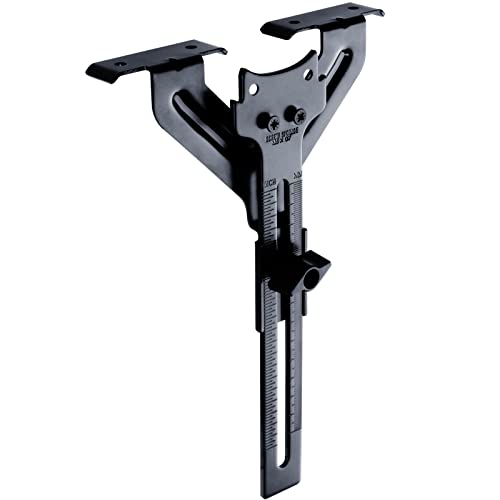
The CICIDO DNP618 edge guide is tailored for compact fixed-base routers. It is a simple, durable all-metal tool that resists bending and handles precise line work. It suits routers like the DCW600B, DWP611, and similar models for accurate inlays, dadoes, and edge routing. It’s best for users who want a compact, easy-to-attach guide. A limitation is its compatibility scope; it is designed for specific router models and may not fit other brands without adapters.
DEWALT Universal Router Edge Guide with Dust Collection

The DEWALT edge guide focuses on versatility and integration with dust collection systems. It offers fine adjustment and a vacuum adaptor, making it well-suited for workshop setups where dust control and precise offsetting matter. This option is best for general router work, including grooves, rabbets, and edge-forming tasks. A caution: ensure the model compatibility with your specific DEWALT router bases and dust solutions.
Taytools 12″ Anodized Aluminum Straight Edge

The Taytools 12″ straight edge offers a guaranteed straightness of 0.0005″ over the full length. Its anodized aluminum construction provides durability and a flat reference surface for tasks like marking and routing small-dimension work. It’s best for precision-focused projects on shorter spans. A limitation is the shorter length when working on wide panels or long routing runs.
Milescraft 1224 Edge & Mortise Guide
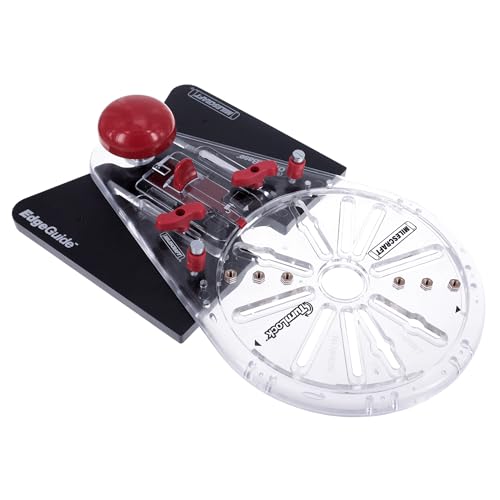
The Milescraft 1224 Edges & Mortise Guide supports both straight paths and curved edges, with a built-in mortise guide and a large work surface. It accommodates plunge and fixed-base routers, making it versatile for both straight cuts and mortising. This option is best for projects requiring mortises and complex layouts. A note: verify compatibility with your router’s base type and the required travel limit for your workpiece.
Buying Guide: Straight Edge And Router Guides
- Length and reach: Choose length based on your typical workpieces. Longer edges reduce repositioning, but require more space in your workshop.
- Material and rigidity: Aluminum is light and stiff for most tasks; steel offers extra rigidity but adds weight.
- Clamp mechanism: Quick-lock or lever clamps speed setup and reduce runout during cuts.
- Compatibility: Verify base compatibility with your router models (fixed base, plunge base) and with other tools (jigs, saw guides).
- Dust management: Edge guides with dust collection are advantageous in confined spaces for cleaner results.
- Mortise and groove features: If you frequently cut mortises, consider guides with integrated mortise routing support.
- Portability and storage: Lightweight guides are easier to move between projects; hanging holes help keep tools accessible.
- Accuracy specifications: Look for guaranteed straightness, especially for long spans, and check tolerance claims for short runs.
Frequently Asked Questions
- What is the main purpose of a router edge guide? To guide the router along a straight line, improving accuracy for edge cuts, grooves, and inlays.
- Should I choose a longer straight edge for large panels? Yes, longer edges reduce repositioning and help maintain consistency across wide workpieces.
- Do all edge guides fit every router? No. Check compatibility with your router’s base (fixed, plunge, or palm) and mounting system.
- Is aluminum enough for high-precision work? For most woodworking, yes. Steel offers higher rigidity but adds weight and cost.
- Do edge guides require special maintenance? Keep moving parts clean, lubricate hinges or quick-locks per manufacturer recommendations, and inspect for burrs or warping.
- When is a mortise guide useful? When your projects frequently include mortises or tenons, a built-in or compatible mortise guide can save setup time.