Answering the demand for reliable metal-cutting blades, this guide highlights blade sets built to cut steel, stainless, and other tough metals. The selections suit professionals with heavy metal demolition projects, fabricators handling thick materials, and DIYers tackling pipe, rebar, or steel bars. The top five blades below emphasize carbide or bi-metal constructions, longevity, and cutting efficiency. Summary table follows to compare core specs at a glance.
| Product | Material Type | Size / TPI | Best For |
|---|---|---|---|
| EZARC Carbide Reciprocating Saw Blade R678HM Endurance | Carbide | 6 in, 8 TPI | Thick alloys, stainless, cast iron |
| Diablo Steel Demon Carbide Teeth, DS0908CF | Carbide | 6 in, 8 TPI | Extreme metal cutting |
| Diablo Bi-Metal Reciprocating Blades, DS0914WBF25 | Bi-Metal | 9 in, 14/18 TPI | Auto dismantling, medium metals |
| HORUSDY 6PCS 9-Inch 14TPI Bi-Metal Blades | Bi-Metal | 9 in, 14 TPI | Steel pipe, rebar, thick metal |
| EZARC Obsidian Carbide Recip Saw Blade R678HMK | Carbide | 6 in, 8 TPI | Thick metal, cast iron, alloy steel |
EZARC Carbide Reciprocating Saw Blade R678HM Endurance
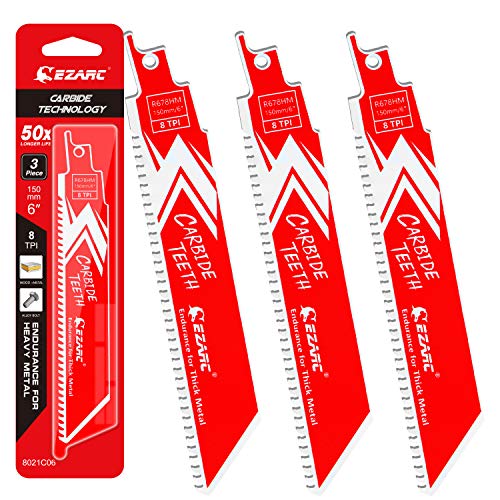
Best for extreme metal cutting and long life, this carbide blade targets tough metals where bi-metal blades struggle. The 6-inch length with 8 TPI provides steady, aggressive cuts through high-alloy steels, stainless, rebar, and car beams. The carbide technology promises up to 50x longer life than standard bi-metal blades, making it ideal for frequent metal demolition work.
Who it’s best for: metal fabrication shops and professionals cutting thick metal in repeated cycles. Why selected: superior wear resistance and consistent performance on challenging materials. Caution: carbide blades can be more brittle; use steady, straight cuts to avoid chipping on very hard edges.
Diablo Steel Demon Carbide Teeth DS0908CF

Best for extreme metal cutting, this 6-inch carbide-tipped blade is designed to handle high-strength alloys, cast iron, and stainless steel. It features a TiCo Hi-Density carbide edge that can deliver up to 50x longer cutting life than standard blades in demanding applications. A Perma-SHIELD non-stick coating helps resist heat and gumming, extending blade life in tough jobs.
Who it’s best for: job sites tackling thick metals and cast iron. Why selected: combines carbide durability with a coating that reduces heat buildup. Caution: carbide tips are excellent for long life but require careful handling to avoid chipping on very hard or non-uniform materials.
Diablo Bi-Metal Reciprocating Blades DS0914WBF25

Best for auto dismantling and medium-metal cutting, these 9-inch blades feature a full-contact arched design and dual tooth configuration for faster material removal. The 14/18 TPI options enable efficient cutting of metal sheet, pipe, and profiles with reduced heat buildup. A Perma-Shield coating protects against heat and corrosion, preserving blade life in harsh environments.
Who it’s best for: auto dismantling and shop projects with repetitive metal cutting. Why selected: faster, cleaner cuts with better durability under heat. Caution: the longer length requires more control to prevent flexing on very thick stock.
HORUSDY 6PCS 9-Inch 14TPI Bi-Metal Blades

Best for professional and home use in cutting steel pipes, rebar, and thick metal sheets, this six-pack offers solid toughness with a robust bi-metal construction. The 14 TPI tooth geometry aims for clean, fast cuts with reduced vibration, making it suitable for longer cutting sessions.
Who it’s best for: builders and DIYers needing a reliable multi-pack for metalworking. Why selected: good balance of cost, durability, and performance. Caution: for very hard stainless steel, consider a carbide blade for longer life.
EZARC Obsidian Carbide Reciprocating Saw Blade (Pro) R678HMK

Best for demanding thick metal cutting with improved heat resistance, this Pro variant uses TiAlN-coated carbide tips and an optimized 8 TPI design. It claims up to 100x longer life than standard blades and faster, smoother cuts due to reduced friction. It’s well suited for cast iron, stainless steel, rebar, and alloy steel.
Who it’s best for: high-volume metal shops and professionals needing maximum blade life. Why selected: exceptional durability and efficiency on tough metals. Caution: carbide blades can be more brittle; apply steady, straight cuts and avoid twisting during heavy cuts.
Buying Guide
What to consider when choosing sawzall blades for steel
- Material type: Carbide blades offer longer life on hard metals, while bi-metal blades balance flexibility and durability for general steel cutting.
- Tooth configuration and TPI: Lower TPI (like 8 TPI) cuts thicker metal faster; higher TPI (14-18 TPI) delivers smoother cuts on thinner or cleaned edges.
- Blade length: Longer blades provide reach for deep cuts but can flex under load; shorter blades are stiffer and better for precision work.
- Coatings and edge design: Coatings (Perma-Shield, TiAlN) reduce heat buildup and gumming, extending life in tough materials.
- Application fit: For thick alloys, cast iron, and stainless steel, carbide options excel; for noncritical, cost-conscious tasks, bi-metal blades perform well.
Key buyer considerations
- Budget vs. blade life: Carbide blades cost more upfront but last longer in demanding metal cuts.
- Cutting environment: Harsh, hot, or gumming-prone environments benefit from coated blades.
- Machine compatibility: Confirm your saw’s shank type and tooth size to ensure proper fit.
Practical quick-answers FAQ
- What blade is best for thick steel cuts? Carbide-tipped blades, like EZARC Endurance or Diablo Steel Demon, offer extended life in tough metals.
- Are bi-metal blades OK for metal cutting? Yes, for many metal types, especially where budget matters and cutting is less extreme.
- Do coatings matter? Coatings reduce heat buildup and gum buildup, improving blade life in high-temperature tasks.
- Should I use a longer blade for auto dismantling? Longer blades cut more material per pass but require steadier handling to avoid deflection.
- Is a 14TPI blade better than an 8TPI for steel? 14TPI provides cleaner cuts but slower progress; 8TPI cuts thicker metal faster but with rougher edges.
- Can I mix carbide and bi-metal blades in the same job? Yes, use carbide for hard sections and switch to bi-metal for simpler, repetitive cuts to save cost.