When cutting cast iron pipes with a reciprocating saw, choose blades built to handle hard metals without dulling quickly. Carbide-tipped blades offer dramatically longer life and cleaner cuts in cast iron, stainless steel, and other thick metals. This guide highlights five high-performance options ideal for cast iron pipe work, explains who each blade best serves, and notes practical limitations to consider. The selections emphasize durability, compatibility with 1/2-inch shanks, and steady cutting in dense materials.
Overview of top picks for quick reference:
| Product | Best For | Why It Stands Out |
|---|---|---|
| EZARC R678HM Endurance (6″, 8TPI, 3-Pack) | General cast iron piping, mid-size jobs | Carbide design with up to 50x life vs bi-metal; versatile for thick metal |
| Diablo DS0908CF (6″, 8TPI) | Extreme metal cutting | First carbide-tipped blades designed for high-strength alloys and cast iron |
| EZARC R978HM Endurance (9″, 8TPI, 3-Pack) | Longer reach, larger pipes | Similar carbide endurance, bigger cutting depth |
| HAPU HARPOW TOOLS 9″ Diamond-Grit Edge | Thick materials, dense masonry-adjacent cast iron | Diamond grit edge for up to 6x longer life; reduced vibration |
| HARDWIN 6″ 8TPI | Compact spaces and durable metal cuts | 30x longer life with carbide teeth; balanced 150mm length |
EZARC R678HM Endurance 6″ Carbide Reciprocating Saw Blade
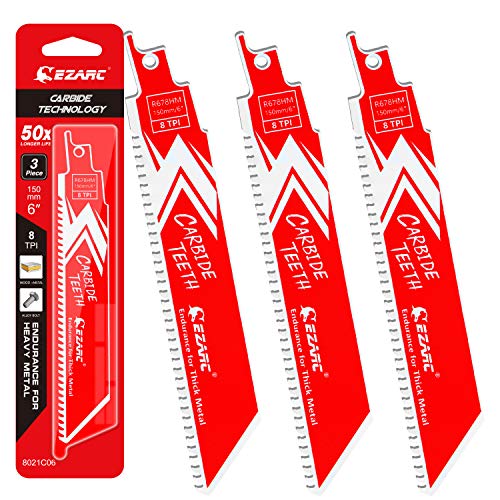
- Brand: EZARC
- Teeth: 8 TPI
- Material: Carbide technology for extended life
- Best for: Cast iron, thick metal, stainless steel, and high-alloy steels
The R678HM Endurance blade is best for contractors who frequently cut thick cast iron pipe and heavy metals in demolition or plumbing work. Its carbide teeth deliver up to 50x longer life than bi-metal blades, reducing replacement frequency in demanding cuts. Suitable for high-alloy steels, rebar, and car beams. A noted limitation is that carbide blades can be harder to start in very soft, non-metal materials and may require steady, controlled pressure to maximize the edge.
Diablo DS0908CF Steel Demon 6″ 8 TPI Carbide Blade

- Brand: Diablo
- Teeth: 8 TPI
- Specialty: Ultra-hardened TiCo Hi-Density carbide edge
- Best for: Extreme metal cutting, cast iron, stainless steel, high-strength alloys
Choose this when the task involves extreme metal cutting beyond standard bi-metal performance. The DS0908CF’s carbide edge resists heat and delivers longer life under intense cuts. It’s a robust choice for large-diameter cast iron pipes or thick-walled sections. A potential limitation is that aggressive carbide blades can deflect if not guided properly in awkward angles, so steady control is essential.
EZARC R978HM Endurance 9″ Carbide Blade
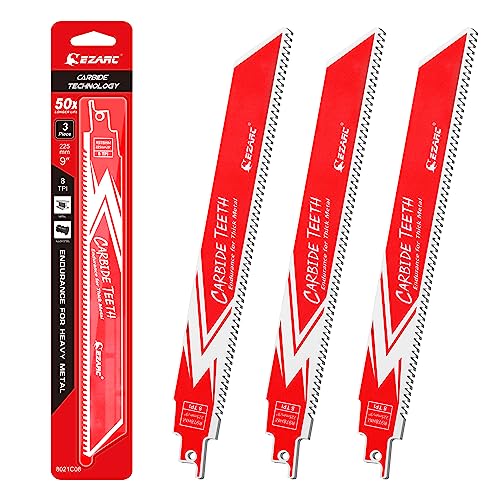
- Brand: EZARC
- Teeth: 8 TPI
- Material: Carbide technology for superior wear resistance
- Best for: Thick metal, cast iron, and angle iron
Opt for the longer 9-inch blade when cutting longer stretches of cast iron pipe or reaching deeper into metal assemblies. The R978HM provides similar 50x life improvements to the 6-inch variant and supports efficient removal on larger workpieces. Limitation: length can be harder to maneuver in tight spaces where a shorter blade would be better.
HAPU HARPOW TOOLS 9″ Diamond-Grit Edge Blade

- Brand: HAPU HARPOW TOOLS
- Grit: Diamond edge
- Best for: Cast iron, masonry, fiber cement, fiberglass
- Specialty: Reinforced body to minimize deflection
Use this blade for thick cast iron or composite materials where diamond grit excels and provides longer life than standard carbide alone. It’s particularly suitable for dense pipe sections and when working in tight spaces due to its thin kerf. A caveat is that diamond-grit blades can be more brittle in highly impacted cuts; avoid aggressive side loads to prevent chipping.
USEWIN Carbide Reciprocating Saw Blades 3 Pack

- Brand: USEWIN
- Teeth: 8 TPI
- Material: Bi-metal with carbide teeth
- Best for: Thick metal, pipe, rebar, angle iron
Choose USEWIN for a value-packed option with carbide tips designed to extend blade life. The three-pack provides flexibility for multiple cuts on cast iron pipes and related metalwork. Limitation: While robust, this option may not offer the same extreme life extension as premium EZARC or Diablo carbide designs in the longest, toughest cuts.
HARDWIN 6-Inch 8 TPI Carbide Reciprocating Blades

- Brand: HARDWIN
- Length: 6 inches
- Teeth: 8 TPI
- Best for: Thick metal, cast iron, alloy steel
HardWin blades provide a balanced option for compact spaces while delivering durable carbide teeth and a 1/2-inch universal shank for broad compatibility. They’re best for shorter cuts in cast iron and heavy metals. A limitation is that shorter blades can require more passes on very thick sections, potentially increasing cycle time.
Buying Guide: Cast Iron Pipe Cutting With Sawzall Blades
- Material compatibility: Carbide-tipped blades outperform standard bi-metal blades on cast iron, stainless steel, and high-alloy steels. For masonry-adjacent pipe, consider diamond-grit options as a backup for extended life in abrasive environments.
- Blade length and reach: Shorter blades (6″) fit tight spaces; longer blades (9″) cover more material in a single pass but require steadier handling.
- Tooth design and speed: 8 TPI is common for metal cutting; carbide teeth reduce friction and heat, enabling faster, cleaner cuts in thick pipes.
- Shank compatibility: Ensure the blade fits your reciprocating saw’s 1/2-inch shank standard. Most blades listed are compatible with common saws used in HVAC and plumbing work.
- Durability vs. control: Higher longevity blades can be less forgiving in very tight angles; keep a steady, perpendicular approach to maximize life and cut quality.
- Cost vs. value: Carbide and diamond blades cost more upfront, but their longer life makes them cost-effective on repeated cast iron work.
Frequently Asked Questions
- What blade is best for cutting cast iron pipe with a Sawzall?
– Carbide-tipped blades designed for thick metal, especially those rated for cast iron, are typically the best balance of speed and durability. - Should I use a diamond-grit blade on cast iron?
– Diamond-grit blades excel on very abrasive materials and thick cast iron; they’re great for long cuts but can be more brittle in heavy impact cuts. - Is a longer blade always better for pipes?
– Longer blades reach deeper into pipes and reduce re-positioning, but require steadier control in cramped spaces. - How many teeth per inch do I need for metal cutting?
– 8 TPI is standard for metal cutting and provides a good balance between aggressiveness and smoothness. - Can carbide blades cut through stainless steel and rebar?
– Yes, carbide blades are designed to cut hard metals, including stainless steel and rebar, with longer life than standard blades. - Do I need to avoid using carbide blades in certain materials?
– In non-metal, low-hardness materials, carbide blades may not perform as efficiently as in metal; use standard blades for wood or plastics.