Answering buyers who need capable blades for cast iron and other hard metals, this guide highlights five top options with carbide tips and advanced coatings. These picks are best for contractors, metal workers, and DIYers tackling thick metal, cast iron piping, or automotive components. Each blade balances durability, cutting speed, and control, helping you choose the right blade for heavy demolition or precise metal fabrication. The quick reference table below helps compare core traits at a glance.
| Product | Material Focus | Length / TPI | Best For |
|---|---|---|---|
| EZARC R678HM Endurance 6″ | Cast iron, thick metal | 6″ / 8 TPI | Heavy metal work, demanding cuts |
| EZARC Obsidian R678HMK 6″ | Cast iron, thick metal | 6″ / 8 TPI | High-performance, heat-resistant cuts |
| Diablo DS0908CF 6″ | Extreme metal cutting | 6″ / 8 TPI | Alloy steels, cast iron, stainless |
| HARDWIN 6″ 8 TPI | Thick metal, stainless | 6″ / 8 TPI | Demolition and precise heavy-metal cuts |
| EZARC R978HM Endurance 9″ | Thick metal, cast iron | 9″ / 8 TPI | Longer reach with heavy-metal cuts |
EZARC R678HM Endurance 6-Inch Blade
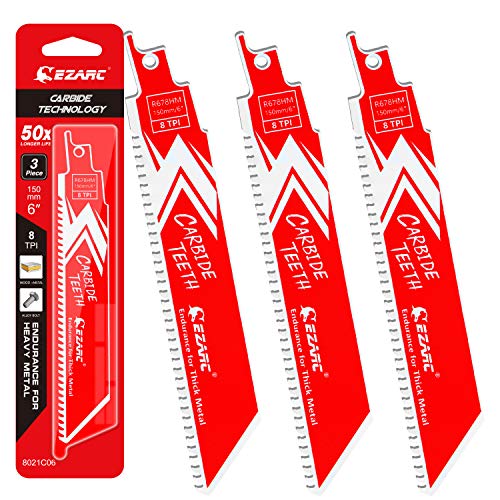
Features: Carbide technology promises up to 50x longer life than bi-metal blades. Designed for heavy metal applications, the 8 teeth-per-inch design handles thick materials, including high-alloy steels and car beams. Best for contractors facing repeated cuts through hardened metals or rebar. Limitations include potentially slower initial penetration on very soft materials, where a standard blade may suffice. This blade is best for long-term durability in tough metal work.
Who it’s best for: professionals tackling recurring metal demolition or fabrication projects where blade life matters most. Why chosen: superior carbide edge and end-to-end durability for cast iron and heavy steels.
EZARC Obsidian Carbide Reciprocating Saw Blade (R678HMK) 6-Inch

Features: TiAlN-coated carbide tip with a refined 8 TPI tooth pattern provides heat resistance and smoother cutting through thick metal. It can outlast standard bi-metal blades by up to 100x in some applications, especially cast iron and stainless steel. One limitation is the heavier carbide build can be a bit stiffer to start in very tight curves. Best for: users needing exceptionally long blade life and consistent performance in demanding metal work. Why chosen: the advanced coating reduces friction and heat buildup for demanding cuts.
Diablo DS0908CF Steel Demon Carbide 6-Inch

Features: First carbide-tipped blades designed for extreme metal cutting, including high-strength alloys and cast iron. TiCo Hi-Density carbide edge delivers up to 50x longer life vs standard bi-metal blades, with a perma-shield non-stick coating to resist heat and corrosion. Caution: carbide blades may be heavier than standard blades, potentially affecting balance in very light-duty tasks. Best for: harsh metal demolition where speed and blade life matter. Why chosen: proven carbide technology for tough metal surfaces.
EZARC R978HM Endurance 9-Inch Blade
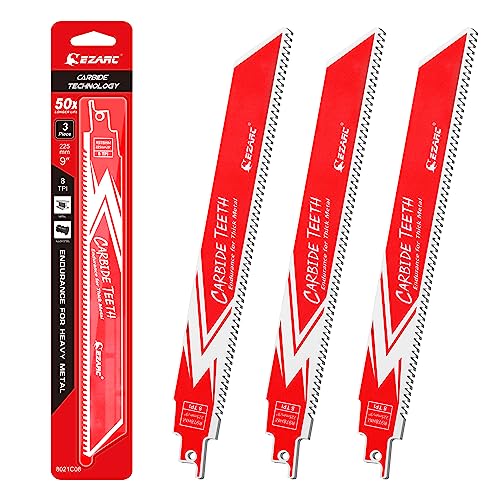
Features: Carbide technology promises extended blade life for thick metal, including cast iron and alloy steel. 9-inch length with 8TPI supports longer cuts and deeper reach in demolition projects. Best for: projects requiring longer blades to cover larger work areas. Why chosen: longer blade length combined with carbide durability for sustained performance in thick metal work. Caution: longer blades may be less maneuverable in tight spaces.
HARDWIN Carbide Reciprocating Blades 6-Inch

Features: 6-inch blade with 8 TPI and universal 1/2-inch shank. Carbide teeth deliver up to 30x longer life than conventional bi-metal blades, with a design optimized for cutting thick metal, stainless steel, and cast iron. Benefits: balanced length for tight spaces while maintaining cutting depth. Limitation: not the longest blade option, which may matter for extended cuts. Best for: versatile demolition tasks where controlled cuts in metal are needed. Why chosen: strong carbide performance with practical length and shank compatibility.
HAPU HARPOW 9-Inch Diamond-Grit Blade (2-Pack)

Features: Diamond grit edge delivers up to 6x longer life than standard blades, suitable for cast iron, masonry, fiber cement and fiberglass. 9-inch length extends reach in tight spaces. Reinforced body minimizes deflection and vibration; thin kerf supports fast material removal with precision. Limitation: diamond grit blades are best for specific dense materials and may wear faster on very soft metals. Best for: rough-cut metal and masonry tasks where cast iron is involved. Why chosen: exceptional durability on cast iron and abrasive materials.
Buying Guide: Key Considerations For Cast Iron And Thick Metal Cuts
- Blade material and coating: Carbide tips and TiAlN coatings extend life and reduce heat buildup when cutting hard metals like cast iron and stainless steel.
- Tooth geometry and count: 8 TPI is common for thick metal; higher counts can yield smoother finishes but slower cutting in heavy metal. Choose based on material thickness and desired cut speed.
- Blade length: Short blades offer better control in tight spaces; longer blades reach deeper into the workpiece but can be harder to control in confined areas.
- Shank compatibility: Most blades use standard 1/2 inch shanks; verify compatibility with your saw’s arbor to prevent vibration or fit issues.
- Heat management: Coatings and carbide tips help resist heat, reducing glazing and dulling in cast iron and stainless steel.
- Best-use scenarios: For frequent heavy-metal demolition, prioritize blades with extended life; for precision metal work, choose blades with smoother cuts and controlled wear.
FAQ
- What blade is best for cutting cast iron?
- Why choose an 8-TPI blade for metal cutting?
- Are longer blades better for thick metal?
- Do diamond-grit blades work well on cast iron?
- Is carbide more durable than bi-metal for metal cutting?
- Can I use these blades on standard reciprocating saws?
Carbide-tipped blades with TiAlN coatings or similar heat-resistant carbides are best for cast iron, offering longer life and cleaner cuts than standard bi-metal blades.
Eight teeth per inch balances aggressive metal removal with durability, making it a common choice for thick metals and cast iron.
Longer blades provide deeper reach and stability for large sections, but may be harder to maneuver in tight spots. Choose based on space and project scope.
Yes, for very abrasive or dense materials, diamond-grit blades can offer extended life, but they are more specialized and may not be necessary for all cast iron tasks.
Carbide tips typically last longer in hard metals and high-alloy steels, reducing blade changes during demanding projects.
Yes, provided your saw uses a standard 1/2-inch shank and the blade length fits your tool’s clearance and stroke capacity.