When you want professional-looking concrete textures without renting equipment, pattern imprinted tools are your best option. This guide highlights five top options for DIYers and pros alike, based on durability, texture realism, and ease of use. Each product is suitable for creating wood, stone, brick, or cobblestone patterns on patios, driveways, walkways, and walls. Whether you’re resurfacing a small patio or detailing a large commercial walkway, these tools help you achieve consistent, deep impressions with fewer passes and less effort. The buyer’s choice depends on texture type, surface area, and preferred rolling or stamping method.
| Product | Best For | Texture Type |
|---|---|---|
| VEVOR Concrete Stamps Mat, 36 x 36 in & 18 x 18 in | Large areas, textured wood-like finish | Wood-like texture, seamless mats |
| Concrete Stamp Roller – 7 Inch Stone Texture | Patios, driveways with quick coverage | Stone texture, rolling |
| Concrete Texture Roller Stamp, Brick Pattern | Brick-look borders and paths | Brick pattern, rolling |
| Nichiyo Concrete Texture Roller Stamp for DIY Stone Patio | Natural stone look on outdoor surfaces | Stone pattern, rolling |
| Roman Fan Concrete Stamp Set by Walttools | Classic cobblestone with dramatic relief | Cobblestone/fan pattern |
VEVOR Concrete Stamps Mat: Wood-Texture Pattern Kit

The VEVOR kit includes 36 x 36 inch and 18 x 18 inch mats that create wood-like textures across large surfaces. The polyurethane material offers good wear resistance, elasticity, and chemical resistance, enabling repeated stamping with depth and clarity. Best for projects requiring a natural wood texture on floors, patios, pool decks, and walls.
Who it’s best for: DIY homeowners and small contractors needing a consistent, natural texture over expansive areas.
Caution: The mats are large; ensure handling space and consistent wet concrete to avoid misalignment between tiles.
Concrete Stamp Roller – 7 Inch Stone Texture

This 7-inch stone texture roller delivers realistic stone finishes on patios, driveways, and walls. The polyurethane roller offers durability for repeated use while maintaining a smooth rolling action over wet concrete. Best for moderate-area projects where a natural stone look is desired with faster coverage than stamping mats.
Who it’s best for: DIYers and contractors aiming for quick, even stone patterns with straightforward rolling application.
Caution: Rolling texture can sometimes produce minor repeat patterns; plan layout to maximize natural variation.
Concrete Texture Roller Stamp, Brick Pattern
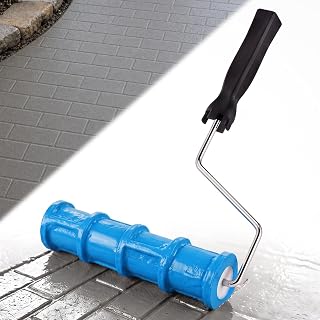
This 8.5″ x 2-5/8″ concrete stamp roller offers a brick texture with precise edges and gaps. Built from industrial-grade polyurethane, it resists wear and deformations under high pressure, keeping texture crisp over larger areas. Best for sidewalks, borders, and pathways where a classic brick look is desired.
Who it’s best for: Professionals or DIYers focusing on brick aesthetics with quicker large-surface coverage.
Caution: Rollers may require multiple passes to avoid missing texture along edges; use overlapping passes for consistency.
Nichiyo Concrete Texture Roller Stamp for DIY Stone Patio

Nichiyo’s texture roller stamp focuses on a realistic stone and masonry pattern for outdoor surfaces. The reinforced, wear-resistant build withstands repeated use on wet concrete, producing authentic depth and subtle weathering. Best for flagstone-like patios and garden pathways with a premium finish.
Who it’s best for: DIYers and landscapers seeking a high-end stone look with durable roller performance.
Caution: The texture depth may be less pronounced on extremely smooth substrates; roughen the base surface slightly for best results.
Roman Fan Concrete Stamp Set by Walttools

Walttools’ Roman Fan set features European cobblestone patterns in a dramatic fan arrangement. The 46″ x 26″ mats include two nylon strap handles on each stamp for maneuverability. This set emphasizes natural variation and durable polyurethane, delivering professional detail for driveways and sunrooms. Best for large-scale cobblestone looks with deep texture.
Who it’s best for: Pros working on large areas where high-detail cobblestone impressions are required and durability matters.
Caution: The large size may require more handling space and careful alignment to maintain pattern continuity across sections.
Buying Guide: Pattern Imprinted Concrete Tools
- Texture Style: Decide between wood, stone, brick, or cobblestone textures. Mats excel for wide, seamless areas; rollers work well for broad, continuous patterns with faster coverage.
- Area and Access: For large patios, use bigger mats or multiple rollers. For corners and edges, consider smaller stamps or flexible mats that can bend with curves.
- Material and Durability: Look for polyurethane that resists wear and chemical exposure. Higher hardness yields crisper patterns, but flexibility helps with intricate curves.
- Ease of Use: Rolling tools offer quick texture over large areas; stamping mats provide deeper textures but require alignment. Choose based on the surface and time constraints.
- Maintenance: Clean tools after use to prevent concrete buildup. Proper curing and storage extend tool life.
- Best Practices: Plan pattern layout before stamping, maintain even moisture in the concrete, and work in sections to preserve texture depth and consistency.
Frequently Asked Questions
- What texture is easiest for beginners? Rolling brick or stone rollers are typically easier and faster for large areas, with forgiving alignment.
- Can I reuse the patterns on the same surface? Yes, most polyurethane tools support multiple uses, provided you clean and store them properly.
- Which tool is best for a natural stone look? Stone-pattern rollers, such as the Nichiyo or similar models, offer realistic textures with broad coverage.
- How do I avoid tool imprint gaps along edges? Overlap passes slightly and mark out borders to ensure continuous texture across sections.
- Are these tools suitable for indoor use? They can be used indoors for decorative concrete features, but ensure adequate ventilation and curing conditions.
- Do I need special concrete mix? Standard concrete mixes work; follow manufacturer guidance for curing times and water content to maximize texture clarity.