Growing environments often require effective odor control and air purification without relying solely on filters. An ozone generator can help neutralize pungent smells and improve air quality in grow rooms, basements, or dedicated odor zones. This article examines five top options, detailing how they perform, safety considerations, and use cases to help you choose the right unit for your space.
| Product | Brand | Max Ozone Output (mg/h) | Best For | Notes |
|---|---|---|---|---|
| Enerzen O-888 Industrial Ozone Generator | Enerzen | 70,000 | Large grow rooms and odor elimination | Pulse output helps address embedded smells |
| Airthereal MA5000 Commercial Ozone Generator | AIRTHEREAL | 5,000 | Homes, cars, and larger rooms up to 2,000 sq ft | Built-in safety features, timer up to 120 minutes |
| VERDECORE 120,000 mg/h Ozone Generator (Blue) | VERDECORE | 120,000 | High-demand odor control and multi-room use | 4-layer ceramic plates for fast distribution |
| Airthereal MA10K-PRODIGI | AIRTHEREAL | 10,000 | Large rooms, offices, and commercial spaces | Digital controls and high-output honeycomb plate |
| WSTA Portable Ozone Generator | WSTA | 500 | Small rooms, office spaces, and portable use | Timer with multiple preset durations |
In this guide, each product section below covers a concise overview, key features, and practical usage notes. The focus is on objective performance indicators and safety considerations to help you compare options for a grow room setting.
Enerzen O-888 Industrial Ozone Generator
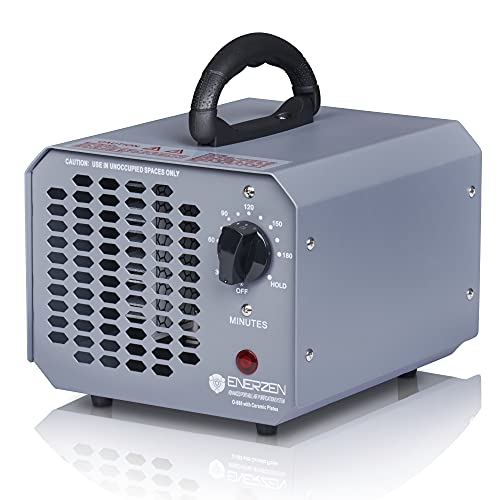
The Enerzen O-888 delivers up to 70,000 mg/h of ozone, designed for comprehensive deodorizing in rooms, vehicles, and pet areas. Its standout feature is a pulsating output that adjusts fan speed and ozone generation during treatment. This approach can help loosen stubborn odors that have embedded into fabrics, walls, or air. The unit emphasizes an odor-removal mechanism rather than merely masking smells, which can be advantageous in grow-room environments where routine cleaning may leave behind lingering notes. The compact form factor suits mid-to-large spaces when used with proper ventilation and a temporary shutdown period between cycles.
Usage considerations include ensuring the treated space is unoccupied, as with most ozone devices, and completing adequate ventilation after the treatment. While the device targets odors, it does not scrub particulates or remove moisture, so it’s best paired with ventilation strategies and standard room cleaning. The Energized approach can be effective for occasional odor resets after cycles of drying, pruning, or fertilizer application.
Airthereal MA5000 Commercial Ozone Generator

The MA5000 offers high-capacity purification suitable for rooms, garages, or vehicles up to about 2,000 sq ft. It emphasizes a true deodorization effect—ozone neutralizes odors at the molecular level rather than briefly masking them. A built-in timer allows up to 120 minutes, with a HOLD function and a recommended waiting period after use, enabling safer post-treatment re-entry. This model is a versatile option for growers seeking robust odor control across multiple space sizes without complex setup.
Important safety notes include ensuring the space is unoccupied during operation and allowing the recommended dwell time in a ventilated environment after treatment. Because ozone can irritate lungs and eyes, proper timing and ventilation are essential for safe use in grow rooms or shared spaces.
VERDECORE 120,000 mg/h Ozone Generator (Blue)

This VERDECORE model doubles as a high-output ozone generator with 120,000 mg/h, designed to tackle strong odors in larger spaces and multi-room setups. The unit combines ozone with negative ions for a multi-stage purification approach, aiding not only deodorization but also dust reduction. The 3200 RPM fan helps distribute ozone evenly for thorough treatment. A rugged all-metal build and portable handle make it feasible to move between rooms or to different parts of a grow area as needed.
Practically, this device suits larger grow rooms or rental properties where odors from soil, compost, or fans might require repeated treatment cycles. Safety protocols remain critical: operate only in unoccupied spaces, follow dwell times, and maintain proper ventilation after treatments to ensure air safety before re-entry.
Airthereal MA10K-PRODIGI Digital Ozone Machine

The MA10K-PRODIGI provides a higher-capacity ozone output designed for larger rooms, offices, or commercial spaces. The unit emphasizes a user-friendly digital interface with a honeycomb ozone plate for efficient production. Its higher output can speed up odor elimination in grow rooms where persistent smells from soil, fertilizers, or plant material can linger. The device is suitable for larger setups but requires careful scheduling and thorough ventilation after use to ensure safety and air quality before occupants return.
Operational notes include monitoring ozone output to avoid over-treatment in enclosed environments and ensuring that additional air exchange occurs post-treatment. The device’s digital controls simplify setup and help maintain consistent results across longer cycles, especially in multi-zone grow spaces where odor management is a recurring task.
WSTA Portable Ozone Generator
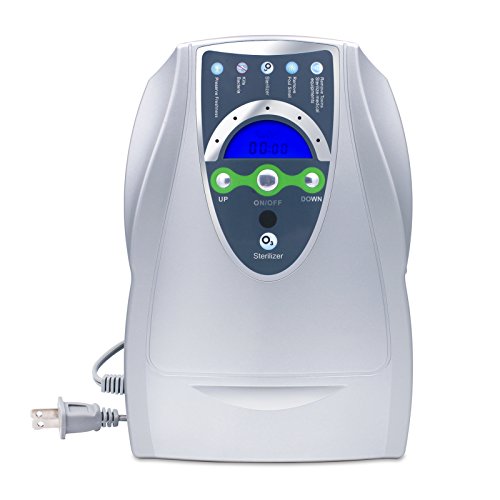
The WSTA model is a compact, portable option with over 500 mg/h ozone production, making it suitable for small grow rooms, offices, or temporary odor-control tasks. Its timer offers five preset durations (5 to 60 minutes), enabling quick treatments for localized odor sources or smaller spaces. While not as powerful as larger units, its portability and ease of use make it a practical on-the-go solution for quick room refreshes after transplanting, pruning, or minor waste management in a grow setup.
Use this option for small-scale tasks or as a supplementary unit alongside higher-output generators. Always operate in unoccupied spaces and ensure proper ventilation after treatment to maintain safe air quality for subsequent use of the room.
Buying Guide: Key Purchase Considerations And Comparisons
When choosing an ozone generator for a grow room, consider these factors to align with space, safety, and efficacy goals:
- Room size and ozone need: Higher-output units (e.g., 120,000 mg/h) are suited for larger grow rooms. For smaller spaces, mid-range models can provide effective deodorization without excessive treatment times.
- Treatment strategy: Determine whether you need rapid odor neutralization, long-term odor control, or multi-room coverage. Some units offer multi-mode or dual purification strategies (ozone plus ions) for deeper air treatment.
- Ventilation and safety: Ozone can irritate lungs; use only in unoccupied spaces and ventilate thoroughly after treatment. Adhere to timer cycles and waiting periods as recommended by manufacturers.
- Control and convenience: Digital controls, built-in timers, and smart features (like Wi-Fi control) can simplify repeated use in grow environments with variable schedules.
- Portability vs. capacity: Portable units are convenient for targeting specific areas, while high-capacity machines are better for larger rooms or ongoing odor challenges. Consider whether you need a single high-output unit or a combination of devices for different zones.
- Safety disclosures and restrictions: Some models may have regional availability or safety advisories. Ensure compliance with local regulations and product notices regarding use in inhabited spaces or shared properties.
- Maintenance and durability: Look for rugged construction (e.g., all-metal frames and durable plates) and availability of replacement parts or service options for long-term use in grow rooms.
In selecting an ozone generator for a grow room, weigh the balance between output, space, and safety. For spaces where odors from soil, feeding, or plant processing are frequent, higher-output units paired with clear ventilation plans tend to deliver more dependable odor control. For smaller tasks or portable needs, compact models provide flexibility without over-treatment.