When cutting nail-embedded wood or demolition materials, you need blades that resist nails, last longer, and cut cleanly. This guide highlights five top-performing nail-cutting blades and explains who each is best for. It’s ideal for contractors, DIY homeowners tackling fences, decks, or windows, and workshop pros needing reliable, long-lasting blades.
| Product | Best For |
|---|---|
| GOSHINE 10 Pack 9″ 6/12 TPI Bi-Metal Demolition Reciprocating Saw Blades | Heavy-duty nail-embedded wood and thick material demolition |
| WORKPRO 6-Piece Reciprocating Saw Blade Set | Versatile nails and wood cutting with organized storage |
| EZARC Obsidian Carbide Oscillating Saw Blades (3-Pack) | Hard metals, nails, bolts, and dense materials |
| ALEXEX 10 Pack 9″ 4/6 TPI Reciprocating Saw Blades | Nail-embedded wood and PVC with extended life |
| Diablo Demo Demon Carbide Teeth Reciprocating Blades (3-Pack) | General purpose cuts in wood, nail-embedded wood, plastic, and metal |
Notes: All blades listed are designed to handle nail-embedded wood and demolition tasks. This table is for quick comparison; read each blade’s details below to match your project needs and tool compatibility.
GOSHINE 9″ Bi-Metal Demolition Blades

Reference: GOSHINE 9-inch blades use a 6/12 TPI tooth pattern with a .05 inch (1.27 mm) thickness. They are built with a new generation bi-metal for higher hardness and longer life. Best for fast, rough outdoor cuts in wood with nails, fences, pallets, and nail-embedded windows. The thicker blade resists bending during heavy demolition tasks. Caution: not all metals are ideal for these blades; use on wood and light metal as specified.
WORKPRO 6-Piece Reciprocating Saw Blade Set
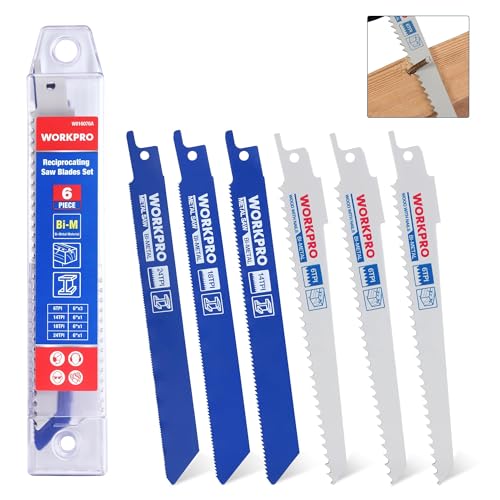
Reference: This 6-piece set includes nails-cutting blades that handle wood with nails and cut plastic pipes up to 50 mm. The saw blades are designed for faster cuts with increased durability, using bimetal construction that outperforms standard CRV blades. Best for DIY projects and professional tasks involving nailed wood and mixed materials. More suitable for lighter demolition and trim work; avoid heavy metal demolition with these blades.
EZARC Obsidian Carbide Oscillating Blades (3-Pack)

Reference: These blades use a carbide tooth design with TiCN coating for heat resistance and extended life. They are optimized for hard metals, nails, bolts, screws, and dense materials. Best for projects where nails and metal obstacles are frequent. Limitation: carbide blades tend to be more brittle under heavy prying or misalignment; use with care in tough, dense materials to prevent breakage.
ALEXEX 10 Pack 9″ 4/6 TPI Bi-Metal Blades

Reference: Bi-metal blades with 8% cobalt and non-stick coating claim up to 5x longer life, designed specifically for nail-embedded wood and PVC like pallets. Best for outdoor trimming, fencing projects, and rough-in work. Choose this if you want longer blade life in nail-in-cabinets or wood framing; caution: performance can vary with metal density and nail spacing.
Diablo Demo Demon Carbide Teeth Blades (3-Pack)

Reference: Diablo’s 9″ blades feature a variable tooth design for faster cuts with less vibration. Carbide teeth offer up to 50x longer life in wood and metal during nail-embedded work. Best for general demolition tasks and mixed-material cuts. Limitation: variable tooth blades can dull faster on very hard metals and require careful alignment to maximize efficiency.
Buying Guide
What should you consider when choosing nail-cutting blades?
- Material compatibility: For nail-embedded wood, bi-metal or carbide blades withstand nails and screws better than standard steel blades.
- Tooth design and cut life: Higher TPI (teeth per inch) usually yields smoother cuts; carbide teeth last longer on dense materials, but may be pricier.
- Blade thickness: Thicker blades resist bending on rough demolition but may cut more slowly; balance speed with durability.
- Coatings: Non-stick and protective coatings reduce gumming from resin and sap but verify compatibility with your tool family.
- Tool compatibility: Ensure the blade shank and length match your reciprocating saw or oscillating tool; universal shanks offer broad compatibility.
- Application notes: Some blades are optimized for nails in wood, while others are better for plastics or metal; select based on primary task.
FAQ
- What blade is best for nail-embedded wood?
A: Blades with bi-metal construction or carbide teeth, such as GOSHINE or Diablo variants, offer better durability when encountering nails. - Can carbide blades cut metal?
A: Yes, carbide blades handle metal better than standard steel blades, but check product claims for metal thickness suitability. - Are longer blades better for demolition?
A: Longer blades reach deeper cuts and reduce blade swaps in dense demolition work, but weight and control are considerations. - Is a non-stick coating necessary?
A: It helps reduce gumming from sap and resin, potentially extending blade life in wood-cutting tasks. - Should I buy a multi-pack or individual blades?
A: Multi-packs offer value and versatility for varied nails and materials, while singles may be ideal for specialized tasks. - What safety steps matter most?
A: Always wear eye protection, secure workpieces, and avoid twisting the blade; use proper feed pressure to prevent blade stress.