If you need a reliable metal cut off machine for precise, fast cuts on steel, aluminum, or pipe, this guide highlights five top options. These models are suited for shop tasks, fabrication projects, and DIY metalwork. Each entry includes who it’s best for, key strengths, and a practical limitation to consider. Use the following quick reference to compare features and choose a model that aligns with your cutting needs, workspace, and budget.
Quick comparison table (highlights):
- Abrasive Chop Saw (2200W) — Best for heavy-duty steel cutting; solid base and ergonomic design.
- VEVOR 14in Chop Saw (2300W) — Best for accurate, wobble-free cuts with easy angle adjustment.
- Evolution S355CPSL Dry-Cut Chop Saw — Best for clean, burr-free cuts with dry-cut tech.
- MAXXT Band Saw — Best for versatile material types and automatic cutting with wheels for portability.
- VEVOR 3500W Chop Saw — Best for high-power, adjustable-speed metal cutting with long blade life.
Abrasive Chop Saw With 14in Blade

The 2200W abrasive chop saw is designed for heavy steel cutting tasks, offering a robust ergonomic design and an upgraded motor for improved heat dissipation and overload resistance. It features a non-slip base and a stable clamping device to reduce wobble during cutting. Best for professional workshop use where long sessions and consistent, straight cuts are needed. A potential limitation is that it relies on abrasive disc wear; blade life will vary with material type and thickness.
VEVOR Abrasive Chop Saw 14in

Best for precise, high-friction clamping and consistent cuts. This model uses a thicker vise with wave patterns to enhance grip and reduce blade wobble, and its 80-tooth blade promises smooth finishes on high-pressure cuts. The 0-45° adjustable fence helps with angled cuts without extra tools. Choose this if you prioritize stable clamping and minimal blade wobble, but expect slightly more setup to align the workpiece for optimal results.
Evolution S355CPSL Dry-Cut Chop Saw

Best for clean, burr-free cuts with minimal heat, thanks to dry-cut technology and a tungsten carbide-tipped blade. This saw is portable and features a 0-45° adjustable miter and quick-release clamps for fast, precise positioning. It’s well-suited for professional metal fabricators needing dry-cut efficiency. Limitation: the dry-cut system may require careful debris management and is optimized for metal with lower heat output.
MAXXT 10-Amp Band Saw for Metal and More

Best for versatility and portability. This 10-amp band saw handles metal, wood, and composite materials with a 5-inch depth cut and adjustable cutting angles from 0 to 45 degrees. It features carrying wheels and a bright LED to illuminate the cut line, aiding accuracy. A potential limitation is that capacity is smaller than larger stationary cut-off setups, so it may be less suited for heavy-scale production runs.
VEVOR Chop Saw With 3500W Brushless Motor
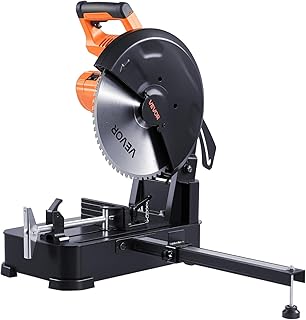
This model emphasizes high-power cutting with a 3500W brushless motor and a wide RPM range (750–1200). It supports 0–45° angled cuts and uses a stainless steel blade for long life and clean finishes. Best for heavy-duty, continuous metal cutting tasks where speed control and durability are important. Limitation: brushless power requires solid electrical supply and may be heavier than lighter-duty units.
Buying Guide
What should you consider when choosing a metal cut off machine?
- Cutting power and material type: Higher wattage and torque help with thick steel, pipe, and solid bars. Consider the blade type and its suitability for your target metals.
- Cutting precision: Look for features like stable vises, adjustable fences, and anti-wobble designs to ensure straight, repeatable cuts.
- Angled cutting capability: A 0–45° range is common; ensure the degree range matches your typical projects.
- Portability vs. capacity: Band saws offer flexibility and mobility, while dedicated chop saws may deliver larger cut capacity and speed for frequent, heavy cuts.
- Dust and debris management: Debris deflectors and efficient chip removal help maintain visibility and reduce cleanup time.
- Maintenance and blade life: Consider blade wear, replacement costs, and how easily blades are replaced or exchanged.
- Electrical requirements: High-power chop saws may require dedicated circuits or specific voltage (e.g., 240V) for consistent performance.
Frequently Asked Questions
- What is a metal cut off machine best used for? Best for straight, precise cuts in steel, pipe, and metal bars, improving efficiency in fabrication tasks.
- Do I need a dry-cut or wet-cut system? Dry-cut systems reduce heat buildup and burrs, suitable for clean finishes; wet-cut systems manage dust and may be preferred in dusty environments.
- Is a higher wattage always better? Higher wattage generally supports tougher cuts, but blade quality, feed rate, and maintenance also influence results.
- Can I use a band saw for metal cutting? Yes, band saws can handle metal with suitable blades and settings; they offer portability and flexibility for various materials.
- What safety features should I look for? Stable bases, blade guards, proper clamping, and debris management are important for operator safety and cut quality.
- How do I choose between a portable chop saw and a large floor-standing model? Portable models suit smaller shops or on-site work; floor-standing models provide higher capacity and stability for production tasks.