Discover the best linear rails for router sleds to improve stability, accuracy, and ease of use in CNC projects. This guide highlights five reliable options ideal for DIY enthusiasts, hobbyists, and small-shop machinists. Whether you’re building a wooden or metal router sled, these rails offer smooth motion, sturdy construction, and simple mounting. Each product is evaluated for who benefits most, with practical notes to help you decide between similar kits. The selections emphasize robustness, easy installation, and consistent performance in automated or semi-automated setups.
| Product | Rail Length | Blocks Included | Best For |
|---|---|---|---|
| VEVOR SBR20-2200mm Kit | 2200 mm | 4 blocks | Long, precise sleds for extended cuts |
| VEVOR SFC20-1000mm Kit | 1000 mm | 4 blocks | Compact, versatile DIY projects |
| SpeTool SBR/SCS20 Connector | Works with 20 mm rails | N/A | Dust collection and quick assembly |
| VEVOR SBR20-800mm Kit | 800 mm | 4 blocks | Budget-friendly, small-footprint sleds |
| VEVOR SBR16-1000mm Kit | 1000 mm | 4 blocks | Smaller rails with solid performance |
VEVOR Linear Rail, 2 PCS SBR 20-2200mm

The VEVOR SBR20-2200mm kit includes two 2200 mm rails and four SBR20UU carriage blocks. Dynamic load per block is 882 N, static load per block 1370 N. The components use carbon steel rails and an aluminum-housed, chrome-plated surface for rust resistance and durability. Built-in aluminum blocks and ball bearings provide smooth, low-friction sliding for long, uninterrupted motion.
Best for: Builders needing long, straight travel with high stability, such as extended router sled spans or large surfacing setups. Choose this if you require maximum travel length without sacrificing smoothness.
Limitation: Longer rails require precise alignment during assembly; ensure the mounting surface is flat and true to avoid binding. Also, the kit uses separate blocks, so compatibility with optional accessories should be checked.
VEVOR Linear Rail Slide SFC20-1000mm

This kit features SFC20-1000 mm rails with four SC20 slide blocks and four rail supports. The rails and blocks use chrome-plated carbon steel and aluminum housings for rust resistance and durability. The fully sealed SC blocks minimize dust intrusion while maintaining smooth operation. Dynamic load per block is 882 N; static load per block is 1370 N.
Best for: Small-to-mid sized router sleds or automation projects where a compact 1-meter travel is sufficient. It’s a solid all-around choice for DIY CNC workstations requiring dependable, quiet motion.
Limitation: The kit does not include pre-drilled mounting patterns for all sled configurations; verify your chassis compatibility and drillings before assembly.
SpeTool Linear Rail Router Sled Connector
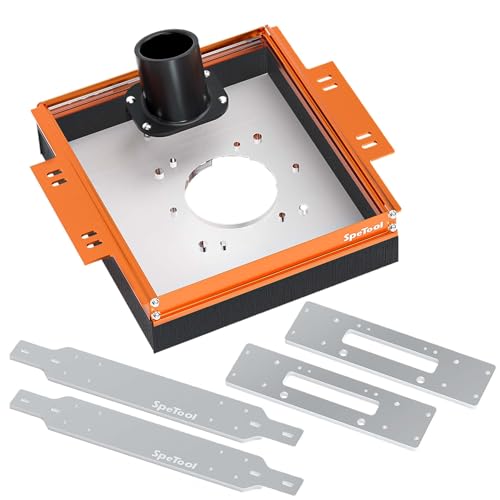
The SpeTool connector is designed to work with SBR20UU and SCS20UU blocks on 20 mm rails. It includes a pre-drilled router plate with a dust collection port, aiding cleanup during routing tasks. Note that the actual linear rail is not included; this product is a connector plate to expand dust-collection efficiency and interface with 20 mm rails.
Best for: Builders who want an integrated dust-collection solution for router sleds and need a quick install for acrylic or wooden router plates. It’s advantageous when existing 20 mm rails are in use and dust control is a priority.
Limitation: The product requires separate 20 mm rails to pair with, so it’s not a standalone rail kit. Please prepare your own vibration-damping tape as recommended to reduce wobble on acrylic plates.
VEVOR Linear Rail Slide SBR20-800mm

This kit includes two 800 mm rails and four SBR20UU blocks. The system uses carbon steel rails with chrome-plated surfaces and aluminum housing for durability and rust resistance. It is designed for smooth, low-noise sliding, supported by built-in ball bearings for consistent motion.
Best for: Budget-conscious buyers building smaller router sleds or compact CNC rigs where space is limited but reliability remains essential. It offers a good balance of cost, size, and performance.
Limitation: Shorter travel length limits the span of a sled; ensure the project scale matches the 800 mm rails to avoid overhang issues.
VEVOR Linear Rail, 2PCS SBR20-1500mm

The SBR20-1500 mm kit includes two 1500 mm rails and four SBR20UU blocks. Dynamic load per block is 882 N, static load per block 1370 N. Chrome-plated carbon steel rails with aluminum housings provide corrosion resistance and long life. This set emphasizes a stable linear guiding system suitable for mid-to-large CNC tasks.
Best for: Projects needing a longer reach than 1000 mm but not as long as 2.2 meters. It suits medium-sized router sleds or automation tasks requiring steadier, longer travel without complexity.
Limitation: Longer rails require careful alignment and may increase the overall weight of the sled; plan mounting and support structure accordingly.
Buying Guide: How To Pick The Right Linear Rails For A Router Sled
What to consider when choosing a linear rail kit for a router sled. Focus on travel length, load capacity, material quality, and compatibility with existing hardware. A solid sled relies on a stable rail-to-block match and proper mounting surfaces.
Travel Length And Application
Longer rails enable extended travel for larger sleds, reducing the need for joints or multiple segments. If you work on full-width slabs or long workpieces, a 2,000 mm rail can dramatically improve routing consistency. For compact benches, 800–1000 mm rails are often sufficient.
Load Capacity And Smoothness
Look for rails with chrome-plated carbon steel and robust aluminum housings. Dynamic load per block around 882 N and static around 1370 N are common figures for mid-range kits and indicate good resistance to sag and deflection under typical router loads.
Material Quality And Corrosion Resistance
Chrome plating reduces rust and wear. Carbon steel rails paired with aluminum carriers balance strength and lightness. Ensure the kit includes properly sealed or low-friction blocks to minimize dust intrusion and noise.
Installation And Compatibility
Verify mounting hole patterns, plate sizes, and hardware availability. Some products require extra components like dust-collection ports or vibration-damping tape. For DIY sleds, confirm that the rails match the diameter of your blocks (e.g., 20 mm or 16 mm systems) and that you have a level, flat mounting surface.
Maintenance And Longevity
Periodic cleaning and lubrication extend rail life. Chrome-plated surfaces resist corrosion, while aluminum housings dissipate heat and reduce wear. Regular checks for alignment and clearance help maintain accuracy over time.
User Scenarios To Consider
- Long, wide sleds for surfacing or joint-free routes: choose 1800–2200 mm rails with multiple carriage blocks.
- Compact, desktop routers or small CNC tasks: 800–1000 mm kits with four blocks are practical.
- Dust management: consider a connector or dust-collection-friendly accessory alongside rails.
FAQs
- What rail length should I choose for a router sled? For large sleds, longer rails (1500–2200 mm) reduce joints; for compact projects, 800–1000 mm works well.
- Do I need to replace blocks if I change rails? Blocks are designed for matching rail diameters (e.g., SBR20UU with 20 mm rails). Confirm compatibility before mixing kits.
- Are chrome-plated rails necessary? Chrome plating improves rust resistance and longevity, especially in dusty shop environments.
- Should I buy a complete kit or mix rails and blocks? Complete kits ensure matched tolerances and easier alignment, while modular setups allow custom lengths.
- Is dust collection important? Yes; products with integrated dust ports or compatible connectors help keep work surfaces cleaner and extend mechanism life.
- Can I install these on any workbench? A flat, rigid, and level mounting surface is essential. Check that your bench can support the rail length without flex.