If you’re choosing a hole punch for steel, you want power, reliability, and ease of use. This guide features five leading options built for steel, iron, and mixed metal work. It helps professionals and serious DIYers pick the best tool for fast, burr-free punching while highlighting each model’s ideal user. The buyers’ table below summarizes who benefits most from each pick.
| Product | Best For |
|---|---|
| AMZCNC 110V 1200W Electric Hydraulic Metal Hole Punch Tool | Small to mid-size fabrication, hobbyists needing fast, burr-free punching |
| 25T Heavy Duty Electric Hydraulic Hole Puncher – CPM25 | Medium-thickness metal plates up to 12 mm, professional use |
| Neiko 02612A Hand Held Power Punch Kit | Lightweight, portable punching on thin sheets |
| 1400W Electric Hydraulic Hole Puncher – 22 Ton, AMPSPART | Heavy-duty, professional fabrication with wide material range |
| 1400W Electric Hydraulic Hole Puncher – DEFIPRO MHP-20 | Versatile, portable heavy-duty punching for varied metals |
AMZCNC 110V 1200W Electric Hydraulic Hole Punch Tool

Best for compact, quick punching of steel plates, this 110V electric hydraulic puncher delivers fast results with a simple one-button start. It covers a wide punching range for iron/steel, copper, and aluminum, including angle iron. It is particularly suitable for workshops needing repeated punching with minimal burrs. The tool offers two working modes: base-and-platform for stable, precise punching and an auxiliary-handle mode for labor-saving operation. Caution: ensure correct die size is chosen for each material to avoid misalignment.
25T Heavy Duty Electric Hydraulic Hole Puncher – CPM25 (Red)

Best for mid-thickness material and professional environments, this 25-ton puncher uses a 1700W motor to deliver high power and fast punching speeds (2-3 seconds). It can punch through metal plates up to 12 mm and is built for durability with a forged working head and a hard-anodized oil tank. Two operation modes support base-and-platform work or handheld punching at angles. Consider this model if you need robust performance on thicker steel and longer tool life, but be aware of its heavier footprint.
Neiko 02612A Hand Held Power Punch Kit
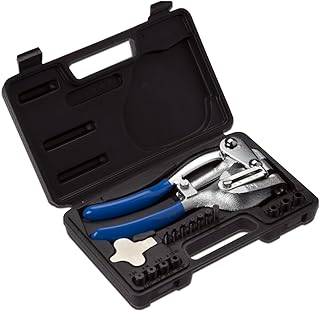
Best for portability and thin-sheet projects, this hand-held kit uses chrome vanadium steel punches hardened to 52 Rockwell for clean holes through up to 16 gauge sheet metal. It comes with seven quick-change punches and dies, covering common hole sizes. The tool is lightweight and easy to transport, making it ideal for fieldwork. Limitation: not suited for thick or high-tension metal where hydraulic power would be preferable.
1400W Electric Hydraulic Hole Puncher – 22 Ton (AMPSPART)

Best for heavy-duty fabrication, this 22-ton hydraulic puncher offers broad material compatibility, including steel, iron, copper, and aluminum plates, with 4#–8# angle steel and 10#–16# channel steel. It punches through up to 5/16″ steel and 3/8″ copper/aluminum quickly (2–3 seconds). The tool supports two operation modes and features a base or handheld setup for versatile site use. Limitation: heavier and less portable than lighter models, suitable mainly for shop work or job sites with a stable setup.
1400W Electric Hydraulic Hole Puncher – DEFIPRO MHP-20

Best for versatile, portable heavy-duty punching, this DEFIPRO model mirrors the 1400W hydraulic design with two operation modes for base-mounted precision or handheld operation. It handles steel, iron, aluminum, and copper plates, with a punch range suitable for channels and angle irons. A caution is to verify die compatibility for specific thicknesses to avoid burrs or incomplete punching when operating near the tool’s limits.
Buying Guide: How To Choose The Right Hole Punch For Steel
Power versus portability: Lighter, hand-held tools are convenient for small jobs and field work, while hydraulic machines with higher tonnage excel on thicker materials and repeated use.
Material compatibility: Confirm the drill range for steel, iron, aluminum, copper, and various shapes like angle and channel iron. Select a punch with dies that cover your common hole sizes.
Where you work: If you have a fixed shop, a base-mounted unit provides stability and precision. For jobs in confined spaces, a handheld or portable setup can avoid excessive setup time.
Die options: Ensure the included dies match your typical hole sizes and that they are easy to change. Consider kits with multiple dies for flexibility.
Maintenance and durability: Look for forged heads, hard-anodized oil tanks, and robust cylinders for longer service life and consistent performance in metal fabrication tasks.
Safety and burr control: Burr-free surfaces improve fit and finish. One-button starts and stable punching surfaces help reduce operator fatigue and errors.
Frequently Asked Questions
- What thickness of steel can a 22-ton punch reliably handle?
Generally up to about 5/16″ (8 mm) for standard dies, depending on die size and punch design. - Do hydraulic hole punchers require special maintenance?
Yes. Regularly check hydraulic oil, seals, and die alignment to maintain smooth operation and prevent burrs. - Is a base or handheld setup better for accuracy?
Base-mounted units offer higher precision and repeatability; handheld setups are easier for tight spaces and on-site work. - Can I punch any metal with a standard punch die?
Not all metals are compatible. Use appropriate dies for steel, aluminum, copper, and avoid overly brittle materials that could crack the die or cause misalignment. - What hole sizes are commonly supported?
Dies typically cover common sizes such as 3/32″, 1/8″, 5/32″, 3/16″, 7/32″, 1/4″, 9/32″, but always check the included dies for your model. - Are these tools suitable for professional fabrication?
Yes, many models are designed for professional use with durable construction and higher punching forces, suitable for ongoing projects.