When you need reliable soil and asphalt compaction, a heavy-duty plate compactor is essential. This guide highlights five top options, explains who they’re best for, and compares their key strengths and limitations. Ideal buyers include professional contractors, landscapers, and DIYers tackling driveways, walkways, or patios. The table below summarizes the five selections to help you compare at a glance.
| Product | Engine / Power | Plate Size | Max VPM | Best For |
|---|---|---|---|---|
| VEVOR 6.5HP Plate Compactor | 6.5 HP / 196 cc | 12 x 351 in² | 5600 | Heavy-duty paving, large areas |
| WEN 6.5HP Plate Compactor | 6.5 HP / 196 cc | — | 5700 | Transportable, versatile |
| BILT HARD Plate Compactor Rammer | 6.5 HP / 196 cc | 21 x 14.5 in | 5500 | Balanced for dirt and asphalt |
| SuperHandy Plate Compactor with 7HP | 7 HP | 20 x 15 in | 5500 | Dust control with water tank |
| BETTERI Plate Compactor 6.5HP | 6.5 HP | 20 x 15 in | 5400 | EPA-compliant, easy transport |
VEVOR 6.5HP Plate Compactor

Best for heavy-duty paving projects, this model delivers a 6.5 HP gasoline engine and 5,600 vibrations per minute, with up to 12 inches of compaction depth. The enlarged 351 in² stamped plate supports rapid coverage, up to about 7,300 ft²/h, making it suitable for larger driveways or walkways. A durable 8 mm plate resists deformation under tough tamping tasks. Mobility is aided by wide wheels and a weight around 146.6 lbs for road-ready handling. Use this when you need consistent, high-volume compaction with solid durability. Caution: heavier unit may require more effort to transport on stairs or tight sites.
Who it’s best for: contractors working on sizeable pavement jobs or landscapers who need fast, reliable density. Why selected: top combination of power, plate area, and depth supports efficient, dense compaction on hard substrates.
WEN 6.5HP Plate Compactor
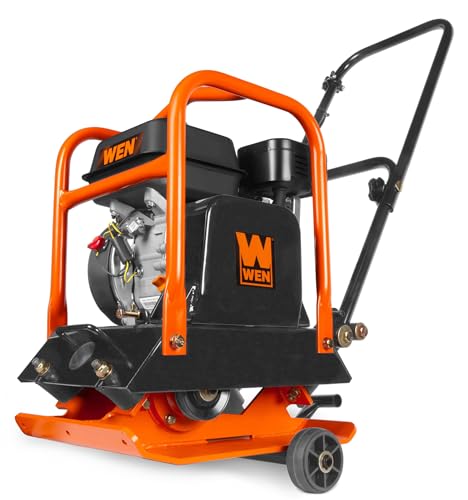
Best for versatile job sites and easier transport, this model provides a 6.5 HP engine with up to 3,350 lbs of compaction force at 5,700 blows per minute. The single-direction plate travels up to 125 feet per minute, helping you cover ground quickly. A wheel kit and lifting handles come standard for straightforward relocation and storage. Choose this if you want balanced power and mobility for residential paths or small commercial projects. Caution: no combined water tank for dust suppression is noted in the spec.
Who it’s best for: compact jobs where easy maneuverability matters as much as raw power. Why selected: strong vibration rate with convenient transport features makes it a solid all-around choice.
BILT HARD Plate Compactor Rammer

Best for balanced density work on paving and landscaping, this 6.5HP, 196cc machine delivers up to 2,500 lbs of compaction force at 5,500 vibrations per minute and an 8 mm-thick plate with 21 x 14.5 inches of area. The design emphasizes easy operation, with a 126 lb weight that remains manageable for most adults, and folding transport wheels for mobility. This unit is ideal when you need reliable density with manageable weight. Caution: not the deepest compaction on heavy soils compared to larger machines.
Who it’s best for: installers seeking a portable, efficient plate tamper for patios and walkways. Why selected: it combines solid power, a roomy plate, and easy handling at a reasonable weight.
SuperHandy Plate Compactor With Water Tank

Best for projects requiring dust control during soil and aggregate compaction, this 7 HP gas engine unit provides up to 4,200 lbs of compaction force and a 12-inch maximum depth. A built-in water tank feeds a sprinkler system to suppress dust and improve visibility on site. The plate measures 20 x 15 inches, and the unit includes folding wheels for easier transport. Choose this for dusty environments or where water-assisted dust suppression is preferred. Caution: water tank adds weight and requires refilling during longer jobs.
Who it’s best for: contractors concerned with dust control in open-site operations. Why selected: the integrated water system helps maintain cleaner workspaces and may reduce regulatory concerns.
BETTERI Plate Compactor 6.5HP

Best for EPA-compliant, family-friendly projects requiring straightforward operation, this 6.5HP unit delivers 2,500 lbs of compaction force and 5,400 vibrations per minute. The 20 x 15 inch plate offers a compact footprint with a 10-inch compaction depth. Transport wheels and folding handles aid storage and mobility. This model suits less heavy-duty sites where ease of use and compliance matter. Caution: performance is solid but not the deepest density compared with higher-end models.
Who it’s best for: homeowners and small contractors seeking a capable, easy-to-use unit with EPA compliance. Why selected: reliable performance in a compact, user-friendly package.
Buying Guide
What should you consider before buying a heavy-duty plate compactor?
Power and vibration: Higher horsepower and vibration rates generally yield faster, denser compaction. Look for 5,000–5,600 VPM and engine sizes around 6.5 HP for most heavy-duty tasks.
Plate size and depth
A larger plate covers more area per pass and can reach greater depths. For driveways and patios, aim for at least 20 x 15 inches with a depth around 8–12 inches where possible.
Mobility and weight
Consider how easy it is to move, lift, and store the machine. Folding handles and transport wheels help, especially on multi-site projects or stairs.
Durability and materials
Look for stamped or heavy-gauge plates (8 mm or thicker) and a sturdy frame. A powder-coated finish supports rust resistance in outdoor environments.
Dust control and environmental considerations
Models with built-in water tanks reduce dust on dusty sites, improving air quality and site cleanliness. If dust is not a concern, you can prioritize weight and cost.
Maintenance and availability
Check for readily available replacement parts, simple maintenance routines, and reputable brands to minimize downtime on long projects.
FAQ
- What is a plate compactor used for? It densifies soil, gravel, asphalt, and other media to create a stable base for foundations, patios, sidewalks, and driveways.
- How deep can a typical plate compactor compact? Most mid-range units reach 8–12 inches in depth, depending on plate design and ground conditions.
- Which features matter most for dust control? Built-in water tanks, sprayer systems, and plates that work well with moisture help suppress dust effectively.
- Are electric plate compactors better for enclosed spaces? Yes. Electric models produce no emissions, making them suitable for garages, basements, and other confined areas.
- Is a bigger plate always better? A larger plate increases coverage per pass but adds weight and maneuverability considerations. Choose based on project size and site access.
- How do I choose between gas and electric options? Gas engines offer mobility and power for larger outdoor jobs; electric options are quieter and better for confined spaces.