When you need to detect hidden moisture behind walls, floors, or concrete, a hammer probe moisture meter is a practical pick for professionals and serious DIYers. This guide highlights five top options that balance deep sensing, rugged build, and compatibility with common meters. The best picks cater to contractors, restorers, woodworkers, and building inspectors who require accurate, in-wall readings and reliable data trends over time.
| Product | Best For | Why It Stands Out |
|---|---|---|
| Extech MO290-HP Hammer Probe | Deep penetration in concrete, wood, drywall | Heavy-duty, compatible with MO290/MO295 meters for deep readings |
| FLIR MR07 Hammer Probe | Non-destructive and ambient-aware testing | Auto temperature compensation, material library, remote readings via FLIR Tools |
| Delmhorst 26-ES | Precision in remote readings | Solid shaft, precise gradient measurements for wood |
| Protimeter BLD9800-C-R MMS3 | Comprehensive building moisture | Pin mode and non-invasive scanning for multiple materials |
| Tramex MEX5 Kit | Dual-depth and holistic surveys | Moisture Encounter with hammer probe for drywall and wood |
Extech MO290-HP Hammer Probe – Deep Moisture Detection

Best for heavy-duty, deep moisture readings in dense materials. The Extech MO290-HP is designed to work with Extech MO290 and MO295 meters, expanding their capability beyond standard probes. It’s ideal for field use on concrete, wood, and drywall where hidden water damage must be confirmed before restoration work. The hammer handle and robust pins support aggressive probing through hard surfaces, providing reliable data in industrial settings or restoration projects. Use this when you need a true hammer probe that can penetrate tough substrates and deliver accurate gradient readings.
- Best for: Deep penetration in concrete, wood, drywall
- Why chosen: Expands MO290/MO295 capabilities for in-wall detection
Caution: The heavy-duty pins may leave small marks on finished surfaces; plan probing around visible finishes or use test zones first.
FLIR MR07 Hammer Probe with Shoulder Bag
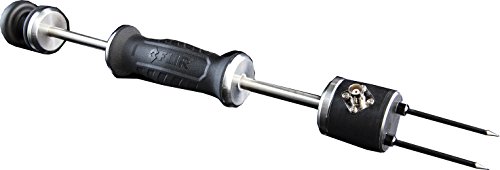
The FLIR MR07 combines a hammer probe with smart measurement features. It automatically measures pin moisture, compensates for ambient temperature, and offers a built-in material library with 11 groups, including wood, drywall, concrete, plaster, and brick. The ability to wirelessly connect to FLIR Tools Mobile for remote viewing makes it a strong companion for on-site inspectors who need quick, shareable readings. This option is best for professionals who value speed, material-aware testing, and remote access to data.
- Best for: Material-aware moisture testing with remote viewing
- Why chosen: Automatic pin readings plus temperature compensation, broad material library
Caution: Depending on the library, some specialized materials may require manual reference checks for precise interpretation. Ensure the meter is updated with the correct material group before testing.
Delmhorst 26-ES Hammer Electrode

The Delmhorst 26-ES is a remote moisture sensing electrode accessory designed for J-2000, J-LITE, and J-4 meters. It features a 10″ solid steel shaft for precision moisture gradient measurements without cutting the wood, enabling accurate data at exposed points. Best for professionals needing controlled, in-situ readings over larger timber sections or when testing hidden moisture gradients is essential. It’s well-suited for specialized woodwork projects and restoration where precision matters.
- Best for: Remote, precise moisture gradient readings in wood
- Why chosen: Long shaft enables deep, targeted measurements without cutting the wood
Caution: Not ideal for rapid, surface-only checks; more suited to deeper, controlled measurements.
Delmhorst JX-30/P01 Kit

The JX-30/P01 is a complete digital wood moisture meter package that includes the 26-ES hammer electrode, a carrying case, extra pins, and a large display with auto backlight. It stores up to 100 readings with high, low, and average statistics. This kit is optimal for fieldwork where durability and data logging matter, such as construction sites or restoration projects involving multiple wood samples. Choose this if you need a robust all-in-one solution for both surface and core moisture trends.
- Best for: All-in-one wood moisture testing with data logging
- Why chosen: Large display, long-term data capture, included hammer electrode
Caution: The digital readout may require calibration for specific wood species; always verify against a known standard when starting a new project.
Tramex Building Survey EZ Kit BSIZK

The Tramex EZ Kit blends a Moisture Encounter MEX5 meter with a hammer probe for both non-destructive and pin moisture testing. This dual-depth system helps you compare surface and core moisture, with a shallow depth up to 9 mm and a deep depth up to 30 mm. The kit also includes a built-in hygrometer and infrared surface thermometer, enabling a more comprehensive moisture assessment. It’s best for survey work across drywall, wood, flooring, and various building materials where substrate influence must be minimized.
- Best for: Dual-depth moisture surveys and combined reading types
- Why chosen: Non-destructive and pin testing in one compact kit
Caution: The depth range may be insufficient for very thick materials; pair with a deeper probe if needed.
Buying Guide
What matters most when choosing a hammer probe moisture meter
Material depth and accuracy: Consider how deep you need to measure. For concrete and dense wood, choose probes designed for in-wall penetration and deep readings.
Compatibility and integration: If you already own a meter, prioritize hammer probes compatible with that model to maximize value.
Durability: Fieldwork often means harsh environments. Look for rugged construction, secure pins, and solid handles.
Reading features: Temperature compensation, material libraries, and data logging help interpret results quickly and reliably.
Portability: For on-site inspections, a probe with a compact form factor and integrated carrying options can save time.
How to use hammer probes effectively
- Plan the test path to cover potential moisture paths, such as along studs, plates, or concrete joints.
- Take multiple readings at different depths if possible to map moisture gradients.
- Document ambient conditions; some probes compensate for temperature or require this data.
- Combine pin tests with non-invasive checks when possible to minimize surface damage.
Tips for specific scenarios
- New construction: Use dual-depth kits to confirm consistent moisture levels across materials.
- Water intrusion: Start with non-invasive scans to identify suspect zones, then pin measurements for confirmation.
- Wood restoration: Prefer long-handle electrodes to access hidden moisture without cutting into material.
Comparison snapshot
- Best for deep detection in dense materials: Extech MO290-HP
- Best for ambient-aware, remote-ready readings: FLIR MR07
- Best for remote, precise wood gradients: Delmhorst 26-ES
- Best for comprehensive building moisture with non-invasive options: Protimeter BLD9800-C-R MMS3
- Best all-in-one wood testing kit with data logging: Delmhorst JX-30/P01 Kit
FAQ
- What is a hammer probe moisture meter best used for?
They are ideal for penetrating hard surfaces to reveal hidden moisture in wood, drywall, and concrete, especially when traditional surface tests are inconclusive.
- Do hammer probes require specialized training?
Basic operation is straightforward, but accurate interpretation benefits from training in moisture measurement principles and substrate differences.
- Can hammer probes be used on all building materials?
Most are suitable for wood, drywall, concrete masonry, plaster, and similar materials; always check the manufacturer’s material compatibility.
- Should I use pin or non-destructive tests first?
Non-destructive tests are best for initial surveying; use pin tests for precise moisture content at specific points.
- Is data logging important for moisture work?
Yes, it helps track moisture trends over time and supports documentation for remediation or restoration projects.
- How do I choose between dual-depth and single-depth probes?
Dual-depth probes provide surface and core readings for comparisons, while single-depth probes offer faster, targeted checks.