When replacing or upgrading an industrial-grade power setup, choosing a generator that combines reliability, fuel versatility, and user-friendly features is essential. This article highlights five capable options suitable for commercial use, construction sites, emergency backups, or large outdoor events. Each model offers strong wattage, portability, and practical safety features to keep equipment and personnel powered safely.
| Product | Brand | Power (Watts) | Fuel/Type |
|---|---|---|---|
| Power Equipment 4400 Watts Inverter Generator | Oxseryn Store | 3400 running / 4400 peak | Gas |
| Westinghouse 12500 Watt Dual Fuel | Westinghouse Store | 12500 peak / 9500 run (gas) | Gas/Propane |
| 4400-Watts Inverter Open Frame Generator | Oxseryn Store | 3400 running / 4400 peak | Gas |
| Westinghouse 14500 Peak Watt Tri-Fuel | Westinghouse Store | 13,500-14,500 peak depending on fuel | Gas/Propane/Natural Gas |
| Solar Powered Generator 200W | Apowking Store | 146Wh battery, 200W peak | Solar |
The following sections review each model’s strengths, supported outlets, runtime expectations, and notable safety features. This comparison aims to assist buyers evaluating industrial-grade options for consistent performance, whether for job sites, backup power, or heavy-duty outdoor usage.
Power Equipment 4400 Watts Inverter Generator

The Power Equipment 4400 Watts Inverter Generator delivers 3400 running watts with a 4400 peak, making it suitable for RVs, job-site tools, and emergency home backup. It includes two 120V AC outlets, a 12V DC port, and an RV-ready connection for versatility. An ECO mode helps optimize fuel use, while a two-gallon tank provides extended operation. The design emphasizes portability with a compact open-frame configuration and relatively quiet operation for on-site use.
Key features include inverter technology for clean power, low oil shutdown, and overload protection. The unit is designed to run up to roughly 14 hours at 25% load, aiding reliability during long shifts or outages. This model is a practical fit for contractors and operators who require steady, portable power with multiple outlet options for various tools and devices.
Westinghouse 12500 Watt Dual Fuel

This Westinghouse dual-fuel generator combines high output with flexible fuel options. It provides up to 12,500 peak watts (gas) and 11,200 peak watts (propane), with running watts listed at 9,500 (gas) and 10,500 (propane). The unit includes remote electric start, a digital hour meter, and a VFT display for real-time voltage, frequency, and hours. A 6.6-gallon tank offers substantial runtime, and the transfer-switch-ready design makes it well-suited for seamless home or small commercial backup power.
Outlets include multiple 120V receptacles, a 30A RV outlet, and a 50A 120/240V connection, all with safety features like rubber outlet covers. With the heavy-duty 457cc Westinghouse engine and automatic low-oil shutdown, this model emphasizes reliability for extended outages and demanding workloads. It is a strong option for larger homes, workshops, or temporary job-site power with multiple circuits to manage.
4400-Watts Inverter Generator, Open Frame
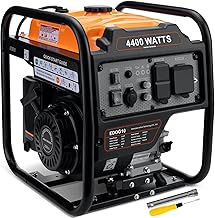
This model mirrors the 4400-watt inverter line with a 3400 running watt rating and 4400 peak. It adds a 30A RV outlet alongside 2x120V and a 12V DC port, giving greater compatibility for equipment and living spaces requiring RV-grade power. The 2-gallon tank and ECO mode contribute to fuel efficiency and extended operation, while the inverter technology helps maintain stable power for sensitive devices. It’s a practical choice for mobile work units, small businesses, or disaster readiness kits needing dependable power on the go.
Safety features include overload protection and low-oil shutdown. The unit’s portability and open-frame design support easy transport to job sites and campsites. Expect up to about 14 hours of runtime at lighter loads, making it reasonable for daily deployments or overnight use at remote locations.
Westinghouse 14500 Peak Watt Tri-Fuel

Designed for heavy-duty backup power, this tri-fuel generator supports gasoline, propane, or natural gas. It delivers up to 14,500 peak watts and 11,500 running watts on gasoline, with propane and natural gas ratings adjusted accordingly. A 550cc Westinghouse engine underpins reliable performance, and a sizable fuel tank with gauge supports long runtimes—up to 19 hours on gasoline and7 hours on a 20-pound propane tank. It is ideal for large homes, workshops, or remote sites requiring substantial, flexible power sources.
Convenient features include remote electric start, a digital display for voltage and hours, and multiple outlets with protective covers. The transfer-switch-ready design aids seamless integration with home electrical systems, reducing manual reconfiguration during outages. This model is best suited for users needing maximum wattage with fuel versatility across various scenarios.
Solar Powered Generator 200W Peak/100W Rated

This solar-powered option uses a compact 146Wh battery with 200W peak output and includes a 40W solar panel kit. It’s designed for portable, low-to-mid power needs, such as charging laptops, phones, cameras, and small electronics during camping, emergencies, or remote work sites. It offers seven outlets (two 110V AC, USB-C and USB-A, plus DC 12V) to support a range of devices. Lightweight and highly portable, it fills the niche of quiet, solar-reliant power that can supplement other generators or operate small loads in off-grid settings.
While not a high-wattage primary generator, its eco-friendly energy source and portability make it a practical complement to larger systems. Users should consider weather exposure, panel efficiency, and charge/discharge cycles when planning extended off-grid operation or flexibility to shift from fossil fuels to solar energy.
Buying Guide: Key Purchase Considerations
When selecting a generator for industrial use, consider these core factors to balance performance, safety, and cost:
- Power needs: Assess peak and running watts for all essential tools and appliances. Plan for some overhead to cover startup surges and future additions.
- Fuel flexibility: Dual- or tri-fuel options offer resilience during fuel shortages or varied availability, particularly for remote sites.
- Outlets and connectivity: Ensure the unit provides the right mix of outlets (120V, 240V, RV, USB) and that transfer-switch compatibility is available for seamless home or facility integration.
- Runtime and fuel capacity: Longer runtimes reduce refueling interruptions. Tank size and fuel gauge aid planning for extended outages or job-site schedules.
- Fuel efficiency features: ECO or inverter modes help maximize runtime and reduce operating costs on routine work.
- Portability vs. durability: Open-frame designs are lighter and easier to move, but enclosures may protect against dust, moisture, and noise in harsh environments.
- Safety features: Low-oil shutoff, overload protection, and spark-arresting designs minimize risk in demanding settings and improve reliability.
- Noise considerations: Industrial sites may require quieter operation; consider models with low-noise engineering for compliant and neighbor-friendly work.
Evaluating these dimensions against the project scope—site size, expected outage duration, and crew requirements—helps identify the best-fit model. For large homes or facilities with high continuous load, prioritize higher wattage and robust fuel options. For mobile operations or camping, portability and multiple outlet configurations may be more impactful. Solar options provide clean power supplements, particularly where quiet operation is paramount or fuel supply is limited. Always verify compatibility with local electrical codes and transfer switch requirements before installation or use.