When you need to cut, scarify, or level concrete quickly, a gas-powered grinder is often the most efficient choice for outdoor work or job sites without easy access to electricity. This guide highlights top gas-powered options and clearly explains who each tool is best for. Whether you’re preparing a road, a driveway, or a large slab, these units offer robust horsepower, portable operation, and machine-specific advantages to fit different project demands.
Buyer note: Below you’ll find five strong picks that balance power, versatility, and ease of use. A quick summary table is provided to compare core traits such as engine size, typical output, and standout features. Use this to narrow down which model aligns with your yard, pavement, or demolition tasks.
| Product | Engine/Power | Best For | Key Benefit |
|---|---|---|---|
| Tomahawk Gas 8” Scarifier + Drum Kit | 5.5 HP Honda GX160 | Heavy-duty scarifying and prep | High productivity per pass |
| Tomahawk Gas 8” Scarifier (Drum Kit Only) | 5.5 HP Honda GX160 | Surface prep with budget versatility | Scarification without drum kit |
| Tomahawk 8” Road Planer Asphalt Grinder | 5.5 HP Honda Gas Engine | Road repair, asphalt prep | Fast material removal and blade-change ease |
| IOENC Gasoline Stump Grinder (12” Blade) | 2.9KW / 78.5cc | Heavy concrete cutting and demolition | Hefty cutting depth and RPM |
| VEVOR 10-Inch (Gasoline) Stacked-Head Alternative | Gasoline-powered option | Alternative gas-powered option | Solid grinding capability with extra blade setup |
Tomahawk Gas 8” Scarifier With Drum Kit
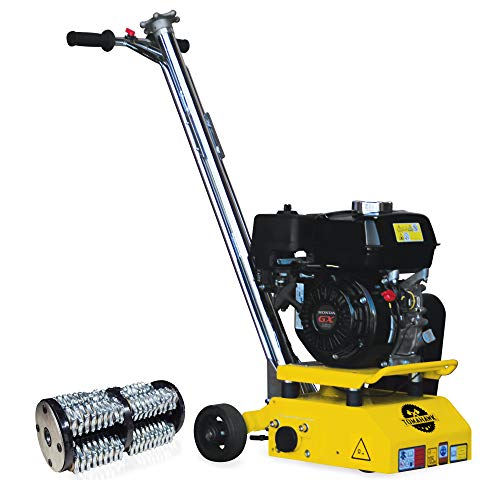
Engine: Air-cooled 163 cc / 5.5 HP Honda GX160. Application: Scarifies 350–500 ft2 per hour at 1/8″ depth; removes traffic lines at 800–1,000 linear ft per hour. This model is best for heavy-duty surface prep where a drum kit provides efficient material removal and a robust engine handles demanding tasks.
Who it’s best for: Contractors working large outdoor surfaces needing quick scarification and traffic-line removal. Why selected: The combination of a reliable Honda engine and a drum kit enables faster material removal per pass than smaller machines. Limitation: Heavier unit with more frequent maintenance considerations than smaller electric options.
Tomahawk Gas 8” Scarifier Only

Engine: Air-cooled 163 cc / 5.5 HP Honda GX160. Application: Scarifies 350–500 ft2/hour at 1/8″ depth; removes traffic lines at 800–1,000 linear ft per hour. Best for projects where only scarifying is required without a drum kit setup.
Who it’s best for: Builders focusing on surface profiling or removal of thin lines without extra drum attachments. Why selected: Lightweight scarifying capability with a strong Honda engine for reliable performance. Limitation: No drum kit means lower versatility for certain heavy-duty applications.
Tomahawk 8” Scarifier Road Planer Asphalt Grinder

Engine: 5.5 HP Honda Gas Engine. Application: Works up to 4 times faster than traditional methods; 360° adjustable handles; easily change blades in less than 2 minutes. Best for: Road repair and asphalt surface prep where speed and ease of blade replacement matter. Why selected: The design emphasizes operator comfort and faster blade changes during long jobs. Caution: Asphalt and roadwork generate significant vibration; ensure appropriate PPE and operator training.
IOENC Gasoline Stump Grinder, 12 Inch

Engine: 2.9KW 78.5cc. Application: 12-inch cutting with up to 3.94 inch depth; suitable for heavy-duty concrete cutting tasks and demolition work. Best for: Demolition crews needing powerful depth capability and a robust diamond blade setup. Why selected: High cutting depth and strong RPM enable efficient concession of thick concrete. Limitation: Requires careful handling due to power and potential kickback; proper training recommended.
VEVOR 10-Inch Gas-Powered Concrete Floor Grinder (Alternative)

Engine: Gas-powered alternative option with a 10-inch grinding capacity. Application: Floor grinding and leveling on larger surfaces. Best for: Projects requiring a gas-powered solution with a broader grinding footprint. Why selected: Provides a different configuration for larger jobs and alternative blade setups. Caution: Review exhaust and noise considerations for job sites with sensitive nearby areas.
Buying Guide: Gas-Powered Concrete Grinding And Scarifying
- Assess the work scope: For heavy scarifying and traffic-line removal, consider a drum-equipped model with higher per-pass material removal. For quick surface profiling, a scarifier-only unit may suffice.
- Engine and fuel considerations: Most robust gas units run on Honda GX160-class engines. Consider fuel availability, maintenance needs, and whether you’ll operate on-site for long hours.
- Attachment versatility: Some models offer interchangeable drums or blades. Factor how easy it is to swap blades, clean the unit, and store spare parts or accessories.
- Portability vs. stability: Heavier units give stability on uneven surfaces but may require wheels or lifting equipment. Lightweight designs improve maneuverability for smaller sites.
- Safety and operator comfort: Look for 360° handles, vibration dampening, and protective guards. Always wear PPE, including eye protection and hearing protection, especially on outdoor or noisy sites.
- Maintenance and availability: Honda-based engines are widely supported. Check blade availability and service centers near your work area to minimize downtime.
Frequently Asked Questions
- What is the main advantage of a gas-powered concrete grinder? Gas-powered units provide mobility and full power without relying on electrical outlets, making them ideal for outdoor or remote job sites. They’re especially useful for large-scale scarifying or asphalt prep where long runtimes are needed.
- Are Scarifier plus drum kits worth it? Yes, when you need to remove old coatings, traffic lines, or thick residues quickly. Drums increase material removal per pass, improving productivity on sizable jobs.
- Is blade replacement time-consuming? Some models offer blade changes in under two minutes, which is advantageous on projects with frequent transitions between tasks or materials.
- What safety gear should I use with gas grinders? Wear eye protection, hearing protection, gloves, and steel-toed boots. Ensure guards are in place and follow the manufacturer’s safety guidelines for blade and drum maintenance.
- Can I mix gas-powered grinders with electric tools on the same site? Yes, but plan for safe electrical and fuel handling practices. Keep a clear separation between fuel storage and electrics, and follow local codes for noise and emissions.
- What maintenance steps are essential? Regularly check air filters, spark plugs, and blade/drum wear. Change oil per engine manufacturer recommendations and store the unit in a dry place to prevent corrosion.