Answering the need for precise, decorative edge work, these flute and bead router bits are ideal for woodworkers seeking clean profiles and durable performance. The top picks below are best for furniture makers, hobbyists upgrading trim details, and professionals who require consistent results on molding, edges, and canoes or curved shapes. Each product is evaluated for suitability, limitations, and who should choose it.
| Product | Brand | Shank | Bead/Flute Type | Best For |
|---|---|---|---|---|
| YONICO Furniture Molding and Trim Router Bits Set 2 Bit Triple Bead & Flute 1/2-Inch Shank 16261 | Yonico | 1/2 in | Triple bead & flute | Medium to large trim moldings |
| YONICO Furniture Molding and Trim Router Bits Set 2 Bit Triple Bead & Flute 1/2-Inch Shank 16260 | Yonico | 1/2 in | Triple bead & flute | 1-3/8″ triple bead and column moldings |
| SICWOOD Triple Bead Router Bit 1/4 Shank | SICWOOD | 1/4 in | Triple bead with 3/32″ radius | Elegant decorative profiles |
| YONICO Bullnose Beading Router Bits 3/8-Inch Bead 1/2-Inch Shank 13192 | Yonico | 1/2 in | Bullnose bead | Edge beads on shelves and table tops |
| Freud 80-122: 1/8″ Radius Traditional Beading Bit | Freud | 1/2 in | Bead with 1/8″ radius | Traditional bead work on varied hardwoods |
YONICO 16260 Triple Bead & Flute Router Bit Set
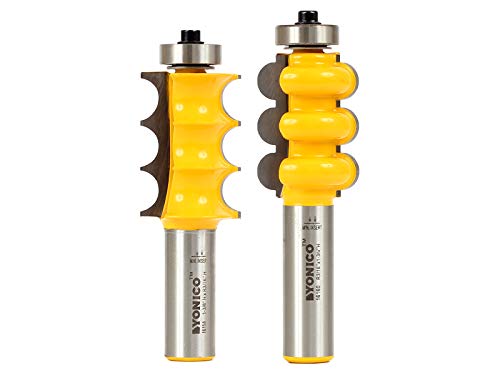
Material and sharpness are designed for 1-3/8″ triple bead and triple flute moldings. Use for adding trim moldings to furniture projects. Features premium C3 micro-grain tungsten carbide for a longer-lasting edge.
Best for large, detailed furniture trim with consistent cuts. Choose this if you regularly work with 1-3/8″ triple profiles and want durable edges. Caution: larger shanks require compatible machines and adequate clearance.
YONICO 16261 Triple Bead & Flute Router Bit Set

Designed for 1″ triple bead and triple flute column and face moldings. Adds trim moldings with a sharp edge thanks to C3 micro-grain carbide. A good pick for finer, thinner profiles on furniture.
Best for mid-size bead work and consistent edge quality. Better for smaller convertible moldings than larger 1-3/8″ profiles. Caution: may require slower feeds on dense hardwoods to prevent tear-out.
SICWOOD Triple Bead Router Bit 1/4 Shank

Features a 1/4″ shank, 7/8″ cutting height, and 3/32″ radius. Carbide blade construction promises durability and clean cuts for ornate columns and molding. Suitable for traditional furniture detailing and decorative work.
Best for robust, long-lasting performance on complex profiles. Choose this if you need a substantial cutting height for taller moldings. Limitation: 1/4″ shank may be less suitable for very large router bases on some machines.
YONICO Bullnose Beading Router Bits 13192

Two-flute carbide cutters with a 1/2″ shank. Ideal for adding a bullnose bead along edges of shelves and tabletops. Uses premium C3 micro-grain carbide for longer edge life.
Best for edging work on tabletops and shelves. Avoid this if you need deeper or non-bullnose profiles on narrow edges.
Freud 80-122 Beading Bit

Beads with a 1/8″ radius and a 1/2″ shank. Designed to mill a traditional half-round bead with a square shoulder. Suitable for hardwood, softwood, plywood, and composites.
Best for classic bead profiles on varied substrates. Choose this if you want a traditional, rounded bead. Caution: cutting depth should be limited on very dense woods to maintain clean edges.
Buying Guide: Key Purchase Considerations
What bead and flute profile matches your project? Select by bead complexity (single, double, triple) and whether you need a bullnose look or a classic bead.
Shank size compatibility matters. A 1/2″ shank provides rigidity for larger profiles, while 1/4″ shanks suit lighter machines or smaller routers. Check router collet compatibility.
Material and blade quality influence edge sharpness and life. Carbine blades with micro-grain carbide (C3) typically offer sharper edges and longer life on hardwoods and softwoods alike.
Cutting height and radius determine the final look. Higher cutting heights enable deeper profiles; radii control bead curvature. Match to the intended molding thickness and style.
Machine usage and safety. Some bits are better for CNC or fixed-base routers, while others perform well with handheld units. Consider anti-kickback features and clean routing on curved shapes.
Maintenance and care. Keep bits clean, use appropriate feed rates, and avoid overheating. Sharpening and storage practices extend bit life and performance.
Frequently Asked Questions
- What is the difference between a flute router bit and a bead router bit? Flute bits primarily shape and remove material with straight or decorative grooves, while bead bits create rounded, bead-like edges or decorative profiles on stock.
- Which shank size should I choose? A 1/2″ shank offers more rigidity for larger profiles; a 1/4″ shank fits smaller machines and lighter tasks. Ensure your router accepts the shank before purchase.
- Are carbide bits better than standard steel? Yes, carbide-tipped or carbide blades maintain sharpness longer and resist wear, especially on hardwoods. They’re typically more durable for repetitive passes.
- Can I use these bits on CNC routers? Some are suitable, particularly those with carbides and anti-kickback designs. Check machine compatibility and bit length specifications before use.
- How do I avoid tear-out when routing beads? Use sharp bits, proper feed rate, and support stock with a backer board. Climb-cutting can also reduce tear-out on demanding grains.
- What maintenance is required for router bits? Clean bits after use, store dry, and occasionally sharpen or replace worn edges to maintain precision.