Finding the right finish nailer for baseboards hinges on reliability, ease of use, and fit for your project. This guide highlights five top options, each suited for common baseboard and trim work. Whether you’re a professional carpenter or a serious DIYer, these tools balance power with precision. The table below compares key traits to help you choose quickly.
| Product | Nail Type | Nail Length Range | Weight | Best For |
|---|---|---|---|---|
| Meite 16 Gauge Finish Nailer (straight) | Finish nails | 1-1/4″ – 2-1/2″ | ~3.86 lb | Baseboards, cabinetry, delicate trim |
| Metabo HPT NT65MA4 (angled) | 15 GA nails | 1-1/4″ – 2-1/2″ | ~4.2 lb | Crown moldings, base moldings, casings |
| HBT64P (straight) | 16 GA nails | 1″ – 2-1/2″ | Lightweight | General trim work, portability |
| Metabo HPT NT65M2S (straight) | 16 GA nails | 1″ – 2-1/2″ | ~3.7 lb | Molding, chair rails, cabinetry |
| DEWALT DCN660B (angled, tool-only) | 16 GA nails | 1″ – 2-1/2″ | Battery powered | Cordless flexibility for baseboards and trim |
Meite 16 Gauge Finish Nailer, Straight
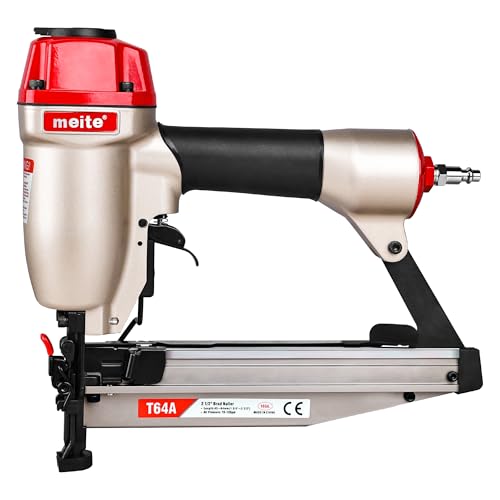
The Meite 16 Gauge Straight Finish Nailer is designed for baseboards, cabinetry, and narrow trim. It accepts 1-1/4″ to 2-1/2″ nails, making it versatile for most baseboard thicknesses and molding profiles. The 70-120 PSI operating range helps balance driving power with control. A 100-nail magazine supports longer sessions without frequent reloads. The tool-free depth adjustment dial helps achieve flush finishes on variable material thicknesses, while the quick jam release minimizes downtime when jams occur. A non-marring tip protects delicate surfaces, which is essential for high-visibility trim work.
Best for: Professionals and serious DIYers who want a straight-nailer option with solid jam-clearing support and surface protection. Avoid this if you prefer an angled nailer for tighter profile work where reach is critical.
Metabo HPT Finish Nailer NT65MA4 (Angled)

The Metabo HPT NT65MA4 is a 15-gauge angled finish nailer built for crown moldings, base moldings, window casings, and cabinetry. Its angled design helps reach into corners and tight joints where a straight tool may struggle. It accepts nails from 1-1/4″ to 2-1/2″ and weighs about 4.2 pounds, striking a balance between power and maneuverability. The tool is favored by professionals for its durability and compatibility with a wide range of finish nails. Consider this option if you frequently work on molding with awkward angles or longer trim pieces.
Best for: Pros or DIYers tackling crown and base moldings where angle access matters. Choose this if you need maximum reach in tight corners.
HBT64P 16 Gauge Finish Nailer

The HBT64P 16 Gauge Finish Nailer emphasizes lightweight construction with a magnesium housing, reducing fatigue during long sessions. It drives 1″ to 2-1/2″ nails and features a crank-free depth-drive and jam-release system for easier maintenance. The lighter design makes it a good choice for projects that require extended periods of use without sacrificing performance. A potential limitation is that magnesium housings can be less durable in rough job-site conditions compared to steel, so handle with care on heavy-duty applications.
Best for: Painters and trim installers who prioritize weight savings and portability. Better for less aggressive framing or shorter installation sessions.
Metabo HPT Finish Nailer NT65M2S

The NT65M2S from Metabo HPT is a lightweight option at about 3.7 pounds, designed for comfort during long installations. It uses 16-gauge nails from 1″ to 2-1/2″ and offers a selective actuation trigger, letting users switch between bump fire and sequential modes. This flexibility helps adjust for different trim profiles and material types. The model is well-suited for molding, chair rails, and cabinet work where controlled shooting is essential. A caveat is that some users may prefer a tool with a wider support ecosystem or modular accessories for follow-up tasks.
Best for: Those who need versatile actuation modes and extended control in cabinet and molding work. Choose this if you value smooth operation across a range of trim projects.
DEWALT 20V MAX Finish Nailer (Angled, DCN660B)

This cordless 16-gauge finish nailer from DEWALT eliminates the need for a compressor, hose, or gas cartridges. A brushless motor enhances runtime and durability, while a tool-free trigger allows for sequential or contact actuation. The angled design helps access tight corners and reduces the need for repositioning when working around doorways and window frames. The major benefit is freedom of movement on large baseboard runs, though cordless models may have slightly lower sustained power for dense hardwoods compared with corded pneumatic tools.
Best for: Projects where mobility and quick setup are priorities, such as large baseboard installations in rooms without easy access to air lines. Avoid this if you require consistently maximum power for very dense woods over extended periods.
Buying Guide: How To Choose The Right Finish Nailer For Baseboards
- Finish Nail Size And Type: For baseboards and trim, 15-16 gauge nails are standard. Straight (0-degree) nails are common, but angled nails can help in tight corners or around obstacles.
- Nail Length Range: Match nail length to molding thickness. Longer nails offer more holding power for thicker baseboards, while shorter nails reduce the risk of protruding tips on delicate trim.
- Air Power vs. Cordless: Pneumatic models excel in continuous use and power. Cordless models offer mobility and cleaner setups, especially where air lines are impractical.
- Weight And Ergonomics: Lighter weights reduce fatigue on long runs. Check balance and grip comfort for extended projects.
- Depth Control And Safety: Tool-free depth adjustment helps flush finishes. A safety nose and jam-clearing features protect against misfires and damage to trim surfaces.
- Maintenance And Accessories: Look for quick jam release, easy-load magazines, and compatibility with common nails across brands to simplify upgrades or replacements.
- Project Type: For crown molding and corner work, an angled tool can be advantageous. For straightforward baseboard installs, a straight tool may be faster and more durable.
Frequently Asked Questions
- What nail size is best for baseboards? — Most baseboard projects use 15- or 16-gauge nails in the 1-1/4″ to 2-1/2″ range, depending on baseboard thickness and stud spacing.
- Should I choose a straight or angled nailer for baseboards? — Straight nailers are typically faster for flat runs, while angled nailers excel in corners and tight spaces.
- Is a cordless finish nailer sufficient for baseboard work? — Yes, especially with newer brushless motors and larger battery packs; ideal for rooms without convenient air supply.
- What safety features matter most? — A secure safety nose, depth adjustment, and jam-clearing mechanisms reduce accidental firing and surface damage.
- Can I use galvanized nails outdoors? — Galvanized nails resist rust, making them suitable for exterior trim, but stainless steel options offer superior corrosion resistance in frequent exposure to moisture.
- Do finish nailers need maintenance? — Regularly check for jammed nails, clean the driver blade, and lubricate moving parts as recommended by manufacturer.