Answering the need for reliable, easy-to-use fence post drivers, this guide compares top options across gas-powered, electric, and manual models. These picks are best for DIY homeowners, small farms, and professional crews tackling wooden, metal, or U-channel posts in soft soil. Each product section explains who it’s best for and why it was selected, plus practical cautions to consider.
| Product | Best For | Power Type | Notes |
|---|---|---|---|
| XtremepowerUS 52cc Gas-Powered T Post Driver | Budget-friendly, portable projects | Gas-powered | Great balance of power and portability |
| JACKCHEN 1900W T-Post Driver | Heavy-duty work on soft soil | Gas-powered | High RPM and robust build |
| HIGOSPRO 2200W Electric T Post Driver | Professional or frequent users | Electric | High no-load speed and strong impact energy |
| JKCHEN PRO 2200W Electric T Post Driver | High-efficiency fencing projects | Electric | Similar power tier with ergonomic design |
| Sekcen Fence Post Driver T Post Driver | Light to medium-duty, versatile posts | Manual/Two-handle | Durable, ergonomic dual-handle design |
Note: All models are designed for driving posts into ground in soft soil or typical fencing installations. For rocky or very hard soils, results vary and additional prep may be required.
XtremepowerUS 52cc Gas-Powered T Post Driver

Best for: Homeowners and small crews needing a portable gas-powered pile driver. The 52cc two-stroke engine provides robust power without electricity, ideal for farm fences and vineyard posts in soft ground. Features a durable metal body with large cooling vents and a rubber grip to reduce recoil.
Selection rationale: This model combines portable gas power with a practical design for repetitive post driving. The motor’s 2-stroke mix ratio and EPA-certification make it suitable for frequent, on-site use without a power source.
Caution: Gas engines require proper mixing oil at the 25:1 ratio and routine maintenance for peak performance. Operators should follow local safety guidelines for gasoline-powered tools.
JACKCHEN 1900W T-Post Driver
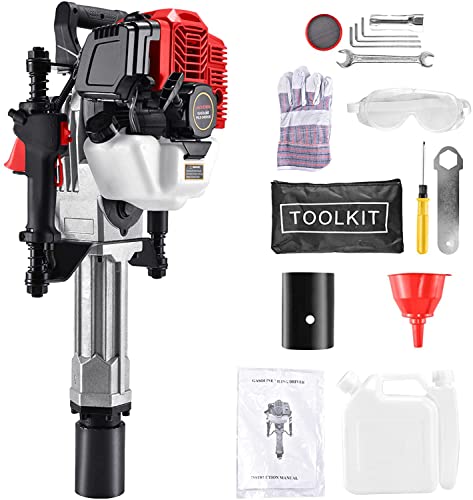
Best for: Professionals and serious DIYers tackling larger fencing projects on soft soil. This gas-powered pile driver delivers high impact frequency (1900W, 6500 RPM) and 55 joules of energy, increasing productivity on highway guardrails or farm fences.
Selection rationale: The engine design emphasizes mobility and long runtime, with ergonomic features like a rubber-plastic handle to reduce recoil and effective cooling to sustain performance during extended use.
Caution: Requires a 25:1 gas-to-oil mix and factory pre-lubrication. Noisy operation may necessitate hearing protection and local noise considerations.
HIGOSPRO 2200W Electric T Post Driver

Best for: Professional sites and frequent users who want high efficiency with consistent power. The electric model offers no-load speeds up to 2100 RPM and 85 joules of impact energy, delivering strong performance without fuel handling.
Selection rationale: Ergonomic design and cooled vents help sustain operation during long sessions. Its mobility and controlled operation make it suitable for dense fencing layouts where steady output matters.
Caution: Requires a compatible power source (110V) and access to electricity on site. For remote locations, battery-powered or generator-backed options may be more practical.
JKCHEN PRO 2200W Electric T Post Driver

Best for: Users seeking high-efficiency electric post driving with a professional-grade design. Comparable power to HIGOSPRO with an emphasis on ergonomic control and reliable performance for fencing construction sites.
Selection rationale: No-load speeds around 2100 RPM and 85 joules of impact energy enable rapid driving of posts with consistent results. The model is designed for on-site efficiency and ease of use.
Caution: Like other electric drivers, needs a stable power source. Ensure electrical supply meets 110V requirements and observe standard electrical safety practices.
Sekcen Fence Post Driver

Best for: Homeowners and light- to medium-duty fencing projects requiring a robust manual post driver. It supports T-Post, U-Post, wood, metal, and other fence posts with ease.
Selection rationale: Dual-side handles provide stability and easy maneuvering, while powder-coated steel construction resists rust and corrosion. The design emphasizes steady control during driving sessions.
Caution: Manual drivers rely on user effort; on very hard soils or lengthy installations, it may require more time and repeated strikes to reach depth.
Buying Guide: How To Choose The Right Fence Post Pile Driver
- Project type and soil: For soft soils and wooden posts, gas or electric drivers provide fast, consistent results. For manual fences or light installations, a manual post driver reduces setup and maintenance.
- Power source: Gas-powered offers portability without electric access; electric machines deliver steady power on-site but require a power outlet or generator. Manual tools are quiet and simple but labor-intensive.
- Post type compatibility: Ensure the driver accommodates T-posts, U-posts, wooden posts, or metal posts as needed. Check stated inner diameter compatibility and sleeve sizes if available.
- Ergonomics and recoil: Look for rubber or sponge handles to reduce fatigue and cooling vents to prevent overheating during long sessions.
- Maintenance: Gas tools require fuel mixing and lubrication; electric tools need cord management and occasional greasing. Manual tools need regular inspection for wear on handles and jaws.
- Portability vs. duty cycle: Gas models typically offer good portability and larger work sessions; electric models provide consistent power with less noise; manual tools are ultra-portable and simple but slower.
Frequently Asked Questions
- What is a fence post pile driver used for? – It is used to drive fence posts into the ground quickly and securely for sturdier fencing, gates, and supports.
- Which post driver is best for large agricultural fencing? – Electric or gas-powered models with high RPM and joule energy are preferred for continuous, heavy-duty work.
- Do I need any special oil or fuel? – Gas models typically require a 25:1 gasoline-to-oil mix. Follow the manufacturer’s lubricant recommendations for electric and manual models.
- Can I use these on hard soil? – Hard or rocky soil may require soil preparation or alternative methods. Many models perform best in soft to moderately firm ground.
- Are manual drivers safer or quieter? – Yes, manual drivers produce no noise or emissions but require more physical effort and time for completion.
- Do these tools come with storage or carrying cases? – Some models include cases; check product listings for specifics and availability.