Find the right replacement blades for your electric hand planer. This guide compares common 3-1/4 inch (82 mm) blades and related carbide, high-speed steel, and tungsten carbide options. It helps buyers choose blades that fit most handheld planers and maximize cutting life. The top picks are ideal for woodworkers who want clean cuts, long-lasting edges, and easy swap-outs. Each product section explains the best use case and any limits to consider.
| Product | Best For | Material | Edge Life |
|---|---|---|---|
| FOXBC 3-1/4 Inch Planer Blades (10 Pack) | General hardwood/softwood, frequent replacements | High Speed Steel (HSS) | Sharp, double-edged |
| FOXBC 3-1/4 Inch Industrial Carbide Blades (10 Pack) | Professional-grade projects, heavy use | Carbide | Twice cutting life |
| 3-1/4″ 82mm Tungsten Carbide Portable Blades (HZ) | Durable, versatile brands | Tungsten Carbide (TCT) | Up to 30% longer life |
| 3-1/4 inch Resharpenable HSS Blades (Niaimei, 10 blades) | Multiple brands, budget-friendly | High Speed Steel | Reversible; spare blades included |
| SPEEDWOX 82mm Tungsten Carbide Blades (10 pieces) | Smooth surface finish, long life | Tungsten Carbide | Double-edged, long-lasting |
FOXBC 3-1/4 Inch Planer Blades, HSS 10 Pack

Best for casual woodworkers who need affordable, ready-to-swap blades. These 3-1/4 inch blades are designed for popular brands including Bosch, Makita, DeWalt, Ryobi, and Craftsman. They are made from High Speed Steel and offer double-edged reversibility for extended life. Suitable for softwood and hardwood cuts with clean results. Caution: HSS blades may wear faster than carbide in dense hardwoods.
FOXBC 3-1/4 Inch Industrial Carbide Blades (10 Pack)

Better for heavy-duty work and frequent use. These carbide blades are compatible with Craftsman CMEW300, Milwaukee M18, Makita, DeWalt, Bosch, Wen, and Ryobi planers. Double-edged, they provide twice the cutting life and a consistently clean edge. Limitation: carbide blades can be more brittle under shock loads compared to HSS in very abrasive materials.
3-1/4″ 82mm Tungsten Carbide Portable Planer Knife Blades (HZ)
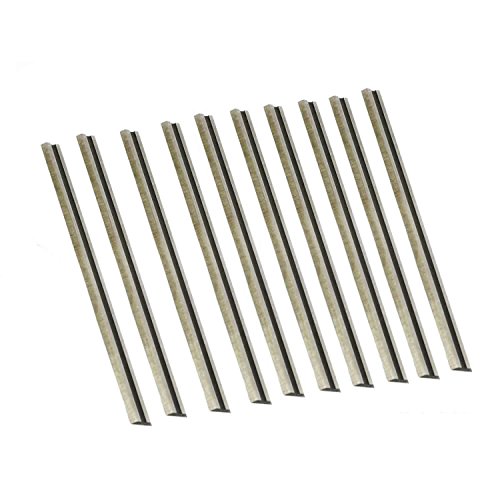
Best for durability-focused projects. These 82×5.5×1.2 mm blades are designed for Makita, Bosch, DeWalt, Black & Decker, Ryobi, and more. Tungsten carbide offers extended life and sharper edges. Caution: installation may require careful handling to preserve the carbide edge, and compatibility should be verified for older tools.
3-1/4 Inch Resharpenable HSS Blades (Niaimei, 10 Blades + 2 Belts)

Best for versatile, budget-conscious workshops. Includes 10 blades and 2 belts for quick resharpening. Compatible with a broad set of 3-1/4 inch planers, including Makita and DeWalt models. This option suits hobbyists who want multiple blades on hand and don’t mind sharpening. Limitation: HSS edges may require more frequent maintenance than carbide in demanding environments.
SPEEDWOX 10pcs 82mm Tungsten Carbide Blades

Best for smooth, long-lasting cuts. These 82 mm tungsten carbide blades feature double-edged reversible edges and come with a set of tweezers for easier handling. They’re designed to fit many standard 3-1/4 inch planers and provide dependable performance for frequent projects. Caution: ensure exact size and brand compatibility before purchasing to avoid fit issues.
Buying Guide: Key Considerations For Replacing Your Planer Blades
Blade material matters for life and cut quality. Carbide blades last longer and stay sharper, especially on hardwood, but may be prone to chipping under heavy shocks. HSS blades are more forgiving, easier to sharpen, and adequate for softer woods or budget projects. Tungsten carbide blades offer the best wear resistance and longevity for frequent use but can be pricier and slightly harder to sharpen. When choosing, match blade width and thickness to your planer’s specifications, and consider the typical wood type you work with.
- Blade life and edge type: double-edged blades double the usable life by rotating the edge.
- Compatibility: verify that the blade is designed for your planer model and the 3-1/4 inch standard size.
- Maintenance: resharpenable blades reduce long-term costs; consider spare blades or belts if included.
- Performance in hardwoods vs softwoods: carbide and tungsten carbide outperform in hardwoods; HSS is sufficient for softer woods.
Frequently Asked Questions
- What blade material lasts longest for planers?
Tungsten carbide blades typically offer the longest life and sharpness in dense woods, followed by carbide; high-speed steel blades tend to wear faster but are easier to sharpen. - Are these 82 mm blades compatible with most brands?
Most 3-1/4 inch blades fit standard handheld planers, including Makita, DeWalt, Bosch, Ryobi, Wen, and Craftsman. Always confirm model compatibility before purchase. - Do I need two blades for a project?
Many blades are double-edged, allowing two cutting edges. This reduces downtime by rotating or reversing the blade after wear. - Is sharpening necessary for carbide blades?
Carbide blades are not typically sharpened the same way as HSS blades; some require professional service or replacement depending on the blade design. - What should I consider when replacing blades for hardwoods?
Choose carbide or tungsten carbide blades for longer life and cleaner cuts in hardwoods. Ensure proper tool handling and secure mounting during installation.