Answering the needs of DIYers and professional carpenters alike, this guide highlights top drilling templates and jigs that ensure accurate, repeatable hole placement for cabinet handles, knobs, and pulls. These tools reduce jitter, improve alignment, and speed up installation. Best for quick setups, repeated projects, and avoiding misaligned hardware.
| Product | Best For | Why It Stands Out |
|---|---|---|
| King&Charles Cabinet Hardware Jig (Kit) | One-step precision for multiple holes | Automatic center punch, metric/imperial scales, portable |
| Ravinte Cabinet Door & Drawer Template Kit | Knobs and pulls with common centers | Includes door and drawer templates, up to 5″ centers |
| TBVHOMM Cabinet Hardware Jig | Workbench-ready, portable projects | Sturdy stainless/AL construction, easy carry |
| SUNCONY All-Aluminum Cabinet Jig | Professional speed and durability | All-aluminum, replaceable bushings, repeatable setup |
| King&Charles Cabinet Hardware Template with Center Punch | Center-punch aided installation | Transparent, thick template for accuracy |
King&Charles Cabinet Hardware Jig, Automatic Center Punch Kit

Best for: DIYers who want a complete kit with an automatic center punch. The jig includes a center punch to start small holes without jig jiggle, followed by larger holes with confidence. Suitable for drawers and doors with standard handle and pull installations.
Key features: Automatic center punch to reduce drilling jitter, metric and imperial scale for precise center measurements, durable ABS ruler with stainless steel backing. The kit is detachable for easy transport and storage.
Caution: The center-punch mechanism adds a separate step; ensure small preliminary holes are punched before drilling the larger holes to reduce wandering. This kit is best when you need repeatable results across multiple units.
Ravinte Cabinet Door & Drawer Hardware Installation Template Kit
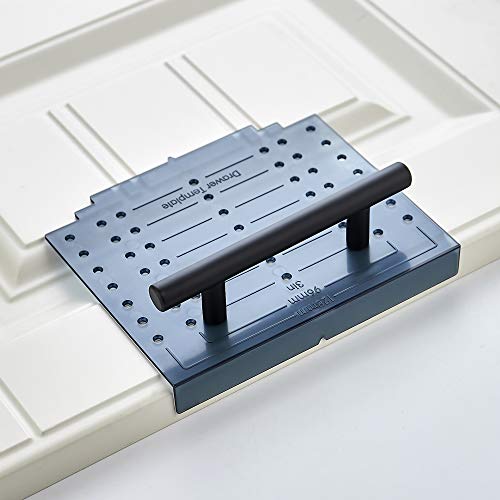
Best for: Projects requiring multiple hole centers (3″, 3-3/4″, 5″ centers). The kit includes separate templates for doors and drawers and a 3/16″ drill bit. Ideal for standard knob and pull configurations on both cabinet doors and drawers.
Why chosen: Clear, simple measurements with explicit guidance for hole center ranges. Includes both door and drawer templates to ensure alignment across components.
Caution: Check the images and installation guide before ordering; the template supports up to 5″ hole centers but verify your specific hardware dimensions to avoid mismatches.
TBVHOMM Cabinet Hardware Jig, Punch Locator Drill Guide

Best for: Woodworkers who value quick setup and modular portability. The jig is designed to be split into smaller parts for easy transport and storage, making it suitable for job sites and workshops alike.
Why chosen: Combines stainless steel, aluminum, and ABS for strength and corrosion resistance. The kit emphasizes repeatable alignment and a compact storage pouch for field use.
Caution: Larger installations may require careful alignment when reassembling; ensure each piece is re-seated firmly to maintain accuracy across holes.
SUNCONY All-Aluminum Cabinet Hardware Jig Tool

Best for: Pro-level installations where durability and precision matter over long-term use. All aluminum construction avoids plastic wear and maintains accuracy under drilling stress.
Why chosen: Precision-engineered aluminum parts with replaceable bushings and laser-engraved rulers that resist fading. The tool is designed to speed up repeated installations while maintaining high accuracy.
Caution: The all-metal design is robust but heavier than plastic alternatives; consider lift assist if handling multiple cabinets in one session.
King&Charles Cabinet Hardware Template With Center Punch
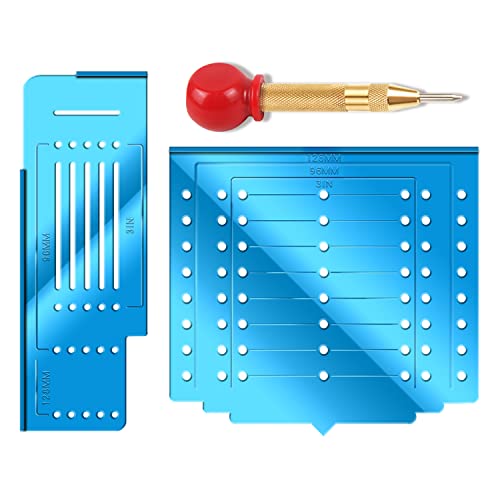
Best for: Cabinets where precise center punching is essential before drilling. The template aligns pulls and knobs with a built-in center punch to mark exact positions.
Why chosen: Transparent and thick template design helps visualize marks and prevents bending during use. It’s a reliable add-on to ensure accurate hole placement for repeated projects.
Caution: The template relies on correct alignment; ensure your drawer fronts are flat and level before punching to avoid skewed holes.
Buying Guide: Key Purchase Considerations
- Hole center compatibility: Verify the common centers your hardware uses (3″, 3-3/4″, 5″, etc.) and choose templates that cover those ranges.
- Construction and durability: All-metal or metal-with-ABS templates offer better long-term accuracy under repeated drilling; consider aluminum for lighter weight with high durability.
- Center-punch features: Tools with automatic center punches reduce drifting when starting holes; this is especially helpful for hardwoods or dense plywood.
- Portability and storage: If you work on-site, choose detachable templates with a carrying pouch or compact form factor for easy transport.
- Ease of use: Templates that require minimal setup and allow quick flips between left and right doors improve workflow.
- Clarity of markings: Rulers and tick marks should be laser-engraved or high-contrast to prevent misreads during measurements.
- Included bits and accessories: Some kits include drill bits or punch tools—assess whether you need these extras for your project.
FAQ
- What is the main advantage of using a cabinet hardware jig?
- Should I prefer a kit with a center punch?
- Are all-aluminum jigs worth it for homeowners?
- How do I verify hole centers before drilling?
- Can these templates be reused for different cabinet sizes?
- What should I avoid when using these templates?
It provides repeatable hole spacing, reduces drilling errors, and speeds up multiple installations with consistent results.
Yes, center-punch-enabled kits help prevent drill wander and improve accuracy, especially on harder woods.
For frequent projects, all-aluminum jigs offer durability and longevity with precise measurements; for occasional use, a plastic or mixed-material jig may suffice.
Double-check measurements against your hardware’s center specifications, align the template, and consider punching small pilot holes first as a test.
Yes, many templates are designed to handle a range of drawer fronts and door sizes, but confirm the center spacing limits before use.
Avoid applying excessive force that might bend the template, and never rely on pencil marks alone for critical holes.