Finding the right diamond hole saw for concrete depends on material thickness, desired hole size, and whether you need dry or wet cutting. This guide highlights five dependable options suited for concrete, brick, block, and related substrates. It targets DIYers tackling home projects and professionals installing pipes, ducts, or conduits.
Summary table of selected products
| Product | Diameter | Depth | Best For | Notes |
|---|---|---|---|---|
| SALI Diamond Core Drill Bits 2 1/2″ | 2.5 in / 63.5 mm | 10 in / 254 mm | Medium openings in cured concrete | Two adapters included |
| SALI Diamond Core Drill Bits 4 1/2″ | 4.5 in / 114 mm | 10 in / 254 mm | Larger openings | Two adapters included |
| SALI Diamond Core Drill Bits 2″ | 2 in / 50.8 mm | 10 in / 254 mm | Smaller holes in concrete | Two adapters included |
| SHDIATOOL Diamond Core Drill Bits 1-1/4 in | 1.25 in / 32 mm | 100 mm | Precise small holes in hard stone and concrete | Dry or wet drilling |
| DECKRKAT 2-1/2″ Diamond Hole-Saw | 2-1/2 in / 65 mm | — | Porcelain tile, ceramic, brick, stone | Guiding pilot included |
SALI Diamond Core Drill Bits 2 1/2″ Core Bit

Diameter 2 1/2″ (63.5 mm), drilling depth 10″/254 mm, with 5/8-11 thread. This core bit uses laser-welded segments designed for cured concrete, brick, block, and masonry. It ships with a 1/2″ hex shank adapter and a 5/8″-11 to SDS Plus adapter for SDS-Plus drills, making it versatile for various machines. Best for mid-sized concrete openings like vent pipes or ductwork, suitable for installers and serious DIYers.
Best for: projects requiring reliable mid-sized holes in concrete or masonry. Choose this if you frequently drill 2.5″ openings and need adapters for different drill types. A limitation: large, longer drilling might require steady guidance to maintain straightness on tough substrates.
SALI Diamond Core Drill Bits 4 1/2″ Core Bit
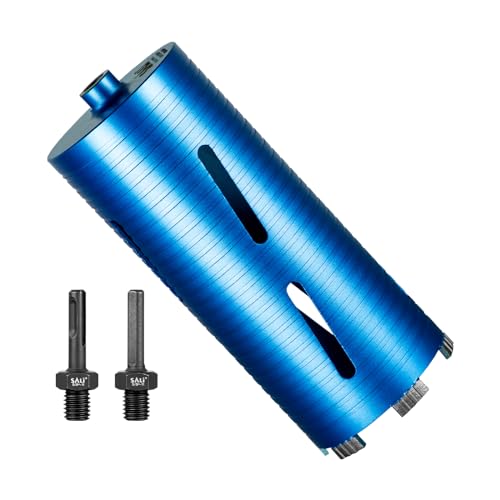
Diameter 4 1/2″ / 114 mm, drilling depth 10″/254 mm. It includes a 3/8″ hex shank adapter and a 5/8″-11 threaded adapter for SDS-Plus drills. This option targets bigger openings in concrete, brick, and block walls, making it well-suited for HVAC pass-throughs or large-diameter conduit installation. Best for: construction or remodeling contexts needing larger holes with stable performance. Limitation: larger cores require stronger guidance and power; ensure equipment can handle the size.
Best for: larger-diameter openings in reinforced concrete or brick. Better for professional use where bigger holes are common; avoid if your drill setup cannot accommodate a 4.5″ core or you need more compact tools.
SALI Diamond Core Drill Bits 2″ Core Bit

Diameter 2″ / 50.8 mm, drilling depth 10″/254 mm. Includes a 3/8″ hex shank adapter and a 5/8″-11 threaded adapter for SDS-Plus drills. This size is ideal for venting or utility line openings in concrete and brick walls. Best for: projects needing precise 2″ holes with flexible drill compatibility. Limitation: smaller diameter may require more passes for larger openings and might be slower on very dense substrates.
SHDIATOOL Diamond Core Drill Bits 1-1/4 Inch

Diameter 1-1/4″ / 32 mm, total length 100 mm, thread 5/8″-11. Designed for hard stone, concrete, brick, and ceramic, this bit supports both dry and wet drilling. It emphasizes precision with a centrally placed pilot bit and is compatible with angle grinders. Best for: small, precise holes in granite, marble, or tile installations. Limitation: smaller diameter may necessitate more passes for larger openings and may be less efficient on thick concrete.
DECKRKAT 2-1/2″ Diamond Hole-Saw

Diameter 2-1/2″ / 65 mm, with a guiding pilot drill bit for precise hole starting. Suitable for porcelain tile, ceramic, brick, granite, stone, and glass bottles. Wet/dry compatible with water cooling to extend life. Best for: tile and masonry installations where clean, round holes are required. Limitation: size is modest, but still demands proper alignment and steady work to prevent chipping on delicate tile surfaces.
Another strong option for larger openings is the DECKRKAT 2-1/2″ model. It emphasizes a pilot bit for alignment and is useful when you need clean edges through tile and stone. If you often drill through ceramic and brick, this line provides reliable performance with appropriate cooling.
Buying Guide
What drill size and material do I work with?
Choose core bits with a diameter that matches your target opening. For concrete, brick, and masonry, laser-welded or laser-cut diamond segments deliver cleaner cuts and longer life. Wet cutting generally slows wear and reduces dust, while dry cutting is faster but may wear bits more quickly in tough concrete.
How important is hole precision and edge quality?
Bits with pilot bits or guiding features help start holes accurately, especially on tile or brick. If edge quality is critical (porcelain tile), select bits advertised for clean, straight holes and consider pilot-guided designs.
What adapters or shanks do I need?
Check that your drill uses 3/8″ hex shanks or SDS-Plus adapters, and verify the thread type 5/8″-11 to match common hammer drills. Many kits include adapters to cover multiple drill types, which is convenient for multi-tool workflows.
Dry vs wet cutting
Wet cutting reduces dust and extends bit life but requires a water source. Dry cutting is convenient and faster in some cases but may be messier and wear the diamond segments quicker on hard materials.
Installation context and safety
For large holes in reinforced concrete, ensure your drill has adequate power and stability. Use clamps or a drill stand when possible to maintain alignment and reduce kickback. Always wear eye and dust protection and follow manufacturer guidelines for best results.
What is the best size for common projects?
- 2″ to 2-1/2″ holes: convenient for pipes and vents in concrete or brick.
- 4-1/2″ holes: suitable for larger conduits or ducts, but require robust equipment.
Summary of buying considerations
- Diameter options to match project needs
- Depth capacity to reach required through-holes
- Core bit construction and segment quality
- Adapter compatibility with your drill collection
- Wet vs dry cutting preference
FAQ
- Q: What is the typical drilling depth for these core bits? A: Most listed bits have up to 10 inches of drilling depth, which covers common through-holes in walls and slabs.
- Q: Are these bits suitable for concrete with rebar? A: They are designed for cured concrete and masonry; avoid heavily rebar-dense areas where cutting may require specialty tools.
- Q: Can I use these bits with standard angle grinders? A: Some bits are designed for angle grinders with 5/8″-11 threads or require SDS-Plus adapters; check the product specifications for compatibility.
- Q: Is wet cutting necessary for best performance? A: Wet cutting generally extends bit life and reduces dust, but dry cutting can be used if water access is limited.
- Q: Which size should I buy for future-use versatility? A: A mix of sizes—2″, 2-1/2″, and 4-1/2″ options—covers most common openings for pipes, vents, and electrical passes.