Answering the common buyer question: which deburring and chamfering tool works best for metal, plastic, and 3D printed parts? This guide compares five top options to help you choose the right tool for your project. Each pick targets a specific use case, from heavy-duty metal work to precise 3D printing deburring. The top picks are best suited for hobbyists, DIY enthusiasts, and professional workshop users who need clean edges, fast results, and reliable blade life.
Summary table of chosen products
| Product | Best For | Material Range | Sharpness/Blades | Notes |
|---|---|---|---|---|
| DKIBBITH Heavy-Duty Deburring Chamfer Tool | Heavy deburring on metal and PVC | 1/8″–3/4″ (3–19 mm) | 3 carbide blades | Fast and versatile with quick hex shank |
| PLATINUMEDGE Deburring External Chamfer Tool | Damage repair on bolts and threads | 1/8″–3/4″ (3–19 mm) | 3 YG8 tungsten carbide blades | Great for fast thread repair |
| 2PCS YG8 Tungsten Carbide Deburr Chamfer Bits | General deburring with quick changes | 1/8″–3/4″ | YG8 carbide blades | Easy swap with 1/4″ hex shank |
| LIBRATON Deburring Tool 3d Printing Kit | 3D printing deburring and resin work | Metal, resin, PVC, wood | 10 blades + swiveling head | 360° rotating tool for versatile access |
| AFA Tooling Deburring Tool | High-speed steel blade precision | Stainless steel and hard metals | HSS blades, M2 alloy | Durable blades with extended edge life |
DKIBBITH Heavy-Duty Deburring Chamfer Tool

The DKIBBITH tool uses optimized carbide blade geometry to remove burrs quickly and create clean external chamfers on metal, PVC, and piping. It includes three high-grade tungsten carbide blades designed for durability during extended use. The quick-release hex shank fits standard drills, making it suitable for a wide range of projects, from metal rods and bolts to 3D printed parts and PVC pipes. Best for: heavy deburring on metal, pipes, and 3D-printed parts where speed matters. Caution: avoid using with hammer drills or impact drivers, as the tool is designed for rotary drilling actions.
PLATINUMEDGE Deburring External Chamfer Tool
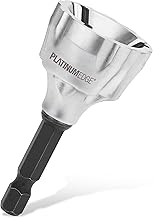
This tool emphasizes instant thread repair by quickly removing burrs to let nuts thread on smoothly. Equipped with three YG8 tungsten carbide blades, it excels at durability and sharpness for tough materials including stainless steel, hardened steel, copper, aluminum, and even some plastics. Best for: fixing damaged bolts and quick restoration of threaded connections. Caution: designed for rotary use; avoid hammer or impact drilling methods which can misalign the cutting edge.
2PCS YG8 Tungsten Carbide Deburr Chamfer Bits

These bits use industrial-grade YG8 tungsten carbide for long-lasting sharpness and corrosion resistance. The standard 1/4-inch hex shank enables fast changes on cordless drills and bench drills. They work across multiple materials, including stainless steel, aluminum, and plastics. Best for: general-purpose deburring and chamfering with a quick-change workflow. Limitation: not compatible with hammer drills in any mode due to design requirements of the quick-release system.
LIBRATON Deburring Tool 3d Printing Kit

This kit centers on 3D printing deburring with a 360° swivel design and multiple blades for resin, metal, and pipe edges. It includes two precision countersink reamers and ten replacement blades, plus a storage box. Best for: finishing printed parts and resin edges, both interior and exterior surfaces. Caution: setup and blade changes require careful handling to avoid misalignment during rotation.
AFA Tooling Deburring Tool

The AFA Tooling option features 11 M2 HSS blades, tempered to HRC 62–64, delivering wear resistance and edge retention for stainless steel, aluminum, and other hard metals. The CNC-anodized aluminum handle complements blade performance and helps with grip during precise deburring tasks. Best for: projects requiring durable HSS blades and reliable edge retention. Limitation: HSS blades can dull with very hard metals over time; rotate blades as needed for best results.
Buying Guide: Key Purchase Considerations
- Material compatibility: Match the tool to the materials you most often deburr or chamfer, such as stainless steel, aluminum, copper, plastics, or 3D-printed resins.
- Blade material and life: Tungsten carbide blades offer durability for tough metals; HSS blades provide good performance with lighter metals.
- Shank size and compatibility: Ensure the hex shank size fits your drill or milling tool (1/4″ is common; check your equipment).
- Blade change and maintenance: Quick-release features speed workflow; consider tools with replaceable blades for long-term use.
- Edge quality and reach: 360° swiveling or flexible heads help access interior radii and tight corners; consider if you need external chamfering only or interior work as well.
- Application breadth: If you work across metal, PVC, wood, and 3D-printed parts, choose a kit with multi-material blades and broad diameter support (1/8″–3/4″).
FAQ
- What is the best deburring tool for 3D printed parts?
– Tools with 360° swiveling heads and carbide blades, such as the LIBRATON kit, handle both exterior and interior edges effectively on resin and printed parts. - Can I use these tools on metal without damaging the workpiece?
– Yes, when used with appropriate blade material and correct speed, these tools remove burrs cleanly without gouging the surface. Follow the manufacturer’s recommended diameters and materials. - Which blade material lasts the longest?
– Tungsten carbide blades generally offer longer life and sharper edges for tough metals compared with standard carbon steel blades. - Are these tools suitable for repair tasks like rethreading bolts?
– Some models claim immediate thread repair by removing burrs; use only on compatible fasteners and avoid excessive force that could cause misalignment. - Do I need a special drill to use these tools?
– Most tools use a standard 1/4″ hex shank, compatible with common cordless drills and bench drills; hammer drills are not recommended for most options.