Urban homes, attic access, gutter cleaning, and overhead painting all benefit from a reliable 16-foot compact extension ladder. This guide highlights five compact, 16.5-foot or 16-foot ladders that balance portability with safety, making them suitable for both DIY enthusiasts and professional setups. Each selection is evaluated for stability, weight, and ease of use, helping buyers choose the right ladder for their space and tasks. The top picks cater to different priorities: lightweight maneuverability, heavy-duty framing, and features like auto-lock rungs or stabilizers to improve balance on uneven ground.
Summary of chosen products:
| Product | Extends To | Best For | Notable Feature |
|---|---|---|---|
| SINMEIRUN Telescoping Ladder (16.5 ft) | 16.5 ft | Home maintenance, DIY projects | Double height-locking latches for safety |
| JADDUO Telescoping Ladder (16.5 ft) | 16.5 ft | Attic access, light fixtures | Individual rung locks |
| Louisville 16 ft Aluminum Extension AE3216 | 16 ft | Professional and frequent use | Quicklatch system |
| Wolec Telescoping Ladder (20.3 ft listed) | 20.3 ft (extended) | Roof, gutters, exterior work | Removable hooks and stabilizers |
| SINMEIRUN Telescoping Ladder Pro (16.5 ft) | 16.5 ft | Professional use and heavy tasks | ANSI A14.2/Type IA rated |
SINMEIRUN Telescoping Ladder, 16.5 FT

Best for: Homeowners who want a compact ladder with strong safety features. The ladder meets EN131 CE standards and supports up to 330 lbs. Its double height-locking latches reduce pinching risk and simplify height adjustments, making it ideal for routine indoor and outdoor tasks.
Why selected: Aluminum construction with an oxidized finish provides durability without excessive weight. Reinforced nylon in plastic parts adds strength for daily use.
Caution: Verify all locks are fully engaged before climbing to ensure stability on uneven surfaces.
JADDUO Telescoping Ladder, 16.5 ft

Best for: DIY projects requiring precise reach with compact storage. This ladder extends to 16.5 ft with 330 lb capacity and features individual rung locks for secure setup before climbing.
Why selected: Aluminum build balances durability with portability, making it suitable for attic access, painting, and gutter work.
Caution: Ensure every rung lock is fully engaged to prevent slippage during extension or retraction.
Louisville Ladder AE3216, 16 ft

Best for: Professionals needing a reliable, lightweight extension ladder with straightforward operation. The 16 ft model meets common safety standards and incorporates a quicklatch system for secure fly and base sections.
Why selected: Strong yet light, the ladder is easy to maneuver, with standards-driven safety assurances that support frequent use in various settings.
Caution: While lightweight, do not exceed load ratings; keep tools distributed to maintain balance during extension.
Telescoping Ladder with Hooks, 20.3 ft
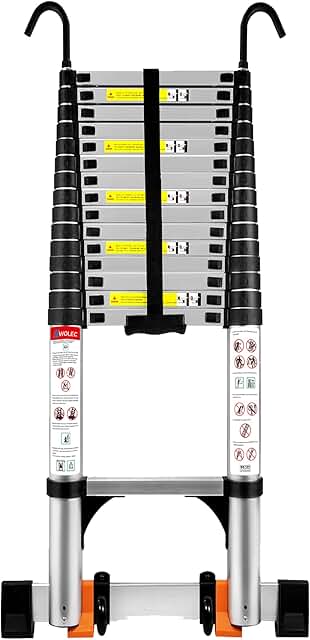
Best for: Exterior home maintenance and roof work where hook positioning matters. The ladder extends to 20.3 ft and includes removable hooks for versatile mounting against supports.
Why selected: ANSI A14.2-2017 tested with a 300 lb capacity, reinforced stability features like a bottom stabilizer and anti-slip feet improve balance on varied surfaces.
Caution: Remove hooks from the ladder when not needed to prevent accidental snagging during transport.
SINMEIRUN Telescoping Ladder Pro, 16.5 ft

Best for: Professionals needing a Type IA heavy-duty ladder for rigorous tasks. ANSI A14.2 certification supports higher safety expectations, with a 330 lbs capacity.
Why selected: The ladder uses thick aluminum and an oxidized surface for longevity. The 11.8-inch step spacing enhances climbing comfort and balance.
Caution: This model is heavier than basic aluminum ladders; plan for more careful transport and placement in tight spaces.
Buying Guide
What to consider when choosing a compact 16-foot ladder
- Weight capacity: Most 16-foot ladders support 300–330 lbs. Consider your weight plus tools and materials when calculating total load.
- Open height vs. collapsed size: Evaluate how much storage space you have and how easily the ladder can reach ceilings, gutters, or attic entries.
- Locking mechanisms: Look for auto-lock rungs, double height-locking latches, or individual rung locks for added safety.
- Material and finish: Aluminum ladders offer lightness and corrosion resistance; thicker alloy and oxide finishes increase durability.
- Stability features: Stabilizers, anti-slip feet, and top hooks improve balance on uneven ground or exterior surfaces.
- Certification and standards: ANSI A14.2 and EN131 CE compliance indicate tested safety performance for professional and home use.
- Portability and storage: Telescoping designs save space but may be heavier to carry; weigh portability against room for storage.
How to compare for specific tasks
- Attic access or lighting changes: A 16.5 ft reach with compact folding and easy locking is ideal.
- Gutter cleaning and exterior painting: A ladder with stabilizers and optional hooks helps set it against edges securely.
- Roof work: Heavier-duty ladders with higher weight capacity and certified safety features are preferable.
- Frequent transport: A lighter, aluminum ladder that fits standard car racks is more practical.
Care and safety tips
- Inspect locks and hinges before each use; ensure all sections are fully extended and locked.
- Place the ladder on a stable surface; use leg levelers or stabilizers if the ground is uneven.
- Maintain three points of contact when climbing; keep hands free to operate locks.
- Avoid overreaching; move the ladder as needed rather than extending beyond its safe reach.
Frequently asked questions
- What is the standard reach of a 16-foot ladder? The maximum safe working height varies by type, but most 16-foot ladders extend to around 16–20 feet when fully opened, depending on design and configuration.
- Are telescoping ladders safe for attic work? Yes, when locks are fully engaged and the ladder is properly secured at the base and top.
- What improvement do stabilizers provide? They help prevent tipping on uneven ground and improve overall stability during use.
- How should I choose between a telescoping ladder and a traditional extension ladder? Telescoping ladders save space and are easier to store, while traditional extensions can offer greater long-term durability and slightly lighter weight per extended length.
- Do these ladders require special care? Wipe clean, lubricate locking mechanisms as recommended, and store in a dry area to prevent corrosion.
- Are there safety certifications I should look for? Yes, ANSI A14.2 and EN131 CE certifications indicate compliance with recognized safety standards.