Find the right circular saw blade for cutting composite decking materials and plastics. This guide highlights options best suited for Trex, cellular PVC, and other composites, with clarity on which blade fits your project and tool. Ideal for DIYers and professionals seeking melt-free, smooth cuts and longer blade life.
| Product | Material Focus | Tooth Count | Best For |
|---|---|---|---|
| Diablo D0744CD TrexBlade | Composite Decking & Plastic | 44 | Low-wear, melt-free cuts on Trex and similar decking |
| DEWALT DWA31740 | Composite Decking | 40 | Clean, cool cuts with laser-cut plate design |
| Norske NCSBP226 | Composite Decking (Trex) & Bamboo | 48 | Long life and smooth cuts in dense composites |
| Diablo D1072CD | Composite Decking & Cellular PVC | 72 | Fine, accurate finishes with non-stick coating |
| Bosch DCB1072CD | Composite Decking | 72 | High-precision cuts with hard blade body for stability |
Product Highlights
Diablo TrexBlade D0744CD For Composites

Features: TiCo Hi-Density Carbide provides long-lasting cutting life in composite decking materials and plastics. The Modified Triple Chip Grind (MTCG) helps keep the blade cool for melt-free cuts, while the Perma-SHIELD non-stick coating reduces drag and resists heat, gum, and corrosion.
Best for: Trex and other premium composites where heat buildup is a concern. This blade is chosen for long blade life and reliable melt-free performance.
Caution: Performance depends on feed rate; pushing too fast may still generate heat in dense decking
DEWALT DWA31740 7 1/4″ Composite Decking Blade

Features: Modified triple chip grind tooth design and laser-cut plate for cool, metal-free cuts. Specifically designed for composite decking, offering clean finishes and reduced tear-out.
Best for: Projects requiring smooth, straight cuts on common composite decking boards with less chipping.
Caution: Slightly fewer teeth than some premium models; may produce coarser finishes on very hard composites.
Norske NCSBP226 7-1/4″ 48T Blade

Features: 48 teeth and a Modified Triple Chip Grind for clean, cool, melt-free cutting in composite decking and cellular PVC. Titanium-type durability supports longer blade life.
Best for: Dense composite decks where long blade life and steady cuts matter, including Trex and bamboo blends.
Caution: May be less aggressive on very thin cuts; use appropriate feed rate to avoid chatter.
Diablo D1072CD 10″ 72T Blade

Features: TiCo Hi-Density Carbide with a Modified Triple Chip Grind and Perma-SHIELD Non-Stick Coating for cooler, cleaner cuts in composite decking and PVC.
Best for: Medium to large deck projects needing a higher tooth count for refined finishes and reduced slag.
Caution: Larger diameter blades require compatible saws and arbor spacing; verify tool compatibility before use.
Bosch DCB1072CD 10″ Decking Blade
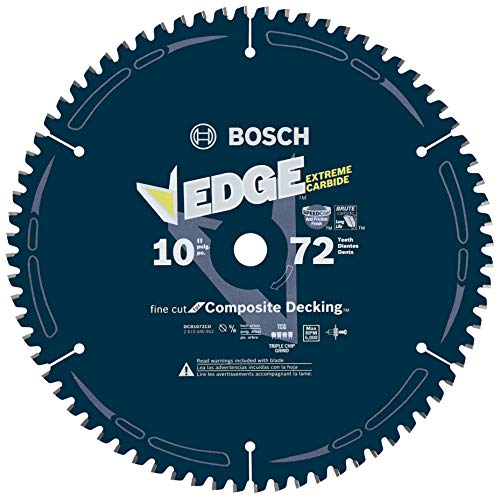
Features: Brute Carbide with C3/C4 micrograin formulation increases impact resistance. Triple chip grind geometry supports high-quality finishes in abrasive composites, with a hardened blade body for stability.
Best for: Professionals handling varied composites, offering dependable cut quality and blade life across materials like Trex and PVC.
Caution: May require slow, controlled passes for very hard boards to maximize edge quality.
Buying Guide
What makes a good composite decking blade?
A good blade for composite decking balances tooth design, metallurgy, and coating to minimize heat, gumming, and wandering cuts. Look for a carbide-tipped tooth, a non-stick or low-friction coating, and a grind that stays cool under load.
How many teeth should you choose?
Higher tooth counts yield smoother edges but cut more slowly. For Trex and similar decking, blades with 48–72 teeth are common, offering a compromise between speed and finish quality.
Why is a “Melt-Free” cut important?
Composite materials can melt or gum the blade when overheated. A Modified Triple Chip Grind (MTCG) and cool-cut coatings help keep temperatures down and reduce smear and tear-out.
Coatings and coatings’ trade-offs
Non-stick coatings reduce buildup and heat. They may wear over time but primarily extend blade life and maintain cutting efficiency in plastics and composites.
Blade compatibility and safety considerations
Confirm arbor size and plate thickness match your saw. Use protective eyewear, clamp the work firmly, and feed steadily to prevent kickback and ensure consistent finishes.
Maintenance tips for longer blade life
Clean debris after each cut, avoid forcing the blade through material, and store blades dry. Inspect for chipping or dulling teeth and replace when performance degrades.
FAQ
What blade is best for Trex decking?
Blades with a 40–48 tooth range and MTCG grind are commonly recommended for clean, melt-free cuts on Trex and similar composites.
Can I use one blade for PVC and wood composites?
Yes, select a blade designed for composites with non-stick coating and carbide teeth. Avoid blades intended only for wood to prevent tear-out on PVC.
Is a 10-inch blade better than a 7-1/4-inch blade for decking?
Not necessarily. The choice depends on your saw’s capacity and the depth of cut required. Larger blades cut deeper but require compatible equipment and slower speeds on some saws.
How important is the tooth count for finish quality?
Higher tooth counts tend to produce smoother finishes but cut more slowly. For decking, aim for a balance that fits your speed and finish expectations.
What maintenance helps blades last longer?
Keep blades clean, dry, and free from resin buildup. Use proper feeds and speeds, store blades correctly, and replace when teeth dull or chipped.