Looking for affordable electric tile cutters that still deliver solid performance? This guide highlights five value-focused options ideal for homeowners tackling bathroom, kitchen, or small remodel projects. Each product section explains who it’s best for, why it was selected, and any practical limitation to consider. The summary below helps you compare at a glance.
| Product | Best For | Key Benefit | Limitation |
|---|---|---|---|
| SKIL 7-Inch Wet Tile Saw | Small tile projects up to 12 x 12 inches | Corrosion-resistant steel top with adjustable fence | Manual water reservoir requires supervised use |
| TaskStar Mini Circular Saw | Multi-material cuts with precision on tight spaces | Laser guide, rip fence, and three blades | 4-1/2 inch blade size limits thick tile cuts |
| Cordless Angle Grinder Kit | Cordless convenience for light tile work | Two batteries and multiple discs for versatility | May be underpowered for heavy-duty tile removal |
| SEESII Mini Circular Saw | Versatile, compact tool for DIYers | Laser guide, dust management, multi-material blades | Small size may mean slower progress on large jobs |
| TEENO Cordless Angle Grinder Kit | Flexible cordless option with multiple blades | Dual batteries and 19,500 RPM for fast cuts | Battery life depends on usage and blades chosen |
SKIL 7-Inch Wet Tile Saw — Best For Small Tile Projects

The SKIL 7-Inch Wet Tile Saw is best for buyers focusing on small bathroom or backsplash tiles. It features a corrosion-resistant stainless steel top that supports tiles up to 12 x 12 inches, a sliding rip fence for accurate straight cuts, and a built-in blade cooling water reservoir to reduce dust and keep the blade cooler during operation. This is a practical pick for beginners and DIYers handling limited-area tile installs. Caution: monitor water reservoir levels to maintain blade cooling and cleaning efficiency.
TaskStar Mini Circular Saw With Laser Guide

Best For: DIYers who need a compact, multi-material cutter with precision features. Selection favors projects where a lightweight tool with a laser guide and adjustable fence improves straightness. The included 4-1/2 inch blades cover wood, soft metal, and tile, reducing the need for extra purchases. Caution: limited blade diameter can restrict deeper tile cuts; plan for multiple passes or alternative tools for thick tiles.
Cordless Angle Grinder Kit — Flexible Tile Detailing

Best For: Users who desire cordless mobility and a compact grinder for edge trimming around tile work. The kit includes two 16.8V batteries and multiple discs for metal, wood, and tile tasks. Use this for light-duty shaping or cleanup around cut tiles. Limitation: grinder performance depends on battery charge; for frequent high-volume tile work, a wired option may sustain longer continuous use.
SEESII Mini Circular Saw — All-Around DIY Versatility
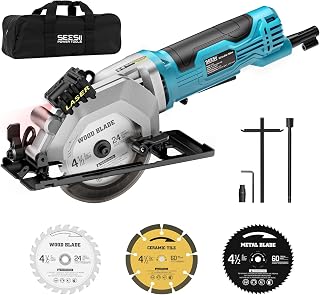
Best For: Home improvement enthusiasts who want a compact multi-material saw with a laser guide and dust management. The tool supports cutting wood, soft metal, and tile using three blades (TCT, HSS, diamond). Its versatility makes it a good choice for DIY projects that require different materials. Limitation: performance can vary when cutting thicker tiles; may require slower feeds and multiple passes for best results.
TEENO Cordless Angle Grinder Kit — Great All-Around Cordless Pick

Best For: Buyers who want flexibility and speed for light tile work, metal, and wood cutting with a cordless setup. The kit ships with two batteries and a selection of discs, enabling rapid transitions between tasks. Caution: actual runtime depends on blade selection and task intensity; plan for battery management during larger jobs.
Buying Guide
Key considerations when choosing an affordable electric tile cutter or compatible accessory:
- Tile size and project type: Choose a saw that handles your typical tile dimensions to avoid oversized tools for small jobs.
- Power source: Corded models offer consistent power; cordless options provide mobility. Balance runtime with task demands.
- Cut precision features: Laser guides, rip fences, and miter gauges improve accuracy, especially for straight lines and angled cuts.
- Blade compatibility: Ensure the tool supports the blade types you’ll need (TCT, HSS, diamond), especially for tile material.
- Dust and splash management: Water reservoirs or dust collection features help keep the workspace cleaner and extend blade life.
- Portability vs. capacity: Mini or compact models excel for tight spaces; larger units handle bigger tiles but are heavier.
- Safety and ergonomics: Look for ergonomic grips, low-vibration designs, and safety features to reduce fatigue during longer projects.
Frequently Asked Questions
- What is the best cheap tile cutter for small bathrooms?
– A compact saw with water cooling and a precise fence is ideal for small bathroom tiling projects. - Do I need a laser guide on a tile saw?
– Laser guides improve cut accuracy, especially for beginners, but they are not strictly necessary for all tasks. - Are cordless tile tools worth it for home use?
– Yes, for mobility and convenience on-the-go repairs; ensure batteries provide enough runtime for your project. - Can I cut tile with a standard circular saw?
– Yes, with the appropriate blade (diamond blade) and careful handling, though dedicated tile saws offer better water cooling and precision. - What blades should I keep for multi-material projects?
– Have TCT blades for wood, HSS for soft metals, and a diamond blade for tile to cover most jobs.