When cutting cast iron or other thick metals, you need carbide-tipped blades built to last. This guide highlights five top choices that balance life, speed, and control. Best for contractors tackling demolition, professionals cutting cast iron pipes, and DIYers dealing with thick steel, these blades are selected for longevity and reliable performance in demanding materials. Below, each product is presented with who it’s best for, why it was selected, and a practical caution to consider.
| Product | Best For | Why It Stands Out |
|---|---|---|
| EZARC Carbide Reciprocating Saw Blade R678HM Endurance | Heavy metal work, general cast iron and steel | Up to 50x longer blade life due to carbide technology; 8 TPI for tough metals |
| Diablo Steel Demon Carbide Teeth DS0908CF | Extreme metal cutting, high-strength alloys | Ultra-hardened carbide edge with protected tip and non-stick coating |
| INWELL 2PCS Tungsten Carbide Blades | Demolition and heavy-duty cuts | Industrial-grade carbide teeth; up to 50x longer life |
| HARDWIN 6-Inch 8 TPI Carbide Blades | Precision cutting in tight spaces | Balanced length; 30x longer life vs bi-metal; 8 TPI |
| EZARC Obsidian R678HMK / R978HMK Series | Thick metal, cast iron, and alloy steel | TiAlN carbide tech; up to 100x longer life; efficient cutting |
EZARC Carbide ReciprocatingSaw Blade R678HM Endurance for Thick Metal
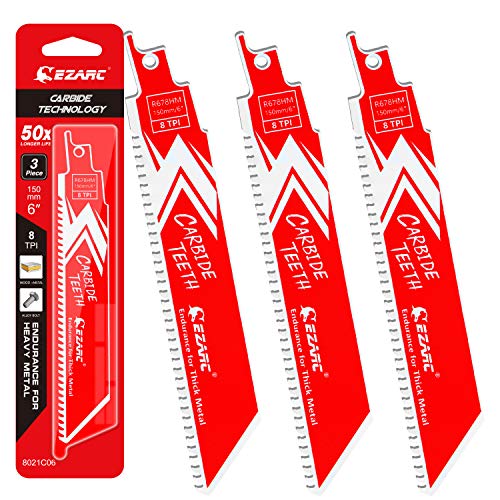
Best for rugged metal cutting, this blade features carbide technology that promises up to 50x longer life than standard bi-metal blades. It uses an 8 teeth-per-inch (TPI) design that excels at penetrating thick metals including high-alloy steels, stainless steels, rebar, and car beams. Choose this if you frequently cut through heavy metal in construction or infrastructure projects; the longer blade life reduces downtime for blade changes. Caution: carbide cores can be brittle if used improperly on very thin or thin-walled metals where binding occurs.
Diablo Steel Demon Carbide Teeth Reciprocating Saw Blade DS0908CF

Designed for extreme metal cutting, this blade uses a carbide-tipped edge to tackle high-strength alloys, cast iron, and stainless steel. It offers up to 50x longer life compared with standard blades in tough applications between 3/16” and 9/16”. The Perma-SHIELD non-stick coating reduces heat buildup and gum, promoting steadier progress in demanding demolition tasks. Best for professionals who need aggressive cuts without frequent blade changes; avoid this if you’re working on very delicate or thin-walled components where carbide tips could chip under misalignment.
INWELL 2PCS Tungsten Carbide Reciprocating Saw Blade

Engineered for demolition and heavy metal work, these blades use industrial-grade tungsten carbide teeth. They are built to maintain sharpness up to 50x longer than bi-metal blades, enabling longer runs through thick metal, cast iron, and stainless steel. With an 8 TPI tooth profile and individually ground carbide teeth, they offer controlled, steady cuts with reduced vibration. Best for consistent, long-duration cutting; choose this if you prioritize blade longevity. Limitation: price and availability may be higher than standard blades.
HardWin Carbide Reciprocating Saw Blades

These 6-inch blades offer high-speed cutting for thick metals, including cast iron and alloy steels. Each blade uses carbide teeth that deliver up to 30x longer life than standard bi-metal blades. The 150 mm overall length balances compact handling with adequate cutting depth, making them a versatile choice for tighter work areas. Best for projects requiring reliable performance in constrained spaces; avoid if you need longer blades for deep cuts in wide-open areas.
EZARC Obsidian Carbide Reciprocating Saw Blade (Pro) R678HMK 8TPI Endurance Ultra

Featuring TiAlN-coated carbide tips and an optimized 8 TPI design, this blade offers heat resistance and smooth controlled cutting for demanding thick metal work. It claims up to 100x longer life compared with standard bi-metal blades and higher cutting efficiency—claimed in lab settings—versus traditional counterparts. Best for users needing extended blade life under tough conditions; choose this if heat build-up is a concern. Caution: thicker blades may require more operator control to avoid binding in very tight curves.
Buying Guide: Key Purchase Considerations
- Material compatibility: Look for carbide or TiAlN-coated carbide tips for cast iron, stainless steel, and high-alloy metals. These provide long life and better heat resistance.
- Tooth design and pitch: 8 TPI is a common choice for thick metals, offering a balance between aggressive cutting and control. Higher TPI reduces chip load on hard materials.
- Blade length: Shorter blades (6″) fit tight spaces; longer blades (9″) enable deeper cuts. Choose based on your typical job site constraints.
- Coatings and coatings longevity: Non-stick or Perma-Shield-like coatings help reduce heat buildup and prevent gumming, extending blade life.
- Durability vs. cost: Carbide blades cost more upfront but can dramatically reduce blade changes on tough jobs; balance with project duration and frequency of use.
- Application scope: If you cut a lot of cast iron or rebar, prioritize blades with robust carbide tips and stable teeth geometry to resist tip fracture.
Frequently Asked Questions
- What blade is best for cast iron? — Carbide-tipped blades (8 TPI) are generally best for cast iron, offering long life and consistent cuts in hard metals.
- How long do carbide blades last compared with bi-metal? — Carbide blades can last several times longer, often up to 50x or more under demanding conditions, depending on material and usage.
- Are coated blades worth it? — Yes, coatings reduce heat buildup, gum, and corrosion, improving performance and blade life in tough materials.
- Can I use a standard blade for demolition work? — For thick metal and cast iron, standard bi-metal blades wear out quickly. Carbide options are typically recommended for demolition tasks.
- What should I consider for tight spaces? — Choose a 6-inch blade with robust carbide teeth for better control in confined areas, or a versatile 6–8 inch blade depending on the workspace.
- Is longer blade always better? — Not necessarily. Longer blades fit deeper cuts but can be harder to control in tight spaces. Match blade length to the job site constraints.