If you’re looking to turn a standard angle grinder into a capable belt sander, these attachments offer a faster, more precise way to remove rust, deburr edges, or smooth welds. This guide highlights top belt sander adapters that fit 5/8-11 grinders and are best for metalworking, rust removal, or detailed wood finishing. The ideal choice depends on your grinder compatibility, belt size, and the job at hand. The table below compares five strong options to help you decide quickly.
| Product | Best For | Key Benefit | Potential Limitation |
|---|---|---|---|
| VEVOR Belt Sander Adapter | General metalworking and rust removal | Wide belt grit range (60–600) for coarse to fine work | Grinder not included |
| YSJWAER Belt Sander Attachment | Rust removal and deburring | Compact head, quick changes, compatible with 42mm max diameter | Requires UL-approved grinders, may need fit check |
| MSFULLSEA Belt Sander Attachment | Flat surfaces, edges, irregular profiles | No-fit-issues guarantee and 360° head for precision | Grinder not included |
Below are five top choices, with details to help you compare at a glance.
VEVOR Belt Sander Adapter For Angle Grinder

Best for: Users needing a versatile setup for various metals and rust removal. This adapter kit fits six pipe sizes and includes 10 sanding belts in 60/120/240/400/600 grits, covering coarse to fine finishing. The 5/8-11 thread and triangular design support quick grinding of pipes and tubes. It’s a solid choice for hobbyists and light fabrication projects where a compact, adaptable sander helps reach curved surfaces. Limitation: The angle grinder itself is not included, so you’ll need a compatible grinder to use this kit.
YSJWAER Belt Sander Attachment For Angle Grinder
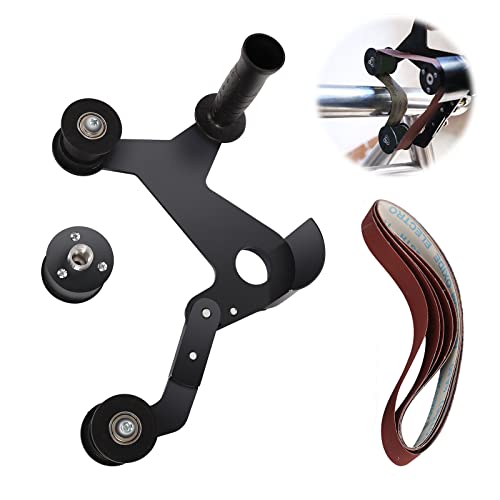
Best for: Quick conversion of an angle grinder into a belt sander for deburring and rust removal. It uses a standard US 5/8-11 thread and is designed for grinders with a body diameter under 42 mm. It supports grinding, forging, and polishing tasks, which can save time on welding cleanup or metal prep. Caution: Ensure your grinder has UL approval and that the attachment fits your model before purchase.
Ritammi Belt Sander Adapter For Angle Grinder

Best for: Those seeking a reliable pipe/ tube sanding solution that emphasizes belt grip and precise control. Features include a hand-grinder-to-sander conversion, a belt with a secure guide pulley, and compatibility with grinders under 42 mm in diameter. It’s a strong pick for rust removal on pipes and for projects requiring steady belt tension. Limitation: The 5/8-11 thread is standard, but verify belt size compatibility with your grinder’s arbor.
MSFULLSEA Belt Sander Attachment For Angle Grinder

Best for: Users needing flexible head movement and belt changes. This 5/8-11 UNC attachment includes a quick-belt-change design, a 360° rotatable head for precise angles, and a built-in dust port for cleaner work. It suits metal rust removal, wood framing, and edge work on irregular profiles. Caution: Actual grinder and belt compatibility should be confirmed; some grinders may require additional adapters.
OCTAOR Upgraded Angle Grinder Belt Sander Adapter

Best for: Detailing work on tubes and pipes, with a redesigned shield mount to fit more grinder sizes. This adapter converts a standard angle grinder into a compact belt sander capable of rust removal and fine polishing on curved surfaces. The design emphasizes simplicity and stability. Limitation: The grinder itself is not included, so you must supply a compatible model.
Buying Guide
What to consider when choosing a belt sander adapter for your grinder:
- Grinder compatibility: Check thread size (commonly 5/8-11) and maximum head diameter to ensure a proper fit. Some adapters require grinders with under 42 mm diameter heads.
- Belt size and grits: Larger belts cover more area but may be harder to control on tight curves. A range from 60 to 600 grit supports rough material removal through fine finishing.
- Head design and adjustability: A rotatable or triangular head can reach pipe interiors, edges, and curved surfaces more effectively. A quick-belt-change system saves downtime on projects.
- Dust management: Built-in dust ports or compatibility with dust bags help maintain a cleaner work area and prolong belt life.
- Durability and materials: Look for stainless steel or reinforced components for longevity in metalworking environments. The belt tracking and guide pulleys should resist belt slip under pressure.
- Intended workpiece: For pipes and tubes, choose adapters with a stable belt grip and a design that minimizes belt sway for even material removal.
Frequently Asked Questions
- Can I use any angle grinder with a belt sander attachment?
Not all grinders fit every attachment. Verify thread size, diameter, and mounting compatibility before purchasing. - What grits are best for rust removal?
Coarser grits like 60–120 are effective for initial rust removal; finer grits such as 240–600 are better for finishing and smoothing. - Do belt sander adapters require any special maintenance?
Regularly inspect guide pulleys and belt tension; keep dust ports clear; replace belts when worn to prevent uneven sanding. - Are these attachments suitable for wood as well as metal?
Many are designed for both, but confirm belt type and adapter tolerances for wood to avoid damage or belt wear. - Will the grinder power affect sanding efficiency?
Yes. Sufficient power helps maintain belt speed and stable sanding, especially on metal surfaces with rust or welds.