Finding the right belt and disc sander combo means balancing power, versatility, and stability. This guide highlights five well-rounded options that cover hobbyists, woodworkers, and workshop pros. Each choice pairs a 4 x 36 inch belt with a 6 inch disc, offering belt and disc sanding in one compact unit. The selections emphasize solid construction, adjustable tables, and practical features like dual dust ports and toggleable belt angles. Use this overview to pick a model that matches your material, project size, and space constraints.
Buyer snapshot: The top picks below are best for beginners who want ease of use, intermediate woodworkers needing flexible angle options, and small-shop setups that require reliable all-in-one sanding capability. If you value speed control, look for variable speed options; if you prioritize stability, focus on solid cast bases and vibration damping. The following table summarizes key traits to help quick comparisons.
| Product | Brand | Best For |
|---|---|---|
| WEN Benchtop Belt and Disc Sander (6502T) | WEN | All-around hobbyist and intermediate projects; value-focused buyers |
| Woodskil Variable Speed Belt Disc Sander | Woodskil | Users needing precise speed control for different materials |
| BUCKTOOL Direct Drive 4×36 in Belt & 8 in Disc Sander | Bucktool | Woodworkers seeking powerful, durable performance and straightforward setup |
| SKIL BB9504-00 Belt and Disc | Skil | Versatile, compact option for varying angles and lengths |
| Woodskil 4.5-Amp Belt & Disc Sander Combo | Woodskil | Balanced performance with robust motor and flexible table angles |
WEN Benchtop Belt and Disc Sander 6502T
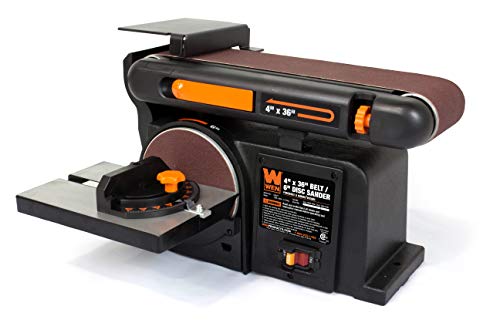
The WEN 6502T combines a 4 x 36 inch belt with a 6 x 6 inch disc for versatile sanding. The belt can tilt from 0 to 90 degrees, enabling vertical and horizontal operation for bevels and edge work. A cast iron base reduces vibration, promoting smoother finishes and more consistent stock removal. Best for hobbyists who want a reliable, space-efficient two-in-one machine and for small workshops that need a budget-friendly, sturdy option.
Best for: Beginners and entry-to-midlevel woodworkers who value a simple, stable setup with clear belt and disc alignment.
Caution: The unit relies on standard power connections and may require careful alignment before heavy-duty use to preserve belt tracking over time.
Woodskil Variable Speed Belt Disc Sander

This Woodskil model offers adjustable disc speed from 2000 to 4000 RPM and belt speed from 1060 to 2110 FPM. The 4 x 36 inch belt and 6-inch disc support edge sanding, surface smoothing, and detail work in one compact unit. Horizontal and vertical operation increases flexibility for irregular shapes and varying project angles. Best for users who need precise sanding control across different materials and finishes.
Best for: Woodworkers who prioritize speed control for different woods and finishes, and those who need flexible mounting orientation.
Caution: Variable speed requires a bit more setup work to dial in the exact RPM for delicate projects, especially with soft woods.
BUCKTOOL Direct Drive Belt Sander (4×36 in / 8 in)

The Bucktool model uses a direct-drive motor for efficient, powerful operation, with a 3/4 HP motor and 3450 RPM disc speed. It supports 4 x 36 inch belts and an 8 inch disc, with a tilting work table 0-45 degrees. The cast aluminum base enhances stability, while the miter gauge helps with precise angle work. Best for: Woodworkers who want a heavier-duty build and straightforward, quick-change belt options for longer projects.
Best for: Projects requiring durable metal and wood work with reliable power delivery and a slightly larger disc for faster material removal.
Caution: Direct-drive power is strong; ensure you manage dust collection and belt tension to prevent belt drift during heavy use.
SKIL 4.5 Amp Belt And Disc Sander BB9504-00
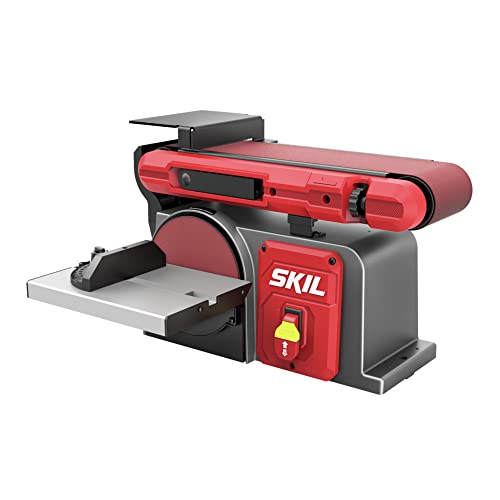
Skil’s BB9504-00 blends a 4 x 36 inch belt and a 6 inch disc in a compact footprint. It supports belt angle adjustment from 0 to 90 degrees and includes a built-in miter gauge to guide crosscuts. This model suits small shops and DIYers who need a versatile unit without taking up much space. Best for: Home workshops with limited space that still require multi-angle sanding capabilities.
Best for: Users who want reliable two-in-one sanding with clear angle presets and a compact form factor.
Caution: The compact size may limit aggressive removal on large or dense stock; plan for longer cycles on big pieces.
Woodskil 4.5-Amp Belt & Disc Sander Combo

This upgraded Woodskil unit features a 3/4 HP motor with 3590 RPM for the disc and 1900 FPM on the belt. The belt table tilts 0-90 degrees, and the miter gauge on the table supports 0-45 degree bevels. A robust cast aluminum base and the option to switch between horizontal and vertical belt positions enhance usability for various stock shapes. Best for: Intermediate builders who appreciate stronger power and precise table adjustments for bevels and edge work.
Best for: Projects that demand a stable, higher-power setup with flexible belt positioning and accurate angle control.
Caution: Heavier weight may require a sturdier bench or stand to maximize stability during operation.
Buying Guide: Key Considerations For Belt And Disc Sanders
What size should you choose? Most belt/disc combos in this category use a 4 x 36 inch belt and a 6 inch disc. This size offers good stock removal, control, and versatility for small to medium projects. If you work with larger pieces, consider a model with a larger disc (8 inch or larger) and a beefier base.
How important is speed control? Variable speed helps when you switch between hard woods, soft woods, and different finishes. If your typical projects vary widely, prioritize a model with adjustable belt and disc speeds to avoid scorching or glazing.
What about build quality and vibration? A cast iron or heavy aluminum base minimizes wobble and vibration, which improves finish quality and belt tracking. Dual exhaust ports help keep chips and dust under control, especially in longer jobs.
What table adjustments matter? Look for miter gauges and tilt ranges that support bevels and angled work. A workspace that can tilt from 0 to 90 degrees makes edge work and contour sanding more efficient.
Should you prefer horizontal or vertical belt operation? Some users switch between horizontal for flat stock and vertical for curved or raised-edge pieces. A 0-90 degree belt tilt expands your ability to reach tricky angles.
FAQ
- What is the typical use for a belt and disc sander combo? To perform edge sanding, flattening, beveling, and fast stock removal on wood pieces with a compact, single machine.
- Is a variable speed feature important? Yes, it provides better control across different materials and finishes, reducing scorching and tear-out.
- Do these machines require dust collection? Yes. Using a dust port on both belt and disc helps maintain a cleaner workspace and prolongs belt life.
- Which model is best for a small shop? A compact, sturdy unit with a solid base and straightforward controls—like the WEN 6502T or SKIL BB9504-00—often fits small spaces well.
- Should I choose 8 in disc or 6 in disc? An 8 in disc can remove material faster and handle larger pieces; a 6 in disc is adequate for most hobbyist-work and tighter spaces.
- What maintenance is needed? Regularly check belt tension, alignments, and dust extraction; replace belts when wear worsens finish quality or tracking.