Bead molding router bits are a practical choice for achieving decorative edges on shelves, tables, and trim. This guide highlights five top picks that balance sharp edges, durability, and ease of use. The best fit depends on your project’s edge profile, material, and shank size. The options below range from bullnose beads to triple beads, helping you create character-rich details whether you’re refinishing a piece or building new furniture.
Buyer’s quick reference: the table below summarizes each selected product’s key edge style, shank, and ideal use.
| Product | Edge Style | Shank | Best For |
|---|---|---|---|
| YONICO Bullnose Beading Router Bits 13192q | Bullnose bead | 1/4 inch | Shelves, tabletops, decorative edges |
| Akylin Convex Edge Oval Router Bit Set | Convex bullnose (oval) | 1/2 inch | Stair treads, shelf edges |
| YONICO Bullnose Beading Router Bits 13191q | Bullnose bead | 1/4 inch | Shelves, tabletops |
| YONICO Furniture Molding and Trim Router Bits Set 16260 | Triple bead & flute | 1/2 inch | Triple bead moldings, trim work |
| SICWOOD Triple Bead Router Bit | Triple bead column | 1/4 inch | Elegant decorative profiles, furniture molding |
YONICO Bullnose Beading Router Bits 3/8-Inch Bead

Best for: furniture edges where a pronounced but subtle bullnose is desired. This bit features a 3/16″ radius with a 3/8″ bead and a 1/4″ cutting depth, and uses two flute carbide cutters with a 1/4″ shank. Premium C3 micro-grain tungsten carbide blades ensure a sharp, long-lasting edge. Choose this if you want a strong edge that still reads as a refined detail on tabletops or shelving.
Why selected: It provides a reliable bullnose profile that’s easy to control for beginners and professionals alike, with a robust cutting depth that handles hardwoods well.
Caution: Check stock height to avoid over-cutting the edge on thin materials, and ensure your router is set to a conservative depth on fragile woods.
Akylin Convex Edge Oval Router Bit Set

Best for: stair treads and rounded shelf edges where a soft, convex profile enhances grip and touch. This 6-piece set uses a 1/2″ shank and offers cutting heights up to 1-5/8″ with shallow bullnose lengths of 1″, 1-1/8″, and 1-1/4″. The YG6X tungsten carbide-tipped bits provide durability, while a ball bearing guide supports precise control. Choose this if you want a gentle, lifted edge with a touch of classical molding detail.
Why selected: The convex profile adds architectural softness and a classic furniture feel, useful for traditional woodworking projects.
Caution: The shallow bullnose option requires careful setup and may not be ideal for deep, heavy profiles on dense hardwoods.
YONICO Bullnose Beading Router Bits 1/4-Inch Bead

Best for: adding a precise 1/4-inch bullnose bead to edges of shelves and tabletops with a clean, consistent finish. The bit features a 1/4″ shank and two-flute carbide cutters, reinforcing a long-lasting edge with premium C3 blades. This is a solid choice for mid-depth bead profiles.
Why selected: It delivers a reliable bead profile with a balance of durability and cut quality, suitable for repeated pass work on furniture components.
Caution: When handling tight corners, ensure the bit clears the workpiece to avoid tear-out on highly figured woods.
YONICO Furniture Molding and Trim Router Bits Set 2 Bit Triple Bead & Flute
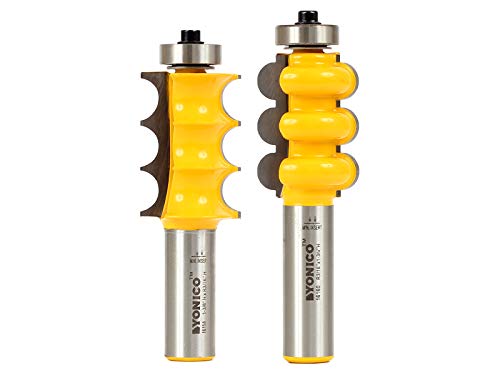
Best for: adding triple bead details and intricate trim moldings to furniture projects. This 1/2-inch shank set supports 1-3/8″ triple bead profiles and triple flute column and face moldings. Premium C3 micro-grain blades ensure sharper, longer-lasting edges. Use for high-end trim work on case pieces and headboards.
Why selected: The triple bead design offers a distinctive, layered look that stands out in detailed molding and furniture accents. It’s particularly effective for projects requiring multiple bead steps in one pass or sequence.
Caution: Triple-bead profiles can be aggressive; use light passes to prevent tear-out on softwoods or highly figured surfaces.
SICWOOD Triple Bead Router Bit

Best for: creating elegant triple bead columns and furniture moldings with a single tool. This bit features a 1/4″ shank, 3/32″ radius, and 7/8″ cutting height. It uses C3 carbide blades for durability and smooth cutting. Suitable for decorative profiles on legs, frames, and trim.
Why selected: It delivers an ornamental, traditional look with a compact cutting height that fits many standard router setups, providing good control for precise profiles.
Caution: The small radius means you must route carefully to prevent chatter on soft woods or extremely thin stock.
CMT Corner Beading Bit
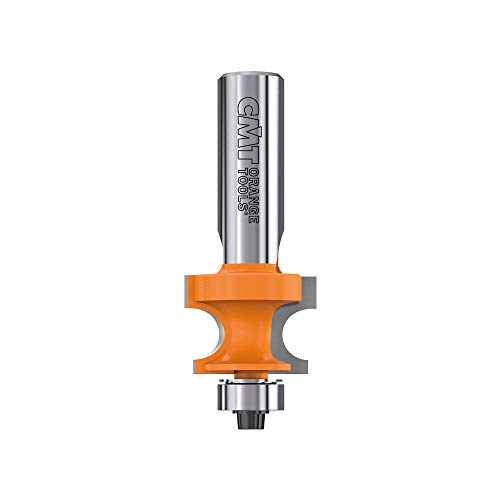
Best for: precise corner rounding and single-pass corner beading on table legs and furniture details. It offers a 1/2-inch shank and a 3/16-inch radius with carbide tips. It supports a versatile approach to both edge rounding and bead creation in one operation.
Why selected: The bit’s ability to produce a rounded edge in one pass helps speed up trim work while maintaining a clean, consistent profile.
Caution: Use two passes for full-round corners in larger stock to minimize heat buildup and tear-out.
YONICO Triple Bead 1/8-Inch Radius 16159q
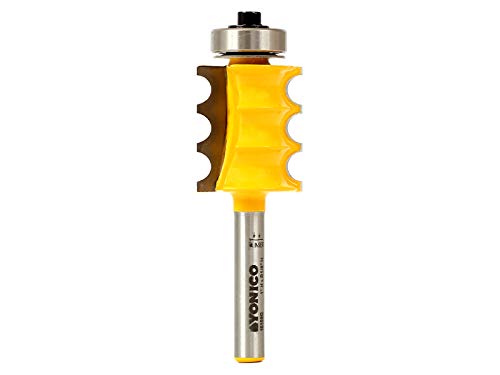
Best for: adding triple bead moldings to furniture trim with a compact 1/8-inch radius. The 1/4-inch shank supports a 2-13/16-inch overall height, balancing reach with control. This bit is well-suited for detailed accent work on frames and cases.
Why selected: The shallow radius creates subtle, elegant bead profiles that don’t overwhelm the overall design, making it ideal for refined furniture pieces.
Caution: The thin bead profile requires careful feed rate and bit tension to avoid chatter on hard woods.
Buying Guide: Bead Molding Router Bits
- Edge profile type: Bullnose, convex/oval, triple bead, or decorative columns. Choose based on the furniture style and the level of detail you want.
- Shank size: 1/4″ shank bits are common for light-duty work; 1/2″ shank bits provide greater rigidity for demanding cuts.
- Material compatibility: Carbide-tipped bits (C3 micro-grain) offer longevity and better edge retention on hardwoods.
- Router capability: Ensure your router’s collet and power can handle the bit diameter and cutting height; begin with shallow passes and increase only as needed.
- Number of beads: Single, double, or triple bead profiles affect appearance and ease of use. Start with simpler profiles if you’re new to bead work.
- Stock thickness: Thicker stock tolerates deeper cuts; thinner edges require lighter passes to prevent tear-out.
- Maintenance: Keep bits sharp and clean, and use proper feed rates to maximize edge quality and tool life.
FAQ
- Q: What bead size should I start with for beginners? A: A 1/4-inch bullnose bead is a common starting point for versatile applications on tabletops and shelves.
- Q: When should I choose a triple bead bit? A: Use triple bead for a more ornate edge on trim moldings and furniture details when a richer profile is desired.
- Q: Can I use carpeted or soft woods with these bits? A: Yes, but adjust depth and feed rate to minimize tear-out and burn marks.
- Q: How can I ensure consistent results across long edges? A: Use a bearing-guided bit or a straightedge with a router table for straight, repeatable passes.
- Q: Are these bits suitable for handheld routers only? A: Most listed bits work with handheld or router-table setups; check shank size and ensure stable handling.
- Q: How many passes are recommended for deep beads? A: Start with shallow passes and gradually increase depth to avoid tear-out and heat buildup.