If you’re searching for a band saw with a sturdy stand to elevate your woodworking or DIY tasks, these five models stand out for stability, blade versatility, and ease of use. They’re suited for hobbyists, DIYers, and small shop setups who want reliable cuts without swapping machines. The top picks balance power, cutting depth, and convenient features like tool-free blade changes and built-in stands. Use the quick-reference table below to compare who each product is best for and why it’s recommended.
| Product | Best For | Why This One Stands Out |
|---|---|---|
| Woodskil 10 Inch Dual Speed Band Saw with Stand | Woodworkers needing both hardwood and softwood versatility | Twin speeds (2360/3000 FPM), quick tension system, six bearings, large 5-1/8″ cutting height, and easy door access for rapid blade changes. |
| WEN Band Saw with Stand, 10-Inch, 3.5-Amp | Beginners and hobbyists seeking solid value | Two-speed operation with a spacious cast-aluminum table; good for basic up to 9-3/4″ wide cuts and 6″ deep cuts. |
| VEVOR Band Saw with Stand, 10-Inch | Budget-conscious woodworkers needing a reliable stand setup | Two-speed benchtop design with a sturdy base and full wood-cutting capability; good balance and safety features. |
| RIKON Power Tools 10-310 | Compact workshops and hobbyists | Cast-iron table, steel stand, and tool-less blade guides enable precise cuts in a small footprint. |
| PowerSmart Portable Band Saw with Stand | Metalworking and versatile on-site tasks | 10A motor with a removable alloy steel base; deep 5″ cut capacity and 0–45° bevel capability. |
Woodskil 10 Inch Dual Speed Band Saw with Stand

Best for: Woodworkers who need both hardwood and softwood cutting versatility. The 2360 FPM speed handles hardwoods like oak and maple without scorching, while 3000 FPM excels with softwoods and plywood for quick project turns. The quick tension system makes blade changes fast, and the six ball-bearing guides reduce drift for accurate curves.
Why chosen: This model combines dual-speed cutting with a sturdy stand, enabling stable precision for curved work, frames, and tabletops. The 5-1/8″ cutting height accommodates 4×4 stock, and the 10″ throat depth yields wide panels.
Caution: Blade tension should be dialed carefully during setup to avoid drift on tight curves. Regular cleaning of guides helps maintain accuracy.
WEN Band Saw with Stand, 10-Inch, 3.5-Amp
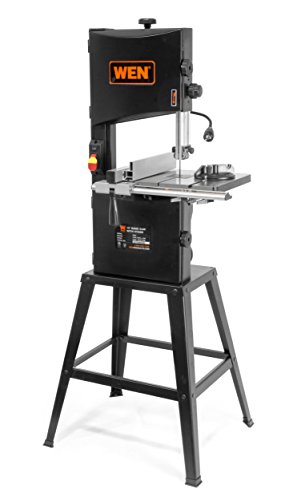
Best for: Beginners and hobbyists seeking solid entry-level performance with an included stand. It offers a reliable 3.5-amp motor and a wide cutting capacity for basic woodworking tasks.
Why chosen: The cast aluminum work table bevels up to 45 degrees and supports consistent cuts. It’s a straightforward, value-conscious option when you want a stable stand setup without extra frills.
Caution: Depth capacity is limited to about 6 inches; larger stock will require alternative fixtures or tools.
VEVOR Band Saw with Stand, 10-Inch

Best for: Woodworkers who want a two-speed benchtop model with a solid stand and reliable cutting performance.
Why chosen: It provides a balance of power and precision with a two-speed option, 6-inch maximum cutting height, and included miter gauge and fence for accurate bevels and crosscuts.
Caution: The base setup is decent, but heavier stock may require careful support to prevent tipping during deep cuts.
RIKON Power Tools 10-310 10″ Bandsaw

Best for: Small shops and hobbyists needing a compact, durable stand-mounted option.
Why chosen: A steel stand combined with a cast-iron table and an easy-to-use tension system supports precise resawing and rip cuts. The 0–45° tilting table enhances bevel and miter versatility.
Caution: Limited resaw capacity compared to larger 14″ or 15″ models; consider this when planning aggressive sheet stock work.
PowerSmart Portable Band Saw with Stand

Best for: Metalworking tasks where portability and a sturdy base are beneficial.
Why chosen: A 10 Amp motor delivers strong capability for metal cutting, with a 5-inch deep cut and a 0–45° bevel. The removable alloy steel base adds versatility for transport and on-site work.
Caution: Primarily designed for metal; wood-cutting performance may be less optimized than dedicated woodworking bandsaws.
Buying Guide: Key Purchase Considerations
Choose the right band saw with a stand by weighing power, cutting capacity, and stability. Consider the material you most frequently work with, space availability, and whether you need portable on-site capability.
- Cutting capacity: Look at maximum cutting height, throat depth, and whether it handles 4×4 stock or wide panels easily.
- Speeds and blades: Dual-speed or variable speeds expand versatility for hardwoods and softwoods. Verify compatibility with common blade sizes (1/8″ – 1/2″).
- Stand stability: A solid base and a well-designed stand reduce vibration and improve accuracy for long cuts.
- Bevel and table: A tilting table (0–45 degrees) expands bevel cutting options and crosscut precision.
- Blade changes: Quick-release tension systems and tool-free doors speed up blade swaps and setup.
- Accessory compatibility: Fence, miter gauge, and dust collection compatibility improve overall workflow.
Frequently Asked Questions
- What is the advantage of a two-speed band saw?
Answer: It allows slower speeds for hardwoods to reduce burning and faster speeds for softwoods and ply to speed up cuts. - Is a stand necessary for a band saw?
Answer: A stand improves stability and reduces vibration, which helps with accuracy, but some benchtop models can work on sturdy work surfaces. - Can I cut metal with a wood band saw?
Answer: Some models are designed for metal or have higher torque, but always use the appropriate blade and follow manufacturer guidelines. - What safety features should I look for?
Answer: Blade guard adjustments, blade tracking indicators, and dust collection compatibility contribute to safer operation. - What blade size is best for general use?
Answer: Blades in the range of 1/8″ to 1/4″ are common for fine woodworking; consult your model’s blade compatibility chart. - Do these units work well for curves and intricate cuts?
Answer: Yes, especially models with six guides or more and a tension system designed for precise curves.