Answer: For straight-cut work on thin sheet metal, choose aviation snips designed for clean, controlled straight lines with minimal effort. This guide highlights top options best suited for HVAC ducts, gutters, and DIY metal projects. If you need precise straight cuts with low fatigue, these picks are ideal for professionals and avid DIYers alike.
The top five products below are selected for straight-cut performance, blade durability, and ease of use. The table provides quick comparisons to help you decide which snip set fits your project needs and hand strength.
| Product | Best For | Cut Capacity | Notes |
|---|---|---|---|
| HURRICANE 10 Inch Tin Snips (Straight Cut) | Thin sheet metal, DIY gutters | Up to 20-gauge steel, 22-gauge stainless | Durable Cr-V blades, non-slip handles |
| HURRICANE 10 Inch Aviation Tin Snips (Cr-Mo) | Clean straight cuts, light fabrication | Up to 20-gauge steel, 22-gauge stainless | High-leverage design, reduces effort |
| CRAFTSMAN Aviation Snips, Straight Cut | General metal fabrication | Up to 18GA steel, 22GA stainless | Induction hardened edge, spring-assisted |
| Crescent Wiss 9-3/4 Inch Snips | Left/Right curves, simple straight cuts | 18 gauge steel | Ergonomic yellow handles, quick latch |
| IRWIN Straight Aviation Snip | Multi-material cutting | Sheet metal, vinyl, plastic | Compound cutting action, EZ close latch |
Use this guide to determine which snip best fits your typical material and cutting style. The selections favor straight-cut performance and dependable blade durability for everyday metalwork and HVAC/gutter projects.
HURRICANE 10 Inch Aviation Tin Snips, Straight Cut
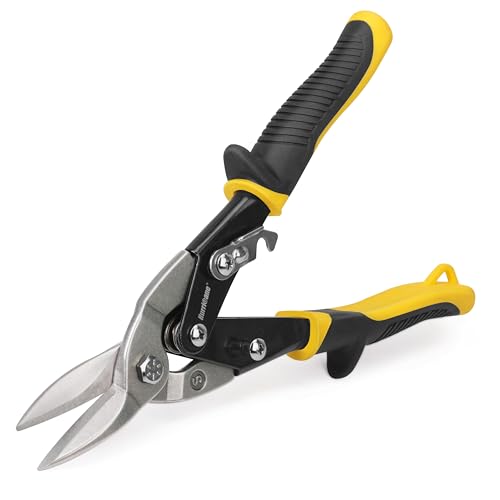
Best for: Professionals and DIYers who need straight-line accuracy with light to moderate gauge metals. These snips are designed for straight cuts and wide, gentle curves in thin sheet metal, such as HVAC ducts and gutter repairs. The Chrome Vanadium (Cr-V) blades feature micro-serrations to grip metal and prevent slipping.
Why chosen: Clear straight-cut capability up to 20-gauge cold rolled steel and 22-gauge stainless steel. The non-slip TyreGrip handle enhances control on long cuts, reducing hand fatigue. A practical choice when you frequently work on flat or gently curved sheets.
Limitations: Not suited for tight circles or sharp angles. Avoid cutting hardened steel, metal rods, or wire mesh to protect blade integrity.
HURRICANE 10 Inch Aviation Tin Snips (Cr-Mo)

Best for: Users needing a high-leverage tool that reduces cutting force for straight and broad curves. Suitable for mild steel, aluminum, and PVC overlays in DIY projects.
Why chosen: The dual-pivot leverage system lowers required force by up to 40% compared with standard snips, aiding fatigue-free long sessions. Cr-Mo steel blades resist wear for longer edge life.
Limitations: Like other straight-cut snips, not ideal for hard metals, tubes, or mesh. Slight variations in results can occur between cuts on different materials.
CRAFTSMAN Aviation Snips, Straight Cut

Best for: General metal fabrication tasks requiring reliable straight cuts with a smooth feel. Useful for beginners and pros in light metalworking projects.
Why chosen: Cut capacity up to 18GA steel or 22GA stainless, with a spring-assisted latch for one-handed operation. Induction-hardened edge helps maintain a sharp bite longer than standard blades.
Limitations: Induction-hardened edges improve longevity, but performance varies with different metals and thickness. Use within the listed capacity for best results.
Crescent Wiss 9-3/4 Inch Snips

Best for: Quick cuts with dual-handling options and basic straight cuts in low-carbon steel applications.
Why chosen: Ergonomic design with yellow handles for easy identification. The precision blended blades and serrations help in steady cutting of 18 gauge steel, offering reliable performance for simple shapes.
Limitations: Not optimized for very tight curves or heavy duty industrial metalwork. Mainly suited for light to moderate straight cuts and simple curves.
HURRICANE 3 Piece Aviation Tin Snips Set

Best for: Those who want a complete kit covering straight, left, and right cuts in one purchase. Great for HVAC ductwork and complex gutter shapes.
Why chosen: The trio includes yellow (straight), red (left/curves), and green (right/curves) snips. This versatility helps maintain cutting rhythm without tool switching and reduces project downtime.
Limitations: The set is most effective when each snip is used within its intended curve direction. Overuse on hard metal can dull blades faster.
10 Inch Snips Heavy Duty (Warmtree)

Best for: Projects requiring precise straight lines and gentle curves in larger metal sheets, including thicker PVC or aluminum panels.
Why chosen: Cr-V blades with serrated edges provide stable material grip and extended service life. The tool is labeled with thickness ratings to verify compatibility quickly.
Limitations: Some users may prefer finer control for very tight curves; this set excels at straight and broad curves rather than extreme shaping.
CRAFTSMAN Aviation Snips, Straight Cut (CMHT73756)
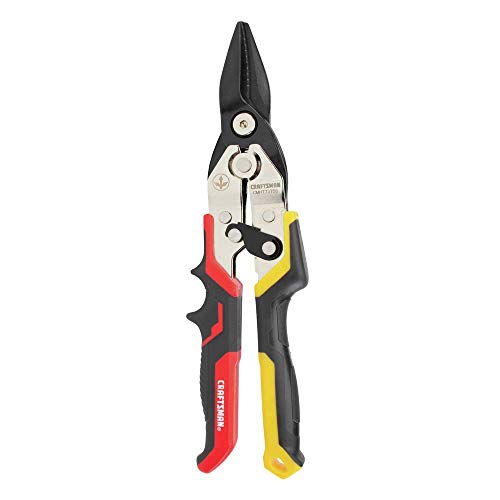
Best for: A dependable straight-cut option with a balance of cost and performance for daily metalworking tasks.
Why chosen: The snips offer a 18GA steel or 22GA stainless capacity, with a spring-assisted latch and an induction-hardened edge for longer edge life.
Limitations: Slightly lower leverage on very thick metals; best used within its stated capacities for consistent results.
Buying Guide
What material will you cut most often?
Thin sheet metal (20-22 gauge) is common in ducts and gutters. Choose snips with cutting capacity matching or exceeding your typical material thickness to avoid blade wear and provide cleaner cuts.
Do you need leverage or speed?
For frequent long cuts or hard metals, select snips with higher leverage or a dual-pivot design. If you mainly shape simple straight lines, standard straight-cut snips are sufficient.
Which handle design helps you most?
Non-slip TyreGrip or similar ergonomic handles reduce hand fatigue on extended use. Color-coded handles can help you quickly identify straight versus curved-cut tools on a busy jobsite.
What about blade life?
Induction-hardened or Cr-V steel blades resist wear better and stay sharp longer. Serrated edges can help grip slippery metal when starting a cut, especially on smooth aluminum or stainless steel.
What is your project environment?
For HVAC duct work and gutters, you may benefit from a 3-piece set to handle straight, left, and right curves without swapping tools mid-project. For occasional metalworking, a single straight-cut snip may suffice.
FAQ
- What is the difference between Cr-V and Cr-Mo blades? Cr-V blades use chrome vanadium steel for durability and ease of sharpening, while Cr-Mo blades use chromium-molybdenum steel for higher strength and wear resistance in some models.
- Can I cut aluminum with aviation snips? Yes, aviation snips are designed for soft metals like aluminum and thin steel; avoid very thick or hardened materials.
- Are snips suitable for left-handed users? Some models offer left-cut variants; otherwise, most snips are ambidextrous but ergonomics vary by design.
- Should I use snips for curved cuts? Yes, some snips provide left and right cut capability to follow tight curves; choose a set with curved-cut options if needed.
- How do I maintain blade longevity? Keep blades clean, avoid cutting through hard materials, and store with latches closed to protect edges during transport.