Looking for an air-powered or cordless staple gun tailored for fencing and mesh work? This guide highlights five top options that balance power, durability, and ease of use for electrified wire, vineyard trellising, snow fencing, pet enclosures, and livestock fencing. The picks cover different gauges and drive lengths to match your staple size needs and project scale. Best for contractors, DIY homeowners, and farm maintenance crews seeking dependable performance with minimal jams.
Summary of chosen products
| Product | Best For | Key Benefit |
|---|---|---|
| Freeman PFS9 Pneumatic 9-Gauge | Heavy-duty fencing | 2″ staples for strong security |
| Freeman PFS105 Pneumatic 10.5-Gauge | Mid-weight fencing | 1-9/16″ staples, rugged build |
| Freeman PFS16 Pneumatic 16-Gauge | Trellising and snow control | 1″ staples, jam release |
| Freeman PFS18 Pneumatic 18-Gauge | Mesh and woven fencing | 3/8″–7/8″ staples, compact |
| Freeman 20V Cordless Fencing Stapler Kit | Mobile tasks and remote sites | Up to 1300 fasteners per charge |
Freeman PFS9 Pneumatic 9-Gauge Fencing Stapler
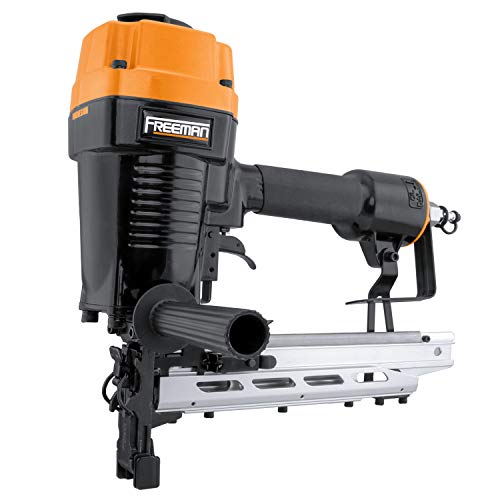
Best for heavy-duty fencing where longer staples are needed to secure livestock or large mesh panels. Designed for electrified single wire with insulation, horse and deer fencing, and chain link fencing. Uses 9-gauge staples from 1-1/2″ to 2″ in length, offering strong penetration and hold. The tool features a hardened steel drive blade and anodized aluminum magazine for durability in challenging job sites. Best for contractors handling rugged fencing installations or projects requiring robust fasteners. Caution: heavier tool may be tiring for long sessions; ensure proper stance and support to maintain accuracy.
Freeman PFS105 Pneumatic 10.5-Gauge Fencing Stapler
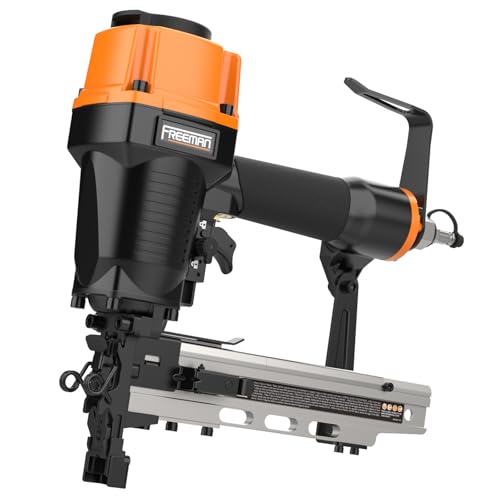
Best for mid-weight fencing jobs requiring longer staple reach, such as vineyard trellising or snow-control fencing. It accepts 10.5-gauge staples from 7/8″ to 1-9/16″. The tool uses a one-piece hardened steel drive blade with an anodized aluminum magazine, promoting longevity in outdoor settings. Choose this if you need a balance of staple length and ease of drive for moderate loads. Limitation: slightly heavier than lighter models, which may reduce maneuverability on small structures.
Freeman PFS18 Pneumatic 18-Gauge Fencing Stapler

Best for mesh and woven applications where lighter, shorter staples are sufficient. It uses 18-gauge glue-collated staples from 3/8″ to 7/8″ for light fencing, electric fencing with insulation, and pet enclosures. The drive blade is one piece and steel, with an anodized magazine and cylinder to resist damage. Opt this model for delicate installations or projects involving smaller mesh or smaller animal enclosures. Limitation: shorter staple range may not meet heavier-duty fencing demands.
Freeman 20V Cordless Fencing Stapler Kit
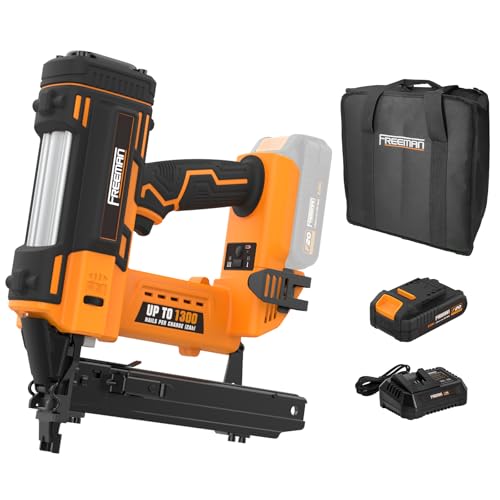
Best for mobile projects and remote sites where cords are inconvenient. This 16-gauge stapler uses 1″ staples and drives up to 1300 fasteners per charge, with a 2.0 Ah lithium-ion battery and a 45-minute recharge. It suits mesh and woven fencing, including electrified single-wire installations, trellising, snow control, and livestock fencing. The kit includes a battery, charger, and bag for easy transport. Caution: battery life may vary with climate and workload; plan for charging breaks during larger installations.
Buying Guide
What to consider when choosing an air or cordless fencing stapler
- Fencing type and staple size: For livestock fencing or heavy mesh, choose 9- or 10.5-gauge models with longer staples. For trellising or pet enclosures, 16- to 18-gauge options provide adequate security with lighter bodies.
- Power source: Pneumatic tools require an air compressor; cordless models offer portability for remote sites, reducing trips to power sources.
- Drive depth and jam resistance: Tools with depth adjustment and jam release help tailor penetration to material thickness and minimize downtime.
- Durability and build: Look for hardened steel drive blades and anodized magazine components to withstand outdoor use and repeated cycling.
- Weight and ergonomics: Lighter tools reduce user fatigue. Belt hooks and comfortable grips improve on-site efficiency during long tasks.
How to use effectively
Prep the surface, align the staple position, and fire with controlled bursts to avoid misfiring. For heavier fencing, use longer staples and verify that the mesh is properly tensioned before stapling. When using cordless models, monitor battery life and recharge as needed to avoid mid-project interruptions.
Maintenance tips
- Regularly oil the drive mechanism and keep staples clean and free of rust.
- Inspect magazines for wear and replace worn parts to prevent misfeeds.
- Store tools in a dry, cool place to extend component life.
FAQ
- What gauge is best for livestock fencing? – Heavier gauges like 9G or 10.5G are typically used where strong hold is required.
- Are cordless fencing staplers as powerful as pneumatic ones? – Modern cordless models offer comparable drive strength for most fencing tasks, with the trade-off of battery management.
- Can I use standard staples with all these tools? – Each tool is designed for specific gauge staples; using incompatible staples can cause jams or tool damage.
- Do these tools require maintenance power? – Pneumatic tools rely on air supply; cordless require battery care and charging cycles.
- Which tool is best for trellising? – The 16- or 16–18-gauge models are well-suited for trellising due to balance of drive length and material compatibility.