Looking for an acrylic circular saw blade that delivers clean, burr-free cuts on plastics, acrylic sheets, and solid surfaces? This guide highlights five top options and explains who each blade is best for. Each product is chosen for specific plastic-cutting scenarios, from solid surface materials to lightweight acrylic sheets. Read on to identify the ideal blade for your project and to compare key features at a glance.
| Product | Best For | Arbor | Notes |
|---|---|---|---|
| IVY Classic 36350 Laser Carbide 7-1/4″ 60T | Solid surface and plastics | 5/8″ | Laser carbide, industrial duty |
| Freud LU94M010 10″ Plastic Blade | Plastic sheets and acrylic | 5/8″ | Cool-cut, MTCG grind |
| IVY Classic 35050 Swift Cut 7-1/4″ 128T | Light gauge aluminum, plastic, vinyl siding | 5/8″ | Swift Cut teeth, smooth cuts |
| FOXBC 5-1/2″ 130T Blade | Plywood, OSB, plastic panels | 5/8″ | Thin kerf, smooth edges |
| IRWIN Tools Classic 7-1/4″ 140T | General purpose, smooth cuts on soft plastics | 1/8″ kerf | Precision-ground teeth |
IVY Classic 36350 Laser Carbide 7-1/4-Inch Blade

This blade is designed for cutting plastics, acrylic sheets, and solid surface materials such as Corian. It features triple-chip ground large C4 modified tungsten carbide teeth and a laser carbide designation, signaling a focus on clean cuts with durable performance. The fully hardened body offers extended life in plastic trimming tasks. Best for professionals working with acrylic panels, Plexiglas, and solid-surface countertops where smooth edges matter. Choose this if you require a high-to-low feed balance with reduced heat buildup and burrs.
Best for: Professionals and serious DIYers cutting acrylic, Plexiglas, or solid-surface materials that demand uniform edge quality. Caution: The blade’s high carbide concentration can require the right feed pressure to avoid chipping delicate plastics.
Freud LU94M010: 10″ Plastic Blade
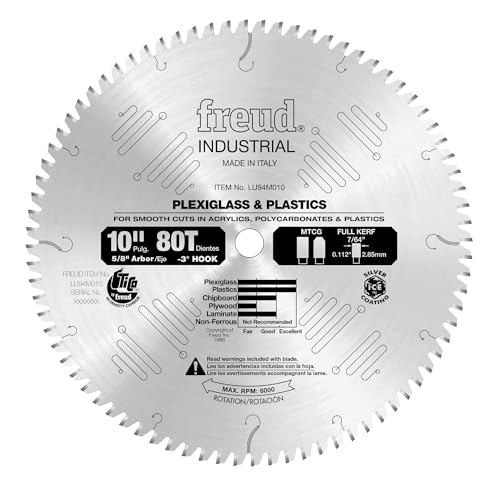
Freud’s 10″ plastic blade uses a TiCo HI-Density carbide blend and a Modified Triple Chip Grind (MTCG) tooth design to keep the material cool and reduce melting during cuts. Its 5/8″ arbor, 0.110″ kerf, and solid construction are geared toward plastics and acrylic-like materials where heat management is essential. Best for: Projects involving acrylic sheets or plastic panels where edge quality and heat control matter. Limitation: Larger blades may require a compatible saw and slower feed rates for very thin plastics.
IVY Classic 35050 Swift Cut 7-1/4″ 128T

Designed for cutting light gauge aluminum, plastic, and vinyl siding up to 1/8″ thick, this blade uses precision-ground high-carbon alloy-steel teeth with no set for smooth, accurate cuts. The Swift Cut branding emphasizes clean edges with minimal vibrations. Best for: Lightweight plastic trimming or edging on non-metallic materials where speed and edge quality are important. Caution: For materials thicker than 1/8″, consider a higher-capacity blade to avoid strain on the blade and saw system.
FOXBC 5-1/2-Inch 130 Tooth Blade

This 5-1/2″ blade features a 5/8″ arbor and includes both 1/2″ and 3/8″ bushings for compatibility with common saws. It’s pitched for fast, smooth cutting of plywood, OSB, plastic panels, and vinyl siding, making it versatile for lightweight plastic projects and paneling work. Best for: Quick cuts on plywood type plastics and paneling where a thin kerf reduces waste. Limitation: Not optimized for very thin acrylic sheets or high-precision laser-cut plastics.
Buying Guide: Choosing The Right Acrylic Circular Saw Blade
- Material compatibility: For acrylic and plastics, blades with carbide teeth and heat-dissipating designs (like MTCG or laser-carbide blends) help prevent melting and chipping.
- Kerf and tooth geometry: Thinner kerfs reduce material loss and heat; larger tooth counts yield smoother edges but may slow cutting. Choose based on plastic thickness and desired edge quality.
- Arbor and compatibility: Confirm your saw’s arbor size (commonly 5/8″) and the need for bushings or adapters, especially for smaller blades like 5-1/2″.
- Edge quality vs. speed: For acrylic or solid-surface work, prioritize blades designed to minimize heat and burrs even if it means a slower feed rate.
- Blade thickness and rigidity: Heavier blades with hardened bodies help maintain trueness during long cuts in plastic panels.
- Usage scenarios: For thick plastics or solid-surface countertops, consider blades explicitly marketed for such materials; for thin acrylic sheets, a blade with cool-cut design reduces risk of melting.
- Safety and handling: Follow CAUTION notes on blade direction and installation, especially when cutting non-metal materials to avoid kickback and overheating.
Quick comparison tips
- Best overall for solid surface and acrylic: IVY Classic 36350 Laser Carbide blade.
- Best heat control for plastics: Freud LU94M010 10″ Plastic Blade.
- Best for lightweight plastics and edge smoothness: IVY Classic 35050 Swift Cut 7-1/4″ 128T.
- Better budget option for panels and plywood-like plastics: FOXBC 5-1/2″ 130T.
- General purpose with clean cuts: IRWIN 7-1/4″ 140T.
FAQ
What blade should I choose for acrylic sheets?
Look for carbide teeth with a design focused on heat management, such as laser-carbide or MTCG patterns, to minimize melting and chipping.
Can a 7-1/4″ blade cut plastics effectively?
Yes, when paired with the right tooth design and the saw’s speed settings; for thinner plastics, choose a blade with a fine tooth count and thin kerf.
Is a higher tooth count always better for plastics?
Not always. Higher tooth counts provide smoother edges but can slow cutting. For plastics, balance edge quality with cutting speed.
Do I need a special arbor for acrylic blades?
Most blades use a 5/8″ arbor. Verify your saw’s arbor size and use the appropriate bushings if needed.
Are there safety tips for cutting plastics with a circular saw?
Ensure proper blade direction, secure the workpiece, and use a slower, steady feed to prevent heat buildup and edge melting.
Can I use non-plastic blades on acrylic safely?
Not recommended; blades designed for non-metals may cause melting, scoring, or chipping on acrylic without heat management features.