If you need a reliable 30 mm arbor saw blade, this guide helps you choose blades suited for different woodworking tasks. The top picks below cover heavy-duty crosscuts, general-purpose wood cutting, and fine crosscuts for cabinetmaking. This selection is ideal for professional shops and serious DIYers seeking durable carbide-tipped and ATB designs. The buyers who benefit most are cabinetmakers, carpenters, and woodworkers looking for consistent accuracy and long blade life. The table below highlights key blades to compare at a glance.
| Blade | Arbor | Key Use | Best For |
|---|---|---|---|
| Tenryu Silencer Series Steel Arbor Blade | 30 mm | Heavy-duty, long-lasting crosscuts | Cabinetmakers and shop use |
| CMT Orange Heavy-Duty Crosscut | 30 mm | Industrial cabinetmaking crosscuts | Radial arm, circular, miter, and table saws |
| Oshlun FesPro 60T Crosscut | 30 mm | General purpose to fine crosscuts | Festool Kapex and similar setups |
| Oshlun FesPro 80T Crosscut | 30 mm | Fine crosscuts; hardwood and melamine | Precision finish work |
| Thomletha 40T 30mm Carbide Blade | 30 mm | Smooth, accurate wood cuts | Everyday woodworking |
Tenryu Silencer Series Steel Arbor Blade 10.23 Inches 72 Tooth

Blade diameter is 260 mm with a steel body and 72 teeth. The Tenryu Silencer design emphasizes durability for aggressive crosscuts and long life in demanding shop environments. Best for professionals who need rugged performance under heavy workloads and want to minimize blade changes on long jobs. One limitation is that high-tooth counts can generate more resistance in very hard materials, potentially slowing feed rate in some setups.
Best for: Cabinetmakers and busy workshops requiring a dependable workhorse blade for heavy-duty crosscuts.
CMT Orange Heavy-Duty Crosscut Blade 12″ x T72 ATB

Designed for machines with a 30 mm arbor, this blade targets heavy-duty crosscuts for industrial cabinetmakers. It fits circular saws, radial arm saws, miters, and table saws. The ATB (Alternating Top Beveled) teeth support cleaner cuts through hardwoods and composites. Best for: shops needing a versatile crosscut blade across several machine types. Limitation: the production profile favors crosscuts; it may be less optimized for very fine plywood or melamine tasks.
Best for: Crosscut work across multiple machines in an industrial setting.
Oshlun SBFT-260060 60-Tooth FesPro 30mm Arbor
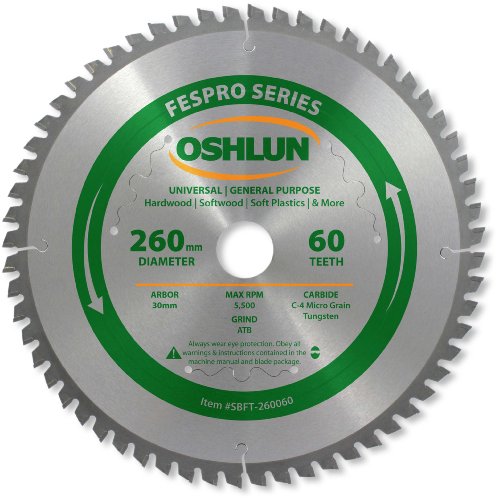
Fits Festool Kapex KS 120 and is a general-purpose blade with hardwood, softwood, and plastics compatibility. Its professional-grade C-4 carbide supports extended edge retention for accurate, repeatable cuts. Best for: Festool-oriented setups needing a reliable, all-purpose blade. Caution: designed for general purpose tasks; users seeking ultra-fine crosscuts may prefer higher tooth counts.
Best for: General-purpose cutting with Festool Kapex or similar 30 mm arbor systems.
Oshlun SBFT-260080 80-Tooth FesPro Crosscut

This blade provides a fine crosscut with 80 teeth and a 30 mm arbor. It is best for hardwoods, softwoods, melamine, and similar materials where a cleaner edge is essential. Best for: finish carpentry and cabinet work requiring tighter tolerances. Limitation: with more teeth, it can experience slower chip removal on very dense woods compared to lower-tooth blades.
Best for: Fine crosscuts and cosmetic surfaces in wood projects.
Thomletha 10 Inch 40T 30MM Carbide Tipped Blade

Made from 50 steel with hardened carbide teeth, this 10-inch blade with a 30 mm arbor aims for smooth, accurate cuts across wood, plywood, and laminate. Best for: everyday woodworking where a balance of speed and edge quality matters. Caution: 40 teeth offer good performance, but extremely fine work may benefit from higher tooth counts.
Buying Guide: Key Considerations for 30mm Arbor Blades
- Blade tooth count: Higher tooth counts offer smoother finishes but may reduce cutting speed and require more power. Lower counts cut faster but may leave rougher edges.
- Tooth geometry: ATB (alternating top bevel) is common for clean crosscuts; TR (triple chip) or CV (combination) designs suit specific materials. Choose according to material type and finish required.
- Arbor compatibility: Ensure the blade’s arbor size is 30 mm and matches your saw’s arbor bore to avoid mounting issues or runout.
- Material and coating: Carbide-tipped blades offer sharpness and longer life. Some blades feature coatings to reduce heat and friction during cutting.
- Intended use: Heavy-duty crosscuts vs. general-purpose vs. fine crosscuts. Pick blades aligned with your dominant tasks and machine types.
- Machine compatibility: Some blades are optimized for Festool Kapex or similar systems; others are more universal across circular, radial arm, miters, and table saws.
- Cut quality vs. feed rate: Heavier hardware typically requires steadier feeds; for quick rough cuts, a blade with fewer teeth may perform better.
Frequently Asked Questions
- What is a 30mm arbor blade best used for? – It fits many common woodworking saws and is ideal for crosscuts on hardwoods and composites in professional shops.
- Do more teeth guarantee a better finish? – Generally yes for crosscuts, but they can slow cutting speed. Choose based on the required finish and material.
- Can I use a 30mm arbor blade on any saw? – Not all saws support a 30 mm arbor. Always verify arbor compatibility with your saw’s model and manufacturer guidance.
- What material should I choose for cabinetmaking? – A heavy-duty crosscut blade with ATB geometry is often preferred for clean, precise cuts in hardwoods and plywood.
- Is carbide-tipped better than steel? – Carbide-tipped blades retain sharpness longer and perform well on a wide range of woods; plain steel blades wear faster on dense materials.
- When should I avoid a high-tooth blade? – If you need rapid material removal or rough cuts, a blade with fewer teeth may be more efficient.