Looking for an 1800 PSI electric pressure washer that delivers reliable cleaning power without the hassle of gas engines? This guide highlights top picks that balance portability, power, and price for common American cleaning tasks. The list targets buyers who want easy, safe operation for cars, driveways, decks, fences, and patios. Whether you’re a DIY homeowner, busy apartment renter, or small-business cleaner, the right 1800 PSI model can cut scrubbing time and improve results. Below is a quick buyer table and five standout options with clear strengths and limitations.
| Product | Best For |
|---|---|
| Westinghouse ePX3100v | Lightweight cleaning on cars, fences, and small patios |
| Westinghouse ePX3500 | Versatile tasks with onboard soap and anti-tipping wheels |
| LWQ Store Portable Power Washer | Multi-surface cleaning with foam cannon and detergents |
| Greenworks 1800 PSI | Low-maintenance, beginner-friendly cleaning |
| Westinghouse ePX3050 | Reliable all-purpose home cleaning with foam and compact design |
Westinghouse ePX3100v Electric Pressure Washer

Best for light to mid-duty tasks on cars, fences, and small patios. This model delivers 2100 max PSI and 1.76 max GPM at the lowest pressure, with 1800 PSI and 1.2 GPM rating for regular use. It is compact and lightweight at about 18 pounds, featuring a built-in handle for portability and a 20-foot easy-coil hose. A detachable foam cannon adds detergents for deeper cleaning on outdoor surfaces. Choose this if you want a simple, portable option for routine cleaning without heavy equipment.
Caution: The lower-end pressure setting may be less effective on very dirty surfaces compared with higher-output models. Best for light to moderate tasks, not heavy industrial cleaning.
Westinghouse ePX3500 Electric Pressure Washer
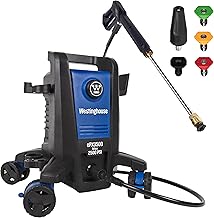
Best for users who need higher cleaning power with enhanced maneuverability. It delivers 2500 max PSI and 1.76 max GPM, with 2000 rated PSI and 1.2 GPM at use. It includes a pro-style steel extendable wand with quick-connect nozzles (0°, 15°, 25°, turbo, and soap). The design emphasizes stability with four quick-lock wheels, a 25-foot hose, and onboard 20-ounce soap tank. This is a solid choice for broader outdoor tasks like decks, sidewalks, and vehicles.
Caution: Higher pressure can be more powerful on delicate surfaces; test on a small area first to avoid damage. Slightly taller footprint than smaller models.
LWQ Store Electric Pressure Washer

Best for multi-surface cleaning with flexibility. It offers up to 2.5 GPM water flow and includes four quick-connect metal nozzles (0°, 15°, 25°, 40°) plus a foam cannon. A built-in detergent bottle supports chemical cleaners, aiding heavy-duty tasks on driveways, patios, cars, and more. Its dual-roller design and anti-tipping base improve stability during use. This model is well-suited for homeowners who want a versatile tool for varied surfaces and patterns.
Limitation: The detergent compatibility is described for chemical cleaners, but users should verify suitable chemicals for the pump in their climate and applications.
Greenworks 1800 PSI Electric Pressure Washer
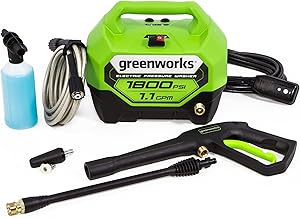
Best for beginners seeking a low-maintenance option. This model offers 1800 PSI at 1.1 GPM, suitable for light-duty cleaning of cars, trucks, boats, patios, and windows. It emphasizes ease of use with push-button start and a 35-foot power cord plus GFCI plug, adding safety for electrical usage. The no-maintenance design means no gas, oil, spark plugs, air filters, or pull cords. Ideal for first-time buyers or those prioritizing straightforward operation.
Westinghouse ePX3050 Electric Pressure Washer

Best all-around option with foam cannon and turbo nozzle. It delivers 2100 max PSI and 1.76 max GPM (1800 PSI and 1.2 GPM rated). The kit includes a soap applicator and a compact design with a 26-inch profile, five-inch never-flat wheels, and a 35-foot GFCI cord for easy transport. This model suits homeowners who want a balanced blend of power, portability, and cleaning versatility for decks, siding, and vehicles.
Caution: Check surface compatibility when using the turbo nozzle to avoid marring delicate surfaces; use the appropriate nozzle for each task.
Buying Guide
What to consider when choosing an 1800 PSI electric pressure washer
- Power versus portability: Higher PSI often means more cleaning capability but may come with heavier or less compact models. Prioritize a balance that fits your typical tasks.
- Nozzle options: Quick-connect nozzles and a foam cannon expand versatility for different surfaces and stains. Look for at least 0°, 15°, and 25° options, plus a soap applicator if you plan to use detergents.
- Hose length and setup: Longer hoses give more reach but add weight. Easy-coil hoses and anti-tipping design improve handling on lawns and around vehicles.
- Detergent compatibility: If you expect to use detergents, ensure the model has an onboard detergent tank or a compatible bottle attachment. Check for indicated detergent types and safety guidelines.
- Maintenance and safety: GFCI protection, maintenance-free pumps, and stable wheels reduce setup time and risk. Push-button start is convenient for quick tasks, but ensure safety features are present.
- Surface suitability: Delicate surfaces (vinyl sidings, stained wood) may require lower pressure or special nozzles. Always test a small area first.
Frequently Asked Questions
- What is an 1800 PSI pressure washer good for? Answer: It works well for light-to-moderate cleaning tasks like cars, sidewalks, patios, fences, and gardening furniture.
- Do electric washers require maintenance? Answer: They typically require little maintenance beyond keeping nozzles clean and ensuring the power cord and hose are in good condition.
- Is higher PSI always better? Answer: Not necessarily. Higher PSI is powerful but can damage delicate surfaces; choose based on the job and surface.
- Can I use detergents with these models? Answer: Many include a foam cannon or onboard soap tank; verify detergent compatibility for each model and follow manufacturer guidelines.
- Is a longer hose better? Answer: A longer hose increases reach but adds weight. Choose a length that matches your most common cleaning area and storage space.
- Which model is best for beginners? Answer: A model with simple start, light weight, and clear nozzle options is typically easiest for beginners.