When choosing a 14-inch metal cutting saw blade, look for higher carbide content, a robust tooth geometry, and compatibility with low-RPM metal saws. This guide focuses on blades designed for mild steel and other ferrous metals, helping buyers pick options that deliver clean cuts with minimal heat and burrs. The top picks below are best for shop projects, fabricators, and DIYers working with mild steel, angle iron, tubing, and similar ferrous materials.
Buyer recommendations at a glance:
| Product | Best For | |
|---|---|---|
| Evolution Power Tools 14BLADEST | Light to medium ferrous metal cutting | No heat, no burrs; carbide-tipped for durability; designed for mild steel |
| Diablo D1472CF | Lifespan and cool cuts | Cermet II teeth for up to 25x longer life; cooler, faster cuts |
| FOXBC 66-Tooth 14 Inch | General purpose with clean finishes | Tough 66-tooth, compatible with Evolution 14″ saws; smooth cuts |
| DEWALT DW8001 | Reliable performance for heavy use | High-performance aluminum oxide grain; durable long life |
| TWIN-TOWN 66 Teeth | Budget-friendly 14″ blades | Cermet construction for cool cuts and long life |
Evolution 14BLADEST 14-Inch Mild Steel Blade
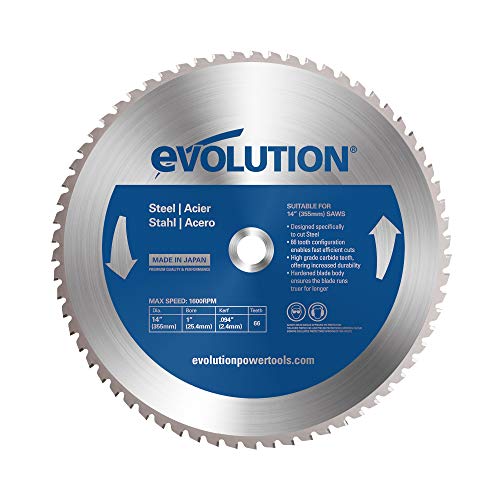
Best for: small to medium metalworking tasks involving mild steel. This blade is specifically designed for cutting mild steel and ferrous metal with minimal heat buildup, burrs, or sparks. Its 66 carbide-tipped teeth enable efficient, precise cuts, making it well suited for shop projects and fabrication work where heat-sensitive or clean cuts are important.
Why selected: It emphasizes no heat and no burrs, allowing users to touch the cut quickly. The blade’s carbide-tipped construction provides durability and long life on ferrous metals. Caution: not intended for galvanized, hardened, or high-carbon steels, which can wear the teeth more quickly.
Diablo D1472CF Steel Demon Cermet II Blade

Best for: users seeking long blade life and cooler cuts on metal. The Cermet II teeth provide up to 25x longer blade life with high heat tolerance, and the triple-chip grind minimizes burrs and sparks.
Why selected: The blade is designed for cooler performance and faster cutting in metal, reducing overall cutting time. Limitation: performance claims are based on design advantages; actual results depend on the saw and material being cut.
Xmnbl 14-Inch 66-Tooth 14BLADEST-Style Blade

Best for: compatible replacements for Evolution 14” S-series saws and other 14″ low-RPM metal saws. The blade uses a carbide-tipped design with 66 teeth and a 1-inch arbor, fitting common Evolution and other brand saws.
Why selected: It mirrors the 14BLADEST specs, offering a practical option for users who want a readily available, compatible alternative. Caution: verify compatibility with your specific saw model before purchasing.
FOXBC 66-Tooth 14-Inch Metal Cutting Blade

Best for: smooth, precise chop cuts on studs, tubing, angle iron, and similar ferrous parts. This blade uses a 66-tooth configuration and is compatible with 14″ Evolution and other low-RPM chop saws.
Why selected: The 66-tooth design aims for finer finishes while maintaining tough carbide tips. Limitation: fine tooth count can be less aggressive on very thick or highly tempered steels.
DEWALT 14-Inch Chop Saw Blade

Best for: durable, general-purpose metal cutting in busy shop environments. The DEWALT blade features a high-performance aluminum oxide grain for longer life and smoother running, suitable for repeated cuts on mild steel and similar ferrous metals.
Why selected: DEWALT is a trusted brand for metalworking blades, offering robust performance and predictable wear. Caution: aluminum oxide blades can wear differently than carbide blades on certain steel alloys; ensure correct blade type for your material.
TWIN-TOWN 14-Inch 66 Teeth Blade

Best for: budget-conscious buyers needing a reliable 14″ blade for mild steel and ferrous metal cutting in lower RPM saws. The 66-tooth design supports smoother cuts with acceptable speed for everyday fabrication tasks.
Why selected: The blade’s cermet construction provides a compromise between toughness and cut quality. Limitation: price-oriented blades may show more variability in performance than premium options.
Buying Guide: How to Choose a 14-Inch Metal Cutting Saw Blade
What matters most is compatibility with your saw and the type of steel you cut. Consider these factors to pick the right blade.
- Tooth design and material: Carbide-tipped blades deliver long life and clean cuts on mild steel. Cermet teeth offer a balance of wear resistance and cooler cutting.
- Teeth count: 66-tooth blades typically yield smoother finishes but may cut a bit slower than coarser teeth. Choose based on finish vs. speed needs.
- Blade diameter and arbor size: Confirm your saw accepts a 14-inch blade with a 1-inch arbor. Some blades specify universal compatibility; always verify your model.
- RPM compatibility: Low-RPM metal cutting saws require blades rated for around 1,600 RPM or less. Exceeding RPM can cause blade failure.
- Material suitability: Many blades are optimized for mild steel and ferrous metals. Avoid blades not designed for the specific metal you work with.
- Wear indicators and life: Longer blade life reduces downtime. Look for blades with durable tooth geometry and heat tolerance.
Frequently Asked Questions
- What is a 14BLADEST blade best used for?
The 14BLADEST is designed for cutting mild steel and ferrous metals with minimal heat, burrs, and sparks, making it ideal for fabrication and shop projects where a clean finish is important.
- Are carbide-tipped blades worth the extra cost?
Yes for frequent cutting of mild steel, as carbide tips resist wear and maintain sharpness longer than standard steel teeth.
- Can I use a 14-inch blade on any 14-inch saw?
Not necessarily. Check arbor size, RPM rating, and compatibility with low-RPM metal cutting saws to ensure a proper fit.
- How do I avoid burrs when cutting metal?
Choose a blade with a fine tooth count and a grind designed to minimize burrs, and ensure the saw is properly aligned and fed at a steady rate.
- Which blade lasts longer for mild steel?
Blades with Cermet II teeth or carbide-tipped designs typically offer longer life in mild steel applications, especially under cooler-cut conditions.
- Is speed important for metal cutting blades?
Yes, blades rated for your saw’s RPM and designed to cut at that speed help maintain blade integrity and cut quality.