When you need ultra-smooth edges and clean finishes, a 10-inch fine-tooth saw blade is essential. This guide highlights five top options that deliver precise, low-tear cuts for cabinetry, trim work, and fine woodworking. Each blade is best for specific setups: hobbyists will prefer versatile, affordable choices, while professionals may seek longer life and flawless finishes. The list below helps buyers compare arbor size, kerf, tooth configuration, and intended use so you can choose confidently.
Quick reference: the table summarizes the five products selected for best 10-inch fine-tooth performance. Each entry includes the blade name, brand, type, and what it’s best for.
| Product | Brand | Best For | Why It Stands Out |
|---|---|---|---|
| Diablo D1060X | Diablo | Heavy-duty finish work | Shock-resistant carbide tips and ultra-smooth cuts |
| TOYAKI 120-Tooth | TOYAKI | Fine finish on wood | 120-tooth pattern for minimal tear-out |
| WEN BL1060 | WEN | Budget-friendly precision | Ultra-thin kerf for clean cuts, reliable life |
| DEWALT DWA11080 | DEWALT | Finishing surfaces | Optimized tooth geometry and low vibration |
| WORKPRO 80T Ultra Fine | WORKPRO | Cabinetry and trim | Thin kerf, carbide tips, low noise |
Diablo Fine Finish Saw Blade for Wood

The Diablo D1060X is designed for ultra-smooth finishing work with a 10″ diameter, 60 Hi-ATB teeth, and a 0.098″ kerf. It features a reinforced carbide-tips and shock-resistant design to handle demanding cutting tasks. This blade is best for professional finish carpentry where consistent edge quality matters. A potential limitation is its higher cost compared to basic blades, which might not be ideal for occasional hobby use. Best for: professional finish carpentry, cabinetry, and visible trim where clean edges are critical.
TOYAKI 10-Inch 120-Tooth Fine-Finish Blade
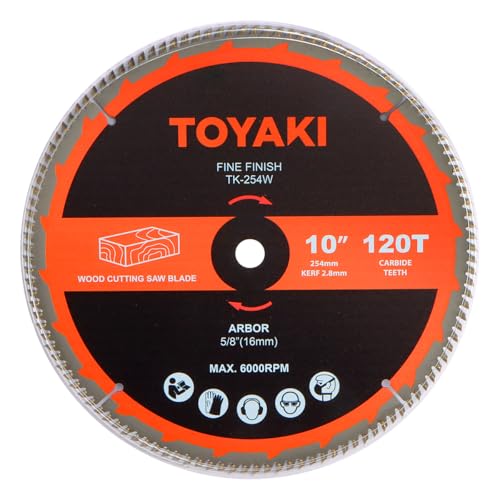
The TOYAKI 120-Tooth Fine-Finish Blade is engineered for smooth, precise cuts on wood. Its 120-tooth configuration minimizes tear-out and yields clean edges on cabinetry, moldings, and fine trim. It is especially suitable for finishing work where tight tolerances are important. Caution: higher tooth counts can slow aggressive rough cutting, so reserve this blade for finishing stages rather than rough sizing. Best for: fine woodworking and cabinetry where pristine edges are required.
WEN BL1060 10-Inch Fine-Finish Blade
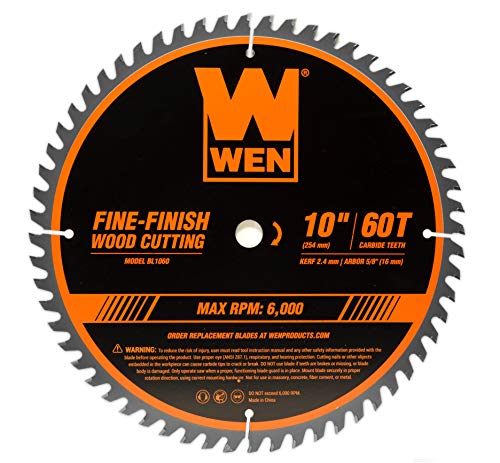
The WEN BL1060 combines a 10″ diameter with a 60-tooth count and a thin 1/10″ kerf for cleaner cuts and less material waste. It’s designed for miter saws and table saws, delivering smooth finishes on both hard and soft woods. Best for: budget-conscious woodworkers needing reliable finishing blades for trim, frames, and cabinetry. Caution: medium tooth count may be less forgiving on highly figured woods with heavy tear-out unless cut slowly.
DEWALT Table Saw Blade, 10 Inch, 80 Tooth
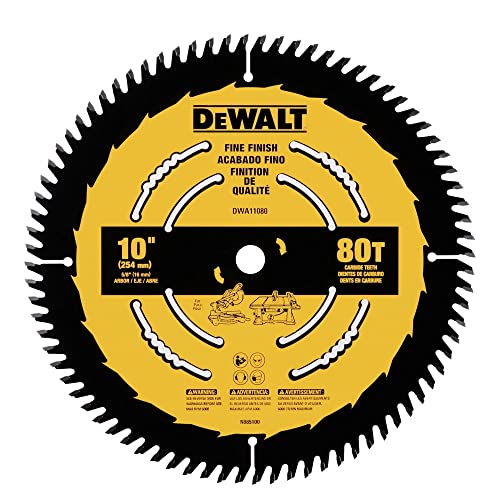
The DEWALT DWA11080 blade offers up to three times longer life and optimized tooth geometry for increased accuracy. Its body-slot design helps reduce vibration, contributing to cleaner finishes. Best for: finishing work in shop or job-site settings where consistent, high-quality cuts are needed. Limitation: as with many premium blades, price may be higher than basic options, which could deter casual hobbyists.
WORKPRO 80T Ultra Fine Finish Wood Blade

The WORKPRO blade uses 80 teeth for fine finishing across cabinetry and trim. Features include premium carbide tips, thin kerf, and laser-cut expansion slots to reduce vibration. It’s best for: precise finish work on wood, plywood, and laminates where a smooth surface is essential. Consider: it may be less ideal for aggressive ripping due to its tooth count and kerf geometry.
FOXBC 80-Tooth Ultra Finish Blade

The FOXBC 80-Tooth blade emphasizes an ultra-finish cut with a 0.098″ kerf and a 5/8″ arbor. The high-density tungsten carbide ensures toughness and wear resistance, while ATB geometry supports smooth, quiet operation. Best for: users needing a durable blade for fine cabinetry and trim with long life. Limitation: may be over-spec for very light-duty tasks, where a lighter blade would suffice.
OA-BRES 80-Tooth Fine Finish Blade

The OA-BRES 80T ATB blade features a durable alloy steel composition with hardened tungsten carbide teeth. The fully polished and chrome-plated surface extends blade life and reduces friction for smoother cuts. Best for: general fine finish woodworking across woods, plywood, and laminates. Caution: the description emphasizes durability; ensure compatibility with your saw’s arbor and speed rating to avoid misfit.
Buying Guide: Key Purchase Considerations
- Tooth count and finish quality: Higher tooth counts (e.g., 120T) yield smoother finishes on softwoods and plywood, while 60–80T blades balance speed and finish for cabinetry and trim.
- Kerf width: Ultra-thin kerfs (around 0.1″ or 2.4 mm) reduce material waste and require less saw power, but may be less forgiving if the saw is not well-tuned.
- Arbor size: Most 10″ blades use a 5/8″ arbor. Verify compatibility with your saw to avoid installation issues.
- Material compatibility: Aluminum and non-ferrous metal blades exist; choose blades explicitly rated for wood to ensure teeth fit the intended material and avoid clogging or dulling.
- Vibration and noise: Blades with expansion slots and optimized tooth geometry minimize vibration, improving precision on long cuts and reducing operator fatigue.
- Durability and lifetime: Carbide-tipped teeth last longer under heavy use; consider blades with reinforced tips if you anticipate tough materials or frequent high-speed cuts.
- Application specifics: For cabinetry and trim, favor fine-finish blades with clean-cut patterns. For broader cuts in framing, a lower tooth count blade might be more efficient.
Quick buyer tips
- Pick a blade whose tooth pattern matches your most common wood types and finish requirements.
- Prioritize low vibration designs for precise, repeatable cuts.
- Check machine compatibility: arbor size, RPM compatibility, and saw type (miter vs. table).
Frequently Asked Questions
- What is a finish blade best used for? Finish blades prioritize clean, smooth edges with minimal tear-out, ideal for visible surfaces in cabinetry and trim.
- Is a higher tooth count always better? Not always. Higher tooth counts provide smoother finishes but may cut more slowly; choose based on the material and finish required.
- What is kerf, and why does it matter? Kerf is the blade thickness that is removed as a cut. A thinner kerf wastes less material and produces lighter loads on the saw, improving accuracy.
- Can I use these blades on both miter and table saws? Yes, most 10″ fine-finish blades with a 5/8″ arbor fit common 10″ miter and table saws, but always verify compatibility.
- How do I maintain blade life? Keep blades sharp, clean residual dust, and avoid cutting materials not intended for the blade’s design to extend life.
- Are these blades safe for hobbyists? Yes, several blades in this list are suitable for hobby projects, especially when you prioritize finish and control over speed.