Looking for an efficient drill bit sharpener that fits your projects and budget? This guide highlights five reliable options suitable for DIYers, hobbyists, and professionals who want to restore bit edges, extend tool life, and improve cutting performance. Each pick is evaluated for common bit sizes, sharpening angles, and portability. The top choices include models that support standard twist bits, varied angles, and compatibility with different bit materials. Use the quick comparison table below to narrow your selection, then read detailed sections to find the best fit for your needs.
| Product | Best For | Why It Stands Out |
|---|---|---|
| Drill Doctor DD750X | Pro or heavy-use shop | Wide bit range (3/32″–3/4″), adjustable angles, edge restoration |
| Drill Doctor DD350X | Smaller shops or garage projects | Durable diamond wheel, simple 2-step sharpening, 118° angle |
| Drill Doctor DD500X | Versatile upgrades and mid-size tasks | Wide range (3/32″–1/2″), optional chuck, 118°/135° angles |
| 2027 Drill Bit Sharpening Jig | Budget-friendly, light-duty use | Multi-size sharpening (3.5–12.5 mm), 118° guide, grinder-compatible |
| MDPSDS Electric Sharpening Tool | Simple, portable sharpening | 1/8″–15/32″ range, 130° standard bit angle, easy operation |
Drill Doctor DD750X Electric Drill Bit Sharpener

- Sharpen range: 3/32″ to 3/4″ twist bits. Also suitable for repairing broken bits.
- Sharpen & split: Creates a split-cut tip to reduce wear and improve cutting performance.
- Angles: Adjusts to 115°–140° to match common bit geometries.
Best for: Professionals or serious hobbyists who need a wide bit range and the ability to restore and refresh worn bits. Choose this if you work with a variety of bit sizes and want edge restoration in one unit. Caution: Larger footprint may be less convenient for compact workspaces.
Drill Doctor DD350X Drill Bit Sharpener
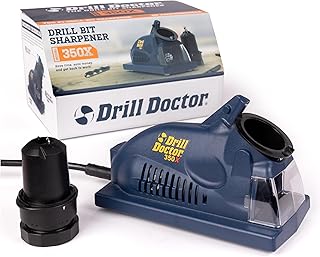
- Sharpen range: 3/32″ to 1/2″. Ideal for common woodworking and light metal bits.
- Durability: Industrial-strength diamond wheel maintains shape and reduces heat buildup.
- Design: Simple two-step process with V-block jaws for stable sharpening at 118°.
Best for: Small shops or garage setups needing a straightforward, durable sharpener for standard bit sizes. Limitation: Limited to a 1/2″ max bit diameter, so larger bits require another solution.
Drill Doctor DD500X Twist Drill Bit Sharpener
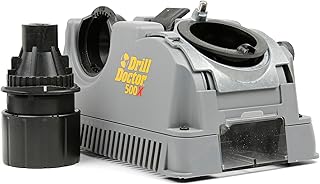
- Range: 3/32″ to 1/2″ twist bits. Optional 3/4″ chuck upgrade adds versatility.
- Shaping: Sharpen & split tip to reduce wear and improve cutting efficiency.
- Angles: Offers 118° and 135° options for precise edge geometry.
Best for: Users who need a mid-range device with angle flexibility and the potential for upgrades. Consider: The 3/4″ chuck upgrade if you anticipate larger bits in the future.
2027 New Drill Bit Sharpening Jig

- Sizes: 3.5–12.5 mm (0.12–0.49 in) compatible with HSS, cobalt, and masonry bits.
- Guide: Stable 118° grinding guide helps maintain even cutting edges.
- Grinder compatibility: Works with 115 mm and 125 mm angle grinders to convert a grinder into a bit sharpener.
Best for: Workshops needing a compact, affordable sharpening jig for a range of modern drill bits. Caution: Requires a compatible grinder for operation, adding setup steps.
MDPSDS Electric Drill Bit Sharpener
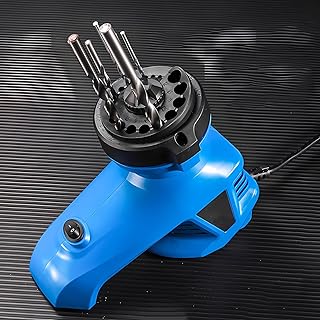
- Bits covered: 1/8″–15/32″ with 130° standard angle for common twist bits.
- Use: Portable and easy-to-use for home projects; one-touch operation.
- Maintenance: Simple design suited for beginners and quick touch-ups.
Best for: Home users or beginners seeking a straightforward, portable sharpener without complex setup. Limitation: Narrower range compared to larger, professional models.
Buying Guide
What should you consider when choosing a drill bit sharpener?
- Bit size range: Ensure the sharpener covers the diameters you most often use, from small micro bits to larger bits.
- Angle options: Common sharpening angles are around 118° to 135°. Choose a model offering the angles you need for your material and bit type.
- Shaping and tip design: Some units offer edge splitting to reduce wear and improve cutting efficiency. This can extend bit life in tougher materials.
- Portability and footprint: If you have limited space or need a portable solution, consider a compact design with a straightforward setup.
- Power and connectivity: Decide between electric plug-in sharpeners and manual or jig-based systems based on your work environment.
- Compatibility: For grinders that convert to sharpeners (jigs), verify compatibility with your current grinder model and wheel size.
- Durability: Look for units with durable wheels (diamond wheels preferred) and stable guides to ensure consistent angles and edge quality.
How do you match a sharpener to your workflow?
- High-volume workshop: Look for a model with a wide range, adjustable angles, and a durable wheel—facilitates fast, repeated sharpening.
- Garage or hobbyist: A simpler two-step system with stable guides may be sufficient and easier to use.
- Light repair and maintenance: Jigs or compact sharpeners can handle occasional bit repair without a large investment.
Maintenance tips for longer bit life
- Keep the sharpening wheel clean and properly lubricated if required by the model.
- Regularly inspect the bit edge for uniformity; uneven edges indicate misalignment or wear.
- Avoid overheating bits; allow cooling intervals during longer sharpening sessions.
FAQ
- What is the standard sharpening angle for most twist bits?
Most models target around 118° to 135°, depending on the bit type and material. - Can I sharpen masonry bits with these sharpeners?
Some models support masonry bits; check the product specs for compatibility and wheel type. - Is a larger wheel always better for sharpening?
Not necessarily; wheel quality and proper alignment matter more for edge accuracy and longevity. - Do these sharpeners require special grinding wheels?
Some use diamond wheels; others use standard wheels—verify the wheel type and replacement availability. - Can I upgrade a sharpener later?
Some models offer upgrade options (like additional chucks or different angles) to expand capability.