All buyers seeking reliable 1/4 panel pilot router bits can expect clean edge finishes and accurate template routing. This guide highlights top choices ideal for plywood, paneling, siding, and veneer work, with each option fitting a 1/4-inch shank. Best for hobbyists, contractors, and woodworkers needing dependable single-flute or concave pilot designs, these picks balance durability, finish quality, and ease of use.
Summary table of selected products:
| Product | Brand | Diameter | Shank | Best For |
|---|---|---|---|---|
| YONICO Router Bits Pattern Bit Panel Pilot Trim | Yonico | 1/4 in | 1/4 in | Veneer trimming, panel edges, precise plunges |
| Bosch 85244MC 1/4 in. x 3/4 in. Carbide-Tipped Panel Bit | Bosch | 1/4 in | 1/4 in | Concealed panel cuts, concave round-overs |
| Bosch 85183 1/4 in. x 5/8 in. Down Spiral Pilot Panel Bit | Bosch | 1/4 in | 1/4 in | Aluminum sheets, plywood, chipboard |
| IVY Classic 10832 Panel Pilot Carbide Router Bit | IVY Classic | 1/4 in | 1/4 in | Plywood and hardwood edging |
| Freud 28-100 Panel Pilot Bit | Freud | 3/8 in | 1/4 in | Siding, sheathing, paneling installations |
YONICO Pattern Bit Panel Pilot Trim — 1/4-Inch

Best for straightforward veneer trimming and panel edge work, Yonico’s 1/4-inch diameter with a 1/4-inch shank uses premium C3 micro-grain tungsten carbide blades for a sharp, longer-lasting edge. This bit excels for plunge-and-trim tasks on handheld routers, making it a solid choice for hobbyists and professionals who prioritize clean cuts with minimal effort. Caution: avoid deep plunges into laminated or highly resinous materials without proper feed rates to prevent tear-out.
BOSCH 85244MC Panel Bit — 1/4 x 3/4
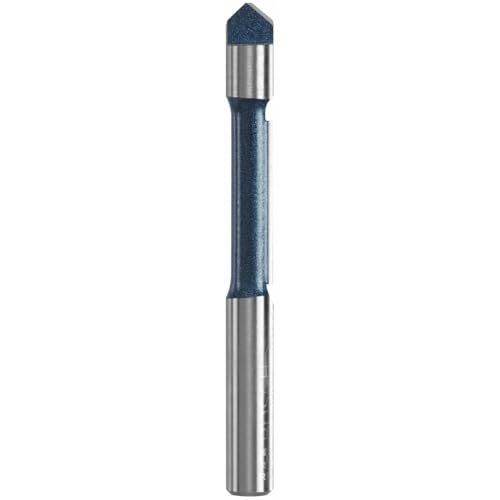
This Bosch bit uses MICROGRAIN carbide-tipped design to deliver consistently smooth finishes with strong wear resistance. The single flute and concave grind accelerate cutting, making it well-suited for faster feed rates in paneling, plywood, and insulative materials. Best for quick, clean panel cuts; better for seasoned operators who value long life in tougher substrates. Limitation: the 3/4-inch cutting length may require deeper setups or sturdier routers for thicker panels.
BOSCH 85183 Pilot Panel Down Spiral Bit — 1/4 in
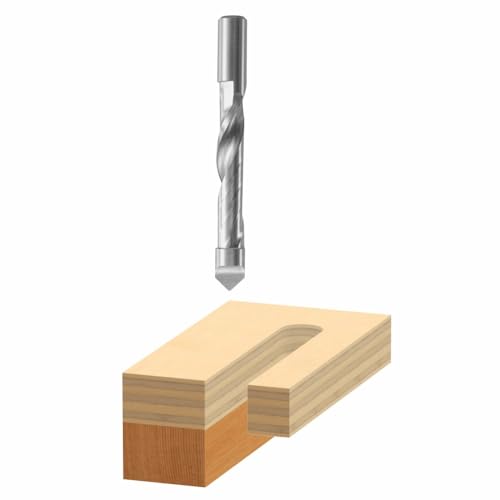
Designed to push chips downward while cutting, this Bosch down-spiral bit minimizes chip buildup and reduces clogging when routing aluminum sheets, wall panels, and other synthetic boards. Its down-cut action helps prevent tear-out on the top surface, which is especially useful for finishing plywood and veneer edges. Choose this if you work with layered materials where top-surface crispness matters; avoid if your project demands upward-chip removal in exposed areas.
IVY Classic 10832 Panel Pilot Carbide Bit

IVY Classic’s panel pilot bit uses a 1/4-inch shank and a single flute with C3 micrograin carbide for extended life and consistent cuts. It’s diamond-honed for true cutting and is well-suited for plywood, composition boards, and both hardwood and softwood. This option is best for budget-conscious projects needing dependable edge routing without premium-price components. Limitation: single-flute design may run warmer on dense materials during prolonged sessions.
Freud 28-100 Panel Pilot Bit — 3/8″ Dia
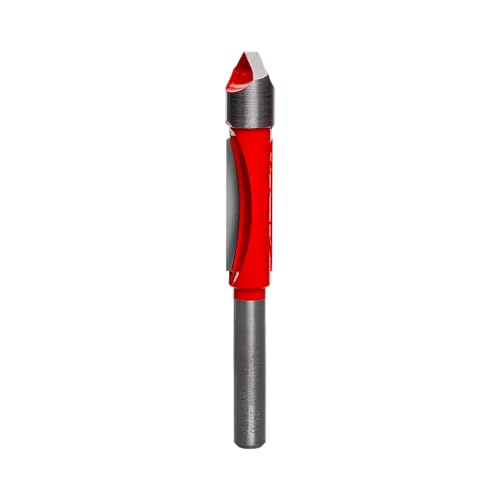
Freud’s panel pilot bit features a 3/8-inch diameter cutting edge with a 1/4-inch shank. It’s widely used for siding, sheathing, and paneling installations where template routing is required. The bit’s PTFE coating helps resist resin and pitch buildup, promoting smoother cuts in challenging substrates. Best for larger paneling projects; choose this if you need more aggressive cutting in wide panels, but be mindful of compatibility with smaller routers and guides.
Buying Guide
How to choose the right 1/4 panel pilot bit:
- Material and edge: Look for C3 micro-grain carbide for edge longevity and smooth finishes on plywood and veneer. If you work with softer woods, high-speed steel can be acceptable but may wear faster.
- Shank and diameter: Ensure a 1/4-inch shank matches your router collet. The 1/4-inch diameter is common for panel routing; larger diameters cut more quickly but require more power and stability.
- Cutting length and style: Panel pilot bits come in flat, down-cut, and concave/convex shapes. Down-cut helps with top-surface finish and chip clearance, while concave designs are better for edge profiles and decorative panels.
- Wood type and thickness: For plywood and softwoods, consider single-flute designs for faster cuts. For hardwoods or dense composites, a carbide-tipped bit with improved heat resistance reduces wear during longer runs.
- Router compatibility: Verify your router’s power, collet size, and available plunge depth. Heavier panels may require sturdier routers or auxiliary clamps to prevent deflection.
Frequently Asked Questions
- What is a panel pilot bit used for?
They guide the router along templates and edges to create precise panel profiles and trim routes. - Can I use these bits for metal or aluminum?
These bits are designed for wood-based panels; using them on metal can dull the carbide and damage the bit. - What is a down spiral bit good for?
Down spiral bits push chips downward, reducing top-surface tear-out and minimizing chip buildup on top surfaces. - Is a 1/4-inch shank compatible with most routers?
Yes, the 1/4-inch shank is a standard size compatible with many consumer and professional routers. - Should I choose dual-flute or single-flute for panel work?
Single-flute bits provide faster feeds and are often easier for softer woods; dual- or multi-flute bits offer cleaner finishes in dense materials but may cut more slowly. - Are carbide-tipped bits worth the extra cost?
Carbide-tipped bits offer longer life and better wear resistance, especially in hardwoods and plywood with adhesive resins.