Best Gas Generators for Home Backup and RV Use
When choosing a gas-powered generator, Americans seek reliable backup power for homes, RV adventures, and emergency situations. This guide highlights five top gasoline generators, comparing wattage, fuel efficiency, noise, and portability. Each model delivers solid performance, from compact inverter units designed for sensitive electronics to high-capacity workhorses suitable for whole-house reliability.
Summary of Selected Products
| Product | Brand | Power Type | Key Feature |
|---|---|---|---|
| Power Equipment 4400 Watts Inverter Generator | Oxseryn Store | Gas-Powered Inverter | 11-14 hour runtime with ECO mode |
| Westinghouse 12500 Watt Dual Fuel | Westinghouse Store | Gas/Propane | Remote start and transfer-switch readiness |
| A-iPower 4600W RV-Ready Inverter | A-iPower Store | Gas-Powered Inverter | CO sensor and lightweight design |
| Westinghouse 14500 Peak Watt Tri-Fuel | Westinghouse Store | Gas/Propane/Natural Gas | Tri-fuel versatility with long runtime |
| AMERISUN 2500-Watt Inverter | AMERISUN Store | Gas-Powered Inverter | Quiet operation for camping and home use |
Power Equipment 4400 Watts Inverter Generator

The Power Equipment 4400 Watts Inverter Generator from Oxseryn Store delivers 4400 peak watts and 3400 running watts, making it suitable for RV camping and emergency home backup. Its dual advantages include multiple outlets (2×120V AC, 1×12V DC, 1×RV port) and an ECO mode that extends runtime. With a 2-gallon fuel tank and a gauge for quick fuel checks, you can monitor fuel levels at a glance. This unit emphasizes portable open-frame design and a balance of power and efficiency, ideal for small to mid-size power needs.
Westinghouse 12500 Watt Dual Fuel Back-Up

This Westinghouse model offers 12500 peak watts (gas) and 11200 peak watts (propane), with 9500 running watts on gasoline and up to 12 hours of runtime on a 6.6-gallon tank. It supports both electric and recoil starting, and includes transfer switch readiness for seamless home integration. The unit features multiple outlets including GFCI 120V 5–20R and a 14–50R for RV use, complemented by a digital VFT display for real-time voltage, frequency, and lifetime hours. A robust choice for whole-home backup and advanced setups.
A-iPower 4600W RV-Ready Inverter
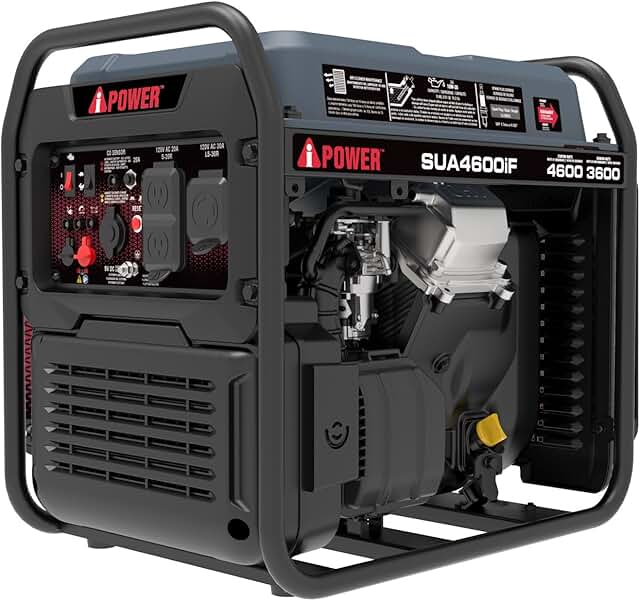
The A-iPower 4600W generator delivers 4600 starting watts and 3600 running watts, making it suitable for RV trips and home backup. It weighs about 56 pounds for portability and uses inverter technology to provide clean power with 3% THD. This ensures stable output for sensitive electronics like laptops and TVs. The unit’s CO sensor adds an extra layer of safety, and its open-frame design helps with cooling in outdoor environments, contributing to reliable performance during extended use.
Westinghouse 14500 Peak Watt Tri-Fuel

This tri-fuel generator supports gasoline, propane, and natural gas with a peak of 14,500 watts and 11,500 running watts on gas. A heavy-duty 550cc 4-stroke OHV Westinghouse engine with cast iron sleeve powers long runtimes—up to 19 hours on a 9.5-gallon tank, or up to 7 hours on a 20-pound propane tank. It’s designed for large homes or remote job sites that demand substantial power, and it includes transfer-switch readiness and multiple outlets with safety covers for outdoor use.
AMERISUN 2500-Watt Inverter Generator

AMERISUN’s 2500-watt portable inverter offers 2500 peak watts and 1900 running watts with quiet operation. Weighing around 39.7 pounds, it emphasizes portability while delivering clean power suitable for essential devices during outages or outdoor activities. The unit’s EPA compliance and compact design make it a strong choice for campers, tailgaters, and homeowners needing reliable, low-noise power for essential electronics.
Buying Guide: Key Considerations When Choosing a Gas Generator
- Power requirements: Match continuous running watts to your typical loads. For RVs, essential appliances may require 1600–4000 watts; for home backup, plan for critical circuits and consider units with higher running watts or tri-fuel capability.
- Inverter versus conventional: Inverter generators provide cleaner power with lower THD, ideal for electronics. Conventional non-inverter units can offer higher raw wattage for appliances with high startup surges but may be noisier and less efficient.
- Fuel type and flexibility: Gasoline engines are common, but dual or tri-fuel options offer propane and natural gas compatibility, extending runtimes during fuel shortages. Consider fuel tank size and consumption rate for longer outages.
- Run time and efficiency: Longer runtimes reduce refueling frequency. ECO modes can extend efficiency for lighter loads, while full-load runtimes depend on tank capacity and engine design.
- Noise and portability: Noise levels (dB) impact camp or residential use. Lighter, compact models are easier to transport but may deliver less continuous power. Weigh the trade-off between portability and power needs.
- Safety features: CO sensors, automatic low-oil shutdown, electric and recoil starting options, and transfer-switch readiness are important for safety and convenience in homes and near RV hookups.
- Outlets and compatibility: Check outlet types (GFCI, 120V, 240V, RV outlets) and whether a transfer switch is compatible with your home electrical system or RV hookup.
- Durability and maintenance: Look for engines with cast iron sleeves, automatic oil shutdown, and digital hour meters for monitoring. Regular maintenance helps extend life and reliability.
- Warranty and support: Consider brands with robust customer support and longer warranties, especially for heavy-use scenarios or critical backup power.