Best Two Stage Reciprocating Air Compressors for Serious Power
Choosing a two-stage reciprocating air compressor can dramatically improve your shop’s efficiency by delivering higher pressures with greater duty cycles. This guide highlights top options that balance reliability, airflow, and longevity, helping you match the right unit to heavy-duty tools and extended use. Below, you’ll find five strong choices, each with key specs and what to expect in real-world use.
| Product | Brand | Max PSI | Stage | Notes |
|---|---|---|---|---|
| EMAX Electric Air Compressor – 80 Gal 7.5HP | EMAX | 200 | 2 | High performance, durable steel build |
| Ingersoll Rand 7.5HP 2 Stage (2475N7.5) | Ingersoll Rand | 175 | 2 | Long life, service-friendly |
| HPDMC 13HP Gas Air Compressor | HPDMC | 180 | 2 | Gas-powered, mobile and robust |
| NorthStar Air Compressor Pump – 2-Stage | NorthStar | 175 | 2 | Two-stage pump head, high cooling efficiency |
| Campbell Hausfeld 80 Gallon Vertical | Campbell Hausfeld | 140 | Single | Great capacity, robust cast-iron pump |
EMAX Electric Air Compressor — 80 Gal 7.5HP, 2-Stage

EMAX delivers strong airflow with a 7.5 HP motor and a two-stage design, making it well-suited for demanding shop tasks. It provides 26 CFM at 100 PSI and a maximum 200 PSI, which supports running multiple high-demand tools in sequence. The 80-gallon tank helps maintain steady air pressure during longer cycles, reducing the need for frequent cycling. The manual tank drain aids routine maintenance, helping preserve performance over time. This unit is designed for reliability in continuous-use environments and features a splash-lubricated pump head for longevity.
Ingersoll Rand 7.5HP 2 Stage (2475N7.5)

This model emphasizes long life and continuous-duty capability. With a cast-iron construction and a maximum operating pressure up to 175 psig, it handles high-demand applications with ease. The 80-gallon receiver provides ample stored air for bursts of heavy use, while independently cast cylinders and a robust crankshaft simplify maintenance. Users benefit from straightforward serviceability and a design that’s built for extended service life in industrial settings.
HPDMC 13HP Gas Two-Stage Air Compressor

Gas-powered two-stage compressors offer portability and power for outdoor or remote job sites where electric power isn’t readily available. The HPDMC unit features a 30-gallon ASME tank and a 13 HP engine, delivering up to 180 PSI with a steady 24 CFM capability. Its three-cylinder design helps sustain air pressure during continuous operation, while the gas power source enables operation away from electrical outlets. The unit is well-suited for mobile workshops, body shops, and construction sites that require consistent high-pressure air.
NorthStar Air Compressor Pump — 2-Stage, 2-Cylinder

NorthStar’s 2-stage pump head is designed to boost compressor efficiency with a V-style cylinder layout that improves cooling and reduces heat buildup. This pump head is built for long service life and can be paired with a compatible receiver to form a high-capacity two-stage system. It’s a strong option for upgrading an older two-stage setup or building a dedicated heavy-use system from scratch, especially where cooling performance and durability are paramount.
Campbell Hausfeld 80 Gallon Vertical, 5 HP
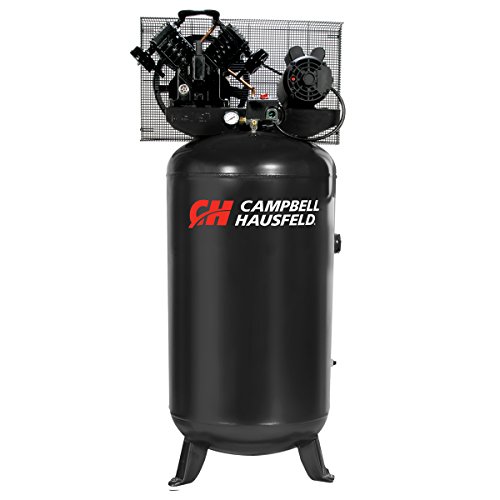
This unit is a robust, single-stage option with an 80-gallon tank and a durable cast-iron pump. While not a two-stage compressor, its large storage and solid build make it a dependable choice for users upgrading from smaller units or seeking straightforward, continuous air supply for woodworking, painting, or automotive tasks. The vertical design helps conserve floor space in tighter shops.
Buying Guide: Key Factors For Two-Stage Reciprocating Compressors
- Stage design and pressure: Two-stage compressors compress air in two steps, delivering higher pressures more efficiently. Look for units rated at 150–175 PSI or higher for demanding tools and auto-body work.
- Flow and tank size: CFM at working pressure and the tank’s gallons matter. Higher CFM at your target PSI reduces cycling and maintains steady air delivery during extended use.
- Power source: Electric two-stage units are common for workshops; gas-powered variants offer mobility for remote sites but require more maintenance and fuel logistics.
- Tank material and durability: Cast-iron pumps and steel tanks improve longevity, especially under heavy-duty cycling. Check for splash lubrication and robust crankcases for endurance.
- Maintenance features: Manual tank drains, easy access oil reservoirs, and service-friendly cylinder arrangements reduce downtime during routine maintenance.
- Noise and footprint: Larger, more powerful units can be louder and take more floor space. Consider models with quieter operation and compact designs if your workspace is shared or limited.
- Warranty and support: Look for brands with solid dealer networks and long-term warranties, especially for heavy-use environments.
Usage Scenarios & Practical Considerations
- Heavy-duty automotive work: Two-stage units excel when you need sustained high-pressure air for impact tools and spray systems without frequent rest periods.
- Woodworking and fabrication: Steady airflow supports grinders, sanders, and nail guns, reducing tool heat and wear.
- Remote sites: Gas-powered two-stage compressors provide portable, high-pressure air independent of electrical infrastructure.
- Shop layout: A larger tank reduces cycling; position the compressor to minimize air line losses and ensure easy maintenance access.
In selecting a two-stage reciprocating air compressor, balance the duty cycle and peak pressure you actually need against space, noise, and ongoing maintenance considerations. The options highlighted above span electric and gas-powered systems, from compact upgrades to heavy-duty, continuous-use configurations. Each model offers different strengths, so choose based on your primary tasks, tool lineup, and preferred power source.