Best Scuba Tank Air Compressors for PCP Gear and Tanks
Finding a reliable high-pressure air compressor is essential for maintaining PCP airguns, scuba tanks, and paintball gear. This guide highlights five top models that balance performance, safety, and versatility for American enthusiasts. Each option supports up to 4500 PSI and works with 12V DC or AC power, making field and home use practical. Read on to compare features, cooling systems, auto-stop capabilities, and portability to choose the right unit for your high-pressure needs.
Summary of Selected Products
- GOYOJO PCP Air Compressor — 4500 PSI / 300 Bar, auto shut-off, dual power (12V DC or 120V AC), built-in cooling
- CHIKADIV PCP Air Compressor — 4500 PSI / 30MPa, auto-stop, water/oil separator, dual voltage
- SMACO PCP Air Compressor 4500 PSI — Oil-free, auto-stop, dual power, water/oil separator
- NGCYGE 4500 PSI PCP Air Compressor — Built-in fan, dual power, fast inflation
Vdapavin PCP Air Compressor — Auto shut-off, digital monitoring, 4500 PSI
GOYOJO PCP Air Compressor Overview

The GOYOJO device is designed for ease of use and broad applicability. It supports inflating PCP airguns, topping off small high-pressure cylinders, and other compact high-pressure tasks. It features a built-in transformer design for safer power delivery, eliminating extra adapters, and offers automatic shut-off up to 4500 PSI for precise inflation. This combination of safety and simplicity makes it suitable for hobbyists and outdoor enthusiasts who need dependable, portable performance.
CHIKADIV 4500Psi PCP Air Compressor
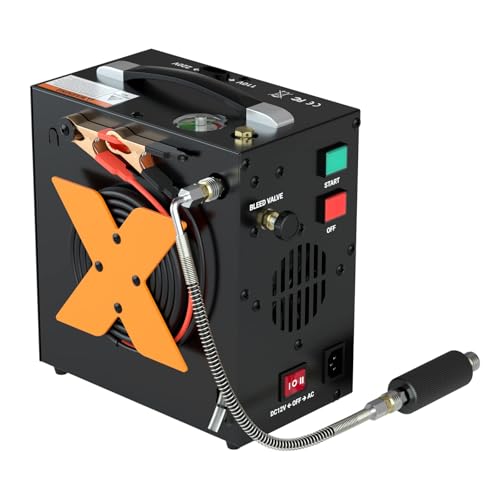
The CHIKADIV model combines auto-stop precision with a built-in transformer, enabling smooth switching between AC and DC power for home or field use. It supports up to 4000 PSI / 30 MPa and includes a water/oil separator. The unit’s cooling design and cooldown requirements after extended use help minimize wear, making it a practical choice for divers and airgun users who value reliable performance and versatility in various environments.
SMACO 4500 Psi PCP Air Compressor

This SMACO unit emphasizes an integrated power adapter and oil-free operation with a built-in cooling fan. It fills to 4500 PSI and includes a 12V DC or 110V AC power option. A 5-micron filtration and active carbon filter help deliver cleaner, dry air. Auto-stop functionality ensures consistent fills while reducing manual monitoring, ideal for paintball tanks, PCP guns, and diving cylinders where portability and simplicity are priorities.
NGCYGE 4500Psi PCP Air Compressor

The NGCYGE model offers a 250W motor capable of 4500 PSI, with a built-in cooling fan for continuous operation. It emphasizes a balance of speed and reliability, suitable for PCP airguns, dive cylinders, and paintball gear. Note that this version is not auto-stop, so users should monitor inflation to manage heat and longevity while taking advantage of its dual power capability for field use.
Vdapavin PCP Air Compressor

The Vdapavin unit features an intelligent digital monitoring system with a preset pressure and real-time readings for pressure and temperature. It offers automatic stop at the set pressure, eliminating guesswork during inflation. With a 350W motor and a 4500 PSI ceiling, it is positioned as a reliable all-around option for PCP gear, diving tanks, and paintball equipment, combining user-friendly operation with solid build quality.
Buying Guide
Key considerations when choosing a scuba tank air compressor for PCP gear and tanks include safety, power options, cooling, and inflation speed. The following perspectives help buyers compare models effectively:
- Safety and auto-stop: Models with automatic shut-off at the desired pressure reduce overfilling and user error. Verify the maximum PSI and whether the unit displays a clear indication when inflation completes.
- Power versatility: Dual power options (12V DC and AC) improve field usability. Ensure the included power adapters are compatible with your vehicle or home outlets and that the unit remains stable under operation.
- Cooling and heat management: Look for built-in fans and water/oil cooling where applicable. Adequate cooling extends motor life and maintains consistent inflation speeds.
- Filtration and air quality: Oil-free designs and integrated filters help deliver clean, dry high-pressure air, which is crucial for scuba cylinders and PCP equipment.
- Inflation speed and accuracy: Higher wattage and efficient motors deliver faster fills. A digital or easy-to-read gauge assists in monitoring pressure precisely during inflation.
- Portability and durability: For fieldwork, consider weight, dimensions, and rugged construction. Aluminum or reinforced housings enhance durability against vibration and transport.
- Maintenance and support: Look for units with accessible spare parts and clear cooling requirements. Manuals that outline cooldown periods help prevent overheating.
Additional Product Comparisons
To help you choose among the options, consider these quick contrasts:
- GOYOJO vs. CHIKADIV: Both offer up to 4500 PSI and dual power, but GOYOJO emphasizes beginner-friendliness and a simplified power setup, while CHIKADIV focuses on a robust auto-stop and dual voltage with a clear cooldown protocol.
- SMACO vs. NGCYGE: SMACO provides an integrated power adapter and oil-free operation with filtration, ideal for versatile use; NGCYGE stresses rapid inflation and built-in cooling with a slightly smaller feature set for long sessions.
- Vdapavin vs. VEVOR: Both include digital monitoring; Vdapavin centers on preset pressure with a concise display, whereas VEVOR combines dual displays for real-time pressure and temperature and emphasizes a clear end-state display (E4).
Notes On Usage And Safety
Always follow manufacturer guidelines for setup, operation, and cooldown. High-pressure systems require proper handling, secure connections, and regular inspection of hoses and fittings. Never exceed the listed maximum pressure for any attached tank or device, and store units in a cool, dry place away from direct sunlight. If you are new to high-pressure inflations, start with lower pressures and gradually progress as you become familiar with the unit’s behavior and cooling needs.