Best Roofing Nails for Nail Gun: Top Picks for Fast, Reliable Shingle Installation
Choosing the right roofing nails for a nail gun can impact drive quality, shingles seating, and overall job efficiency. This guide highlights five top-rated options from trusted brands, covering a range of degrees, nail sizes, and coil configurations. Each product is evaluated on durability, loading capacity, and ease of use to help you select nails that align with common roofing needs—from asphalt shingles to fencing applications.
| Product | Brand | Nail Range | Coil Type / Degree |
|---|---|---|---|
| Metabo HPT Roofing Nailer Nails (7/8″ to 1-3/4″) | Metabo HPT | 7/8″ – 1-3/4″ | 16 Degree Coil Nails |
| BOSTITCH RN46 Coil Roofing Nails | Bostitch | 3/4″ – 1-3/4″ | Coil, 15–Degree (assorted configurations) |
| BOSTITCH BRN175A Roofing Nailer Nails | Bostitch | 0.375″ – 1.75″ | 15-Degree Coil |
| PORTER-CABLE RN175C Roofing Nails | PORTER-CABLE | Full range to match 15-degree guns | 15-Degree Coil |
| 3PLUS HCN45SP Roofing Nails | 3PLUS | 3/4″ – 1-3/4″ | 15-Degree Coil |
The following sections explore each product in detail, highlighting why these nails are well-suited for American roofing projects. Each entry stays within a concise limit while providing practical guidance for selecting compatible nails with your nailer and project type.
Metabo HPT Roofing Nailer: Pro-Grade Power and Precision

The Metabo HPT nail line is designed for heavy-duty, high-speed roofing work. It drives up to three nails per second, making it ideal for asphalt shingles and insulation board applications. With a controllable power range of 70–120 PSI, installers can achieve consistent drive depth across varying substrate hardness. The 16-degree magazine accommodates up to 120 nails, supporting longer roofing sessions without frequent reloading. A tool-free depth adjustment helps ensure flush seating, which reduces nail heads protruding beneath the shingle surface. Weighing 5.7 pounds, the unit balances well on steep roofs and minimizes user fatigue.
Overall, this package suits pros who need reliable performance on larger roofs with a mix of materials. When operating in cooler or gusty conditions, verify that your compressor maintains stable pressure to maintain uniform nail depth. The combination of speed, accuracy, and durability makes this option a strong baseline for professional roofing projects.
BOSTITCH Coil Roofing Nailer RN46: Lightweight, Durable, Efficient

The RN46 emphasizes durability with a lightweight aluminum housing, helping reduce user fatigue on long days. A zero nail lockout feature prevents dry firing and signals when it’s time to reload, protecting the gun and shingles from misfires. The nosepiece includes carbide inserts for extended wear resistance, enabling long-term performance under tough job-site conditions. This model prioritizes reliable cycling, quick reloads, and consistent drive quality, particularly on varied roof substrates where consistent penetration matters for weather-tight seals.
For professionals with frequent reloading needs, the RN46 provides an efficient workflow with durable components that endure job-site abuse. While the aluminum housing keeps weight down, ensure the chosen nails match the gun’s coil and degree specification to maximize loading efficiency and drive depth consistency across shingles of different thickness.
BOSTITCH BRN175A: Upgraded Drive System For Consistency

The BRN175A focuses on upgrades to the engine and feed system to improve drive quality and overall durability. Its dual-door magazine design offers flexible loading and closing options, while an oversized tool-free depth adjustment makes precise nail setting easier. This configuration supports better control when driving nails through tough roofing materials, reducing the chance of under- or over-driven fasteners. The 15-degree coil design aligns with standard roofing nails, providing compatibility with a broad range of shingles and substrates.
For roofers who value long-term reliability and smooth operation, the BRN175A presents a balanced choice of performance and adjustability. When selecting nails for this gun, confirm that the coil nails match the 15-degree angle and the shank size recommended by your nailer’s manual to optimize seating and minimize jams.
PORTER-CABLE RN175C: Durable Performance And Depth Control

The RN175C introduces a refined engine design and a feedback system aimed at improving both performance and durability. It provides a tool-free depth-of-drive setting with detents, allowing quick and consistent nail seating. A steel contact safety mechanism paired with carbide inserts helps minimize wear on the nailer and prolongs the life of cutting surfaces during operation. This model is well-suited for professionals who regularly switch material types or roofing conditions, as the depth control supports consistent results across substrates.
In practice, pairing the RN175C with compatible 15-degree coil nails ensures dependable drive depth and reduced material damage. Keep the compressor footprint consistent to maintain steady PSI, especially when tackling larger projects or dense underlayment. This combination of design and feedback helps maintain quality across repeated cycles on busy projects.
3PLUS HCN45SP: Versatile 15-Degree Coil For A Range Of Jobs
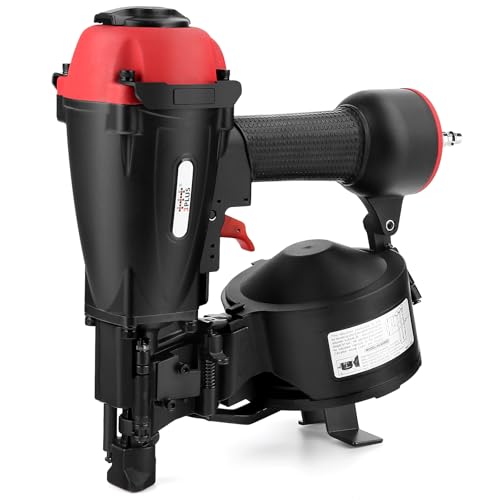
The 3PLUS HCN45SP is designed to drive 3/4″ to 1-3/4″ full-head coil nails, with a 15-degree configuration that matches most common roofing nails. A practical adjustable shingle guide helps ensure even spacing, contributing to uniform rows and tighter shingles. Integrated side skid pads prevent the tool from sliding when placed on its side, offering stability on steep pitches or windy conditions. The rugged construction supports repeated use on commercial or DIY projects alike, making it a versatile option for varied roofing tasks.
For homeowners and contractors alike, the 3PLUS HCN45SP offers a strong balance of range, control, and convenience. When selecting nails for this gun, ensure they are compatible with 15-degree coils and match the shank thickness and head style specified by the nailer manufacturer to avoid feeding issues and misfires.
Buying Guide: Key Considerations For Roofing Nails And Nail Guns
Choosing the right roofing nails involves matching the nail type to your nailer’s degree, shank design, and the roofing material. Here are essential factors to consider:
- Nail gauge and length: Ensure the nails are sized for the roof substrate and shingle type. Common roofing nails range from 3/4″ to 1-3/4″ for asphalt shingles.
- Coil degree compatibility: Most roofing nailers use 15- or 16-degree coils. Using the correct angle reduces jams and improves seating accuracy.
- Coil capacity and loading: Larger coils save time on reloads but may increase weight. Check the magazine capacity to fit your project duration.
- Fastener material and coating: Electrogalvanized or coated nails resist corrosion in varied climates. For coastal or humid environments, consider galvanized or stainless options.
- Drive depth and safety features: Tool-free depth adjustment and safety interlocks help achieve flush seating and protect surfaces during operation.
- Compatibility with the nailer: Always verify that nails are designed for your specific model, taking into account shank type, head style, and recommended PSI range.
- Weather and application: For delicate shingles or reclaimed materials, select nails with a finer head and smoother shank to minimize surface impact and ensure a tight seal.
- Maintenance and durability: Look for nails with robust coating and corrosion resistance if you plan frequent roofing work across seasons.
When evaluating options, consider the typical roof profile, climate, and the type of shingles or underlayment you commonly install. Comparative testing—such as drive depth consistency, reloading frequency, and jam resistance—can help determine which nails align with your workflow and productivity goals.