Choosing the right rip blade can dramatically improve table saw performance, accuracy, and finish quality. This guide highlights five top-rated ripping blades designed to maximize power, reduce waste, and deliver true, straight cuts on both softwoods and hardwoods. Each option features high-density TiCo carbide blends, optimized tooth geometry, and kerf designs tailored for different saws and workloads. Use this overview to compare performance, durability, and compatibility with common table saw setups.
| Product | Main Benefit | |
|---|---|---|
| Freud LU87R010 | Low-power saw efficiency with clean, fast ripping | 0.098″ kerf, 24T, 10″ diameter |
| Freud LM72M010 | Ultimate ripping performance with flat-top teeth | 0.126″ kerf, 24T, 10″ diameter |
| CMT ORANGE TOOLS 250.024.10 ITK | Fast cuts on soft/hardwood with thin kerf | 0.102″ kerf, 10″ diameter, 24T |
| Freud LM74R010 | Tri-Chip design for smooth glue-line edges | 0.126″ kerf, 30T, 10″ diameter |
| Freud LM75R010 | Precision finish cuts for fine cabinetry work | 0.126″ kerf, 30T, 10″ diameter |
The table above summarizes core specs to help you compare kerf width, tooth count, and intended use. All blades shown use premium TiCo carbide blends for edge retention and durability. When selecting a blade, consider your feed rate, stock type, and whether you need ultra-smooth finishes or the fastest possible ripping performance.
Freud Thin Kerf Rip Saw Blade – LU87R010

The Freud LU87R010 blade is optimized for underpowered table saws and radial arm saws. Its thin kerf design reduces horsepower demand, enabling smoother operation and cleaner cuts. The Premium TiCo Carbide Blend increases edge retention and durability, maintaining performance through tough woods. With a 0.098″ kerf, this blade minimizes material waste and supports faster ripping without bogging down the saw. It is well-suited for general-purpose ripping tasks in home shops where power and efficiency are a concern.
Freud Heavy-Duty Rip Saw Blade – LM72M010

The LM72M010 model emphasizes heavy-duty ripping with a rigid body and razor-sharp flat-top carbide teeth. It delivers precise “glue line” readiness for materials ranging from 3/4″ to 2-3/4″ thick, making it versatile for hardwoods and softwoods alike. The blade uses a premium TiCo carbide blend to balance performance and durability. An oversized flat-tooth design helps produce ultra-smooth finishes, often reducing the need for sanding or jointing in finishing stages.
CMT Orange Tools ITK Ripping Blade – 250.024.10

The ITK ripping blade from CMT Orange Tools is designed for fast ripping cuts in both soft and hardwoods. It features a thin kerf and a 0.071 plate thickness with a 10° hook angle and alternate teeth grind. Ideal for use on radial arm saws, miter saws, and table saws when cutting softwood, hardwood, and plywood. The blade aims to minimize waste while delivering clean edges and consistent performance across materials with varying densities.
Freud Industrial Glue Line Ripping Blade – LM74R010
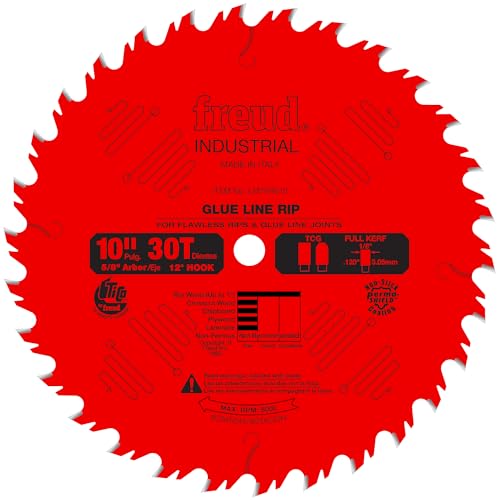
The LM74R010 blade provides heavy-duty construction with a thick kerf and reinforced plate for stability and flatness in demanding cutting tasks. The Premium TiCo Carbide Blend ensures long-lasting edge retention and consistent results. Its Triple Chip Tooth Design is engineered to deliver exceptionally smooth, true-cut surfaces, making glue-ready edges and finish work feasible without extra sanding. Suitable for thicker stock and professional shop settings requiring robust performance.
Freud Industrial Thin Kerf Glue Line Ripping Blade – LM75R010
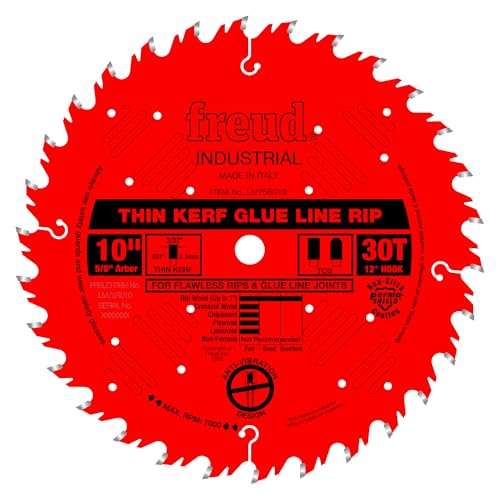
The LM75R010 blade uses a triple chip grind for ultra-smooth, glue-ready surfaces, ideal for fine finish work and cabinetry. The premium TiCo carbide blend provides strong cutting performance and edge retention through tough woods. This blade delivers precise rip cuts in materials from 1/8″ to 1″ thick, making it suitable for cabinetry, trim, and other precise applications where jointing or sanding can be minimized.
Buying Guide: Key Purchase Considerations
Blade selection should consider saw power, stock type, and the required finish. Thin-kerf blades reduce power demand but may wear more quickly on dense hardwoods, so balance kerf with tooth design. For underpowered saws, blades like Freud LU87R010 offer efficiency without sacrificing cut quality. Heavy-duty options such as LM72M010 and LM74R010 emphasize stability and smoother surfaces for glue-ready edges. When finishing work matters, blades with Triple Chip Tooth design (LM75R010) provide smooth, precise results that minimize sanding. For mixed-use setups, look for blades with TiCo carbide blends for durability and consistent performance.
Material and thickness influence dust and waste: thinner plates waste less material but can be more prone to chipping on hard grains. Consider the stock you most often cut—softwood, hardwood, plywood, or a combination—to select a blade with the right balance of kerf, hook angle, and tooth geometry. Arbor compatibility and blade diameter also matter; most blades listed here fit standard 10″ table saws with 5/8″ arbors. Finally, verify availability of replacement teeth or rebuild options, which can extend blade life in busy shops.