Choosing the right non-ferrous miter saw blade can improve cut quality, reduce burrs, and extend blade life when working with aluminum, brass, copper, and other non-ferrous metals. This guide highlights top options designed for precision work on miter and table saws, focusing on high-density carbide teeth, coatings to resist corrosion, and secure arbors. Whether you’re a professional contractor or a DIY enthusiast, these blades are built to handle aluminum and similar alloys with minimal tear-out.
| Product | Brand | Teeth | Arbor | Highlights |
|---|---|---|---|---|
| TOMAX 12-Inch 100 Tooth | TOMAX | 100 | 1-inch | Aluminum and non-ferrous metals; carbide teeth; Electrophoretic coating |
| FOXBC 10-Inch 100-Tooth | FOXBC | 100 | 5/8-inch | Low kerf; noise-reducing stabilizers; durable carbide |
| COMOWARE 12” 100T | COMOWARE | 100 | 1-inch | TCG grind; anti-vibration; anti-stick coating |
| Diablo 12” 120-Teeth | Diablo | 120 | — | Thin kerf; precise cutting for aluminum and plastics |
| FOXBC 12” 120T | FOXBC | 120 | 1-inch | Laser-cut stabilizers; optimized for thin-thickness aluminum |
Across these options, expectations include clean edges, reduced burrs on aluminum, and extended blade life even with repeated cuts. The following selections emphasize non-ferrous metal performance with carbide teeth and protective coatings to resist rust and corrosion in workshop environments.
TOMAX 12-Inch 100 Tooth Blade
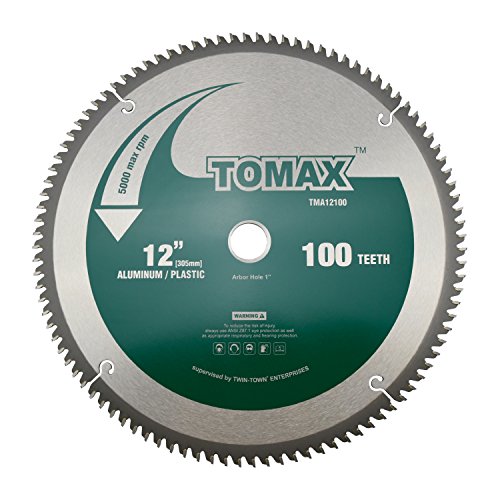
The TOMAX blade is designed for aluminum and non-ferrous metals with a 1-inch arbor. Its 100 carbide teeth provide durability for long life, and the electrophoretic coating helps minimize rust and corrosion in challenging shop environments. This blade targets clean, repeatable cuts on thin and medium-thick aluminum profiles, making it a solid choice for fabricators who handle aluminum extrusions and non-ferrous components.
FOXBC 10-Inch 80-Tooth TCG Blade

The FOXBC 80-tooth blade uses a triple-chip grind (TCG) with a 5/8-inch arbor, optimized for aluminum, non-ferrous metals, and plastic. Features include laser-cut stabilizer vents to dampen vibration and reduce noise, enhancing accuracy and durability. Made from high-density tungsten carbide, this blade aims for controlled cuts with minimal heat buildup—important for non-ferrous alloys that can warp if overheated.
FOXBC 10-Inch 100-Tooth TCG Blade
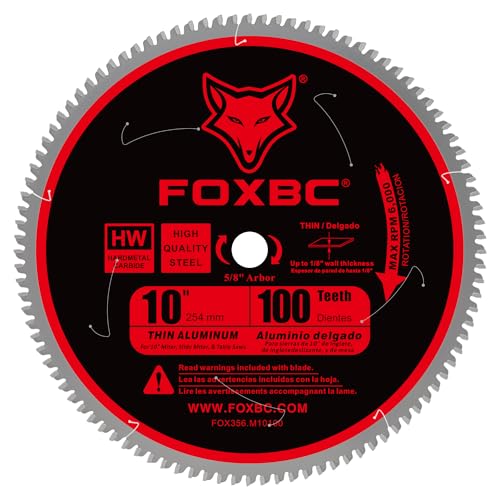
This 10-inch blade with 100 teeth is tailored for aluminum and non-ferrous metal cutting. Its 5/8-inch arbor and TCG geometry offer clean spur-free finishes through thin to moderately thick aluminum sections. The high-density carbide ensures wear resistance, supporting longer life in repetitive cuts and making it suitable for production environments with non-ferrous metal work.
COMOWARE 12” 100T Blade

The COMOWARE blade uses a tungsten carbide tooth design with a 1″ arbor and anti-vibration features. Its 15-degree hook angle supports cleaner scoring and efficient material removal, while the TCG configuration helps minimize tear-out on aluminum and other non-ferrous metals. The anti-stick and anti-vibration coatings contribute to stable performance in coin-sized or longer cuts, depending on the machine setup.
Diablo 12” 120-Tooth Blade

Diablo’s 12-inch blade with 120 teeth specializes in precision cutting of thin to medium aluminum, copper, brass, and plastics. The narrow kerf and refined tooth geometry promote fast chip removal and minimal heat buildup. While focused on aluminum and non-ferrous plastics, it remains versatile for a workshop that handles multiple materials, delivering smooth edge quality with reduced burrs.
FOXBC 12 Inch 120T Blade

The FOXBC 12-inch 120-tooth blade is designed for aluminum non-ferrous metal cutting with a 1-inch arbor. Its 120 teeth and low kerf provide smooth, precise cuts suitable for thin to moderately thick aluminum profiles, copper tubing, brass plate, and similar alloys. Laser-cut stabilizer vents reduce vibration, maintaining accuracy during long cuts and minimizing blade wear.
OA-BRES 10 Inch 80T Blade

The OA-BRES 10-inch blade offers an upgrade TCG 80-tooth design for aluminum non-ferrous cutting with a 5/8-inch arbor. It features heavy-duty carbide teeth, electrophoretic coating to reduce rust, and laser-cut stabilizer vents to minimize vibration. This blade targets durable, razor-sharp cuts across a range of aluminum and non-ferrous metals while maintaining blade integrity over time.
Buying Guide: Key Purchase Considerations
- Material compatibility: Ensure the blade is designed specifically for non-ferrous metals like aluminum, copper, brass, or plastics to minimize tear-out and melting.
- Tooth count and grind: Higher tooth counts (80–120T) produce smoother finishes on thin sections; Triple-Chip grind (TCG) handles aluminum and soft metals well, reducing chatter.
- Arbor and compatibility: Confirm the machine’s arbor size (commonly 1-inch or 5/8-inch) and ensure the blade’s arbor matches your saw or uses an appropriate adapter.
- Kerf and stability: A thin kerf reduces material waste and heat; stabilizer vents and laser-cut features help control vibration for accuracy.
- Coatings and coatings quality: Electrophoretic coatings resist rust and corrosion, extending blade life in humid or workshop environments.
- Cut quality vs. durability: Balance tooth geometry and carbide density for the best compromise between clean cuts and blade longevity in daily use.
- Application range: Some blades excel at thin sections, others perform across a spectrum of thicknesses. Match blade to typical workpieces (extrusions, tubing, sheet metal).
- Maintenance: Clean each cut, remove accumulated aluminum chips, and inspect for jagged teeth or heat discoloration to maintain performance.
Choosing the right non-ferrous blade involves balancing the material being cut, the saw’s capabilities, and the desired edge quality. The options listed above cover common aluminum and non-ferrous applications, with attention to durability, heat management, and vibration control for consistent results.