Best Nail Gun for Small Nails: Top 5 Picks for Precise 18-Gauge Work
Choosing the right nail gun for small 18-gauge brad nails hinges on a mix of power, portability, and user-friendly features. This guide highlights five reliable options that balance precision with versatility—from corded industrial models to cordless, on-the-go staplers that handle light-dinish tasks without a compressor. Each pick targets typical small-nail tasks like trim work, cabinetry, and delicate molding, helping you select a tool that saves time and reduces surface damage.
Summary of chosen products:
| Product | Brand | Type | Power |
|---|---|---|---|
| NEU MASTER Pneumatic Brad Nailer | NEU MASTER | Pneumatic Brad Nailer | Pneumatic (Air) |
| Bielmeier Electric Staple Gun 2-in-1 | populo | Cordless Staple/Nailer | Battery Powered (Cordless) |
| WEN 20V Max Cordless Brad Nailer | WEN | Cordless Brad Nailer | Cordless (Battery) |
| DEWALT Brad Nailer Kit, 18GA | DEWALT | Pneumatic Brad Nailer | Pneumatic (Air) |
| Batavia Electric Staple Gun 2-in-1 | Batavia | Cordless Staple/Nailer | Cordless (Battery) |
NEU MASTER Pneumatic Brad Nailer Review
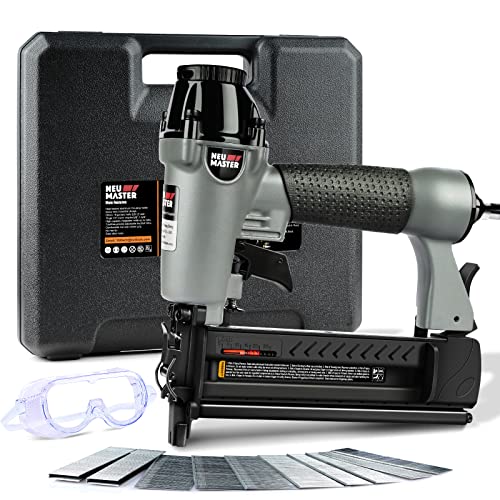
The NEU MASTER 18-gauge 2-in-1 nail/staple gun is designed for both brads and narrow crown staples, enabling quick conversion between nail driving and stapling. The tool supports nails from 5/8 inch up to 2 inches and staples from 1/4 inch crown up to 1-5/8 inch, making it suitable for small trim, cabinetry, and light upholstery tasks. It ships with a carrying case, safety glasses, lubricating oil, and wrenches for on-site adjustments. The model operates as a pneumatic tool, requiring an air compressor (not included).
Key considerations include the dual-function design which reduces tool turnover on projects that require both nailing and stapling. The included case and accessories help protect parts during transport and storage. Because it relies on air pressure, consistent performance depends on an adequate compressor, air flow, and moisture control. This model is well-suited for hobbyists or pro users who already have an air compressor and want a versatile 2-in-1 tool.
Bielmeier Electric Staple Gun 2-in-1 Review

The Bielmeier 2-in-1 cordless stapler/nailer is designed for upholstery, craft work, and light carpentry. It comes with a bottom-loading magazine and a substantial supply of staples and nails, enabling quick completion of fabric-secure tasks, furniture repairs, and decorative mounting. Weighing about 1.6 pounds, it’s easy to maneuver for extended sessions. The device supports T50 staples and 18-gauge brad nails within a range suitable for softwood and light materials. A transparent window helps monitor staple and nail levels, preventing mid-project reload interruptions.
Pros include true cordless operation, portability, and a straightforward loading design. On the downside, performance depends on battery life and the availability of compatible staples in the field. This tool is a strong choice for DIYists and professionals who value rapid, flexible on-site work without hoses or compressors.
WEN 20V Max Cordless Brad Nailer Quick Look

The WEN 20V Max Cordless Brad Nailer delivers freedom from hoses and compressors with a battery-powered design. It accepts 18-gauge brads from 3/4 inch to 2 inches, providing a compact option for trim, cabinet work, and light woodworking. A smart LED indicator helps track battery status, magazine fill, and tool temperature, reducing downtime. The cordless format makes it ideal for elevated or tight spaces where an air hose would be cumbersome. As a cordless tool, it may require planning for battery charge intervals on larger projects.
Batavia 2-in-1 Electric Staple Gun Review

Batavia’s 2-in-1 cordless staple gun and brad nailer combines battery-powered reliability with a bottom-load magazine design. Delivering up to 1200 shots per charge, it supports standard JT21 staples (5/32″–3/8″) and 18-gauge brad nails (3/8″), covering common upholstery, light carpentry, and craft tasks. The device’s lightweight frame (~1.6 lbs) minimizes user fatigue. Its cordless design suits projects without power outlets and complements quick furniture fixes, wall décor, and fabric installations. Battery life, however, will vary with usage intensity and material resistance.
Buying Guide: Key Purchase Considerations And Comparisons
- Power source and versatility: Cordless models offer mobility for on-the-go projects, while pneumatic/nailers provide consistent power for longer sessions and heavier loads. A 2-in-1 tool (nailer/stapler) expands capability without adding multiple devices.
- Gauge compatibility and nail size: For small trim, 18-gauge brads are common. Verify the minimum and maximum nail/staple length to match your typical tasks (5/8″ to 2″ brads, 1/4″–1-5/8″ staples, etc.).
- Magazine design and reloading: Bottom-loading magazines facilitate faster reloads and reduce misfeeds. A transparent window helps monitor supply, preventing unexpected stops mid-project.
- Weight and ergonomics: Lightweight tools reduce fatigue during extended use. Consider grip design, balance, and trigger sensitivity for precise placement and user comfort.
- Safety features: Look for anti-dry-fire mechanisms, contact safety triggers, and exhaust management. Safety glasses and hearing protection should be standard when operating pneumatic tools.
- Accessories and maintenance: A kit with oil, wrenches, and a carrying case adds value. For cordless tools, check battery compatibility and available charging options.
- Project scope: For trim work and cabinetry, prioritize precision and consistent depth control. For upholstery or decorative tasks, a cordless, jam-resistant design with compatible staples is advantageous.
Across these five picks, the balance between corded reliability and cordless convenience is evident. Pneumatic models tend to deliver steady power for repetitive driving, while cordless options provide flexibility in spaces where hoses and compressors are impractical. A 2-in-1 design adds versatility for projects that require both nails and staples, streamlining tool selections on the job. When selecting, align tool capabilities with your typical material choices, workspace constraints, and whether you already own compatible air compressors or batteries.