When cutting wood, dust control is essential for workplace safety and air quality. A reliable vacuum switch can coordinate power-tool startup with a dust collector, reducing debris and minimizing noise. This guide reviews top miter saw vacuum switches that automate dust extraction, featuring load sensing, delays, and multiple tool outlets. Each option helps prevent circuit overload and keeps your workspace cleaner. Below you’ll find five standout choices, with practical notes on installation, modes, and performance to help you choose the right model for your setup.
| Product | Brand | Key Feature | Power Handling |
|---|---|---|---|
| SENCTRL Auto Vacuum Switch AVS3900 | senctrl | 3 modes; 2 tool outlets; delay options | 30A, 14AWG cord |
| Ortis Vacuum Switch with Two Tool Outlets | Ortis | Auto, Off, On; 1s delay start; 7s delay stop | Two tool outlets, 30A |
| SENCTRL AVS3900 Variant | senctrl | Load sensing; overload protection | 30A |
| SENCTRL AVS3000 Auto Switch | senctrl | Three delay settings; manual switch | 30A |
| KTNNKG 120V Remote Switch | KTNNKG | Load sensing; 1s/7s delay | 15A |
SENCTRL Automatic Vacuum Switch – Auto/Manual Modes

The SENCTRL AVS3900 introduces a manual switch in addition to auto operation, supporting three modes: Auto, Off, and On. It allows automatic vacuum control in tandem with power tools or manual control as conditions demand. A 19.7-inch UL-certified 14AWG cord supports currents above 30A. The PC+ABS V0 flame-retardant housing helps manage heat and extend life. A load-sensing start delay of 1 second prevents overload when the tool and vacuum power up together. This model suits saws and dust collectors that require precise coordination.
Ortis Vacuum Switch With Two Tool Outlets

The Ortis switch provides two tool outlets and three vacuum modes with auto-switching to streamline operation. It features a 1-second start delay and a 7-second auto-off delay in auto mode, reducing dust and preventing circuit overload. Installation options include screw mounting or traceless wall-mounting adhesive for quick setup, making it suitable for woodworking shops that need a tidy, reliable control system for multiple tools.
SENCTRL Automatic Vacuum Switch for Power Tools

Designed for professional and DIY users, this AVS3900 model offers three operation modes and two tool outlets. It includes overload protection via a circuit breaker and uses a robust 14AWG cord rated for up to 30A. With adjustable 3/7/10-second shutoff delays, it supports thorough cleanup after tool activity. The durable PC+ABS case resists heat and provides long service life, making it a dependable choice for workshop dust control on miter saws and similar tools.
SENCTRL AVS3000 Auto Vacuum Switch

This AVS3000 model emphasizes a manual switch alongside two tool outlets. Three modes—Auto, Off, and On—provide adaptable workflow control for various projects. It uses an overload-safe 19.7-inch 14AWG cord and a flame-retardant PC+ABS housing to support demanding shop environments. The 1-second turn-on delay and 7-second shut-off delay help coordinate with tools that start and stop independently, reducing airborne dust and improving overall efficiency.
KTNNKG 120V Remote Vacuum Switch

The KTNNKG remote switch provides load-sensing outlets that separate tool and vacuum control. The remote’s VAC-AUTO button enables a 7-second delay after tool shutdown, ensuring debris clearance without abrupt interruptions. A single ON/OFF control helps manage your dust collection system efficiently, and the 120V, 15A rating suits many standard workshop setups. This model is ideal for simple, reliable automatic coordination of table saws and vacuums in smaller shops.
Ortis Auto/On/Off Vacuum Switch with Current Sensing
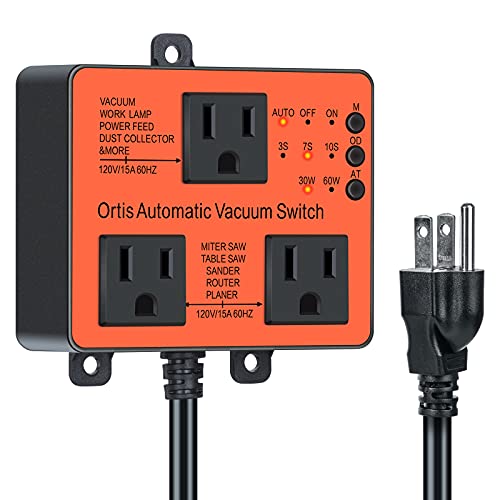
Ortis’s yellow-labeledVacuum Switch emphasizes smart current sensing and delayed start to prevent overload and breaker trips. It supports Auto, On, and Off modes, automatically starting with a 1-second delay when a tool starts and ending with a 7-second delay after the tool stops. The enclosure is UL-listed with a flame-retardant PC+ABS shell, designed for heavy use with miter saws and other power tools. This model prioritizes safety and clean air in busy workshops.
Buying Guide: Key Considerations For Choosing A Miter Saw Vacuum Switch
When selecting a vacuum switch for a miter saw, consider how many tools you want to run and how you prefer to control airflow. Look for models with load-sensing features to prevent simultaneous startup overloads, and at least one delay option to ensure clean evacuation of dust after tools stop. Two tool outlets are helpful if you frequently run more than one tool at a time, while a manual override adds flexibility in dynamic jobs. Durable enclosures, flame-retardant materials, and UL-listed cords indicate long-term reliability in a shop environment.
Key comparison points include: number of tool outlets, available modes (Auto, On, Off), delay durations (seconds), current rating (amps), and cord gauge. If you work with high-dust or heavy-material tasks, prioritize models with adjustable thresholds and longer delays to accommodate different tool start profiles. For smaller spaces, installation options like wall-mounting adhesive can simplify setup without compromising stability. Finally, ensure compatibility with your vacuum system’s inlet size and your table saw’s power requirements to maximize efficiency and safety.