Best Heavy-Duty Generators for Camping and Off-Grid Trips
When you’re planning extended outdoor adventures, reliability matters. Heavy-duty generators designed for camping and off-grid use deliver power for lights, cooking, refrigeration, charging devices, and more without the hassle of frequent refueling. This guide spotlights five durable units, highlighting how they fit different camping styles—from compact hikes to full RV setups. Each option focuses on safety, portability, and steady power delivery, helping you balance weight, runtime, and noise. Use the quick reference below to compare core specs at a glance.
| Product | Type | Best For |
|---|---|---|
| Jackery Explorer 300 | Portable Power Station | Lightweight off-grid stays |
| WEN 6800-DF680iX | Dual-Fuel Inverter | RV and occasional home backup |
| A-iPower 4600W | Open-Frame Inverter | Tailgating and camping |
| Champion 4000-Watt | Inverter with CO Shield | Quiet camping and tailgating |
| Westinghouse 12500W | Dual-Fuel Portable | Remote sites and back-up power |
The selections below are organized to help you compare size, power, and features across a range of camping needs—from compact, solar-ready setups to robust, gasoline-and-propane capable units. Each section includes a concise product profile, key features, and practical usage notes.
Jackery Portable Power Station Explorer 300 Overview

The Jackery Explorer 300 is a compact, 293Wh lithium-ion battery power station designed for light to moderate off-grid use. It supports fast recharging, achieving about 80% capacity within 2 hours via wall outlet and a 60W PD USB-C port, with options to recharge from a car outlet or a Jackery SolarSaga 100 panel. It delivers safe, stable power through two Pure Sine Wave AC outlets, accommodating multiple devices such as drones, laptops, cameras, and more. Weighing around 7.1 pounds, it’s a portable solution for campers who prioritize mobility without sacrificing essential power.
Key features: 293Wh capacity, 2 Pure Sine Wave AC outlets, multiple recharge paths (wall, car, solar), lightweight design. This unit is well-suited for weekend trips, remote picnics, and as a backup power source for small electronics during blackouts or outdoor events. When planning multi-device charging, this model can support several devices simultaneously, though larger appliances will require higher capacity units.
Usage notes: Best for campers who need quick campside charging, phone and laptop recharges, small cameras, and LED lighting. It’s not designed to fully power heavy appliances for long durations, but it can handle essential devices during short outages.
WEN 6800-Watt Dual Fuel Inverter Generator

The WEN DF680iX inverter generator offers dual-fuel capability, supporting gasoline (6800 surge watts, 5100 running watts) and propane (6000 surge watts, 4500 running watts). Its bonded-neutral 240V configuration provides low-power Level 2 charging suitable for battery-electric vehicles and hybrids. A notable safety feature is the CO Watchdog Shutdown Sensor that turns the unit off if dangerous carbon monoxide levels are detected, enhancing outdoor safety for families and groups on extended trips.
Key features: Dual-fuel operation, high surge watts, Level 2 charging capability, CO watchdog safety. This makes it a strong option for campers who may need reliable power for RV systems, lights, and basic appliances, with the flexibility to run on propane where gasoline supply isn’t convenient.
Usage notes: Great for RV setups and backup power on longer excursions, especially where fuel availability varies. Keep in mind weight and noise levels relative to campsite rules and neighbor tolerance.
A-iPower 4600W RV-Ready Quiet Portable Inverter
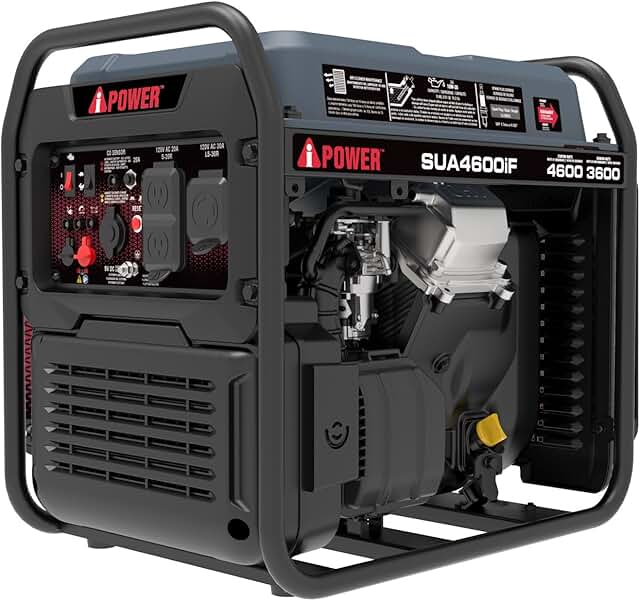
The A-iPower 4600W open-frame inverter provides substantial power for RVs and off-grid camping, delivering 4600 starting watts and 3600 running watts. It’s designed to be lightweight for its class, weighing about 56 pounds, and uses inverter technology to provide a clean 120V, 60Hz output suitable for sensitive electronics like laptops, TVs, and smartphones. While it’s more powerful than ultra-compact models, it remains manageable for transport and setup at the campsite.
Key features: 149cc engine, 4600 starting watts, 3600 running watts, lightweight for its category, clean power with 3% THD. The unit is well-suited for campers needing reliable power for RV systems, cooking appliances, and several devices simultaneously, without pushing noise to disruptive levels.
Usage notes: Ideal for mid-size camping needs, tailgating, and minor home backup scenarios. Consider sound level, fuel type, and storage space when choosing for shared campsites or neighborhood campsites with noise restrictions.
Champion Power Equipment 4000-Watt Inverter With Quiet Technology

The Champion 4000-Watt inverter is designed for quiet operation and portability, weighing under 49 pounds. It offers 4000 starting watts and 3000 running watts, with up to 10 hours of runtime depending on load. The CO Shield system provides automatic shutoff in the presence of dangerous carbon monoxide levels, enhancing safety for family use in camping, tailgating, and home backup scenarios. An optional parallel kit lets you connect another Champion inverter to double the output.
Key features: Quiet operation, CO Shield, parallel capability, portability. This unit suits campers who want reliable power with minimal noise impact on campsites and the flexibility to expand power by pairing with another unit for higher-demand weekends or tailgates.
Usage notes: Best for moderate power needs where long runtimes are helpful and noise restrictions exist. Prepare for additional fuel options if planning extended use away from refueling sources.
Westinghouse 12500W Dual Fuel Portable Generator

The Westinghouse 12500W dual-fuel portable generator is engineered for serious backup power. It delivers 9500 running watts and 12500 peak watts on gasoline, and 8500 running watts with 11200 peak watts on propane. Remote starting with a key fob, plus electric and recoil start options, enhances convenience for remote sites. A 6.6-gallon fuel tank provides up to 12 hours of runtime, and the unit includes transfer switch readiness and several outlet options, including RV-ready and standard household receptacles.
Key features: High power rating, dual-fuel capability, remote start, several outlet configurations, long runtime. This model is aimed at users who require robust, reliable power for extended camping, home backup, or work sites where substantial electrical loads are expected.
Usage notes: Consider storage and transport needs due to its weight and size. Optimal for longer camping trips, emergency power, and situations where a strong, flexible power source is essential.
Buying Guide: Key Considerations For Heavy-Duty Camping Generators
Power needs: Estimate running watts for essential devices and appliances. Inverters provide clean power suitable for electronics, but high-wattage tools and appliances will require higher surge and running watt capacities. If you expect to run air compressors, refrigerators, or space heaters, prioritize models with higher wattage and robust runtime.
Fuel type and availability: Gasoline, propane, diesel, or dual-fuel options offer different conveniences. For remote camping with uncertain fuel access, a dual-fuel model or one compatible with propane can reduce refueling dependency. Consider the fuels you’ll realistically stock at the campsite.
Portability and weight: Lighter units are easier to move to a campsite, especially for hikers or solo travelers. RV and tailgating setups may tolerate heavier units if they deliver more continuous power. Look for built-in handles, wheels, and compact form factors when portability matters.
Noise and campsite etiquette: Inverter generators typically run quieter than conventional open-frame models. If you’re at busy campsites, prioritize noise levels under 60-70 dBA at a distance to minimize disturbance to neighbors and wildlife.
Safety features: CO detection and automatic shutoff (CO Shield, CO watchdog) protect against carbon monoxide buildup. For extended use near living areas, safety features are essential. Ensure proper ventilation and adherence to manufacturer guidelines for safe operation.
Runtime and fuel economy: Longer runtimes reduce the need for frequent refueling, especially on adventures far from fueling stations. Compare gallons per hour or liters per hour estimates, and consider adding a bigger fuel tank or external fuel containers if needed for extended trips.
Durability and warranty: Camp gear benefits from sturdy construction and reliable warranties. Look for rust-resistant components, sturdy frames, and service support in your region to ensure long-term reliability on rugged terrains.
Validation and safety certifications: Verify safety certifications and compliance with local regulations. For RV owners, ensure compatibility with national electrical standards and transfer switch readiness if you plan to integrate with a home backup system.