Best DC Motor Wind Generator Guide for DIY Power Projects
If you’re exploring compact ways to harvest kinetic energy, DC motor wind generators are a versatile option for hobbyists and students. This guide highlights practical small-scale generators, explains how they work with wind or manual input, and helps you compare models suitable for experiments, toys, or educational demonstrations. Each featured product offers different voltages, speeds, and mounting options to fit your project needs. Read on to discover how to select a kit, wire a simple circuit, and assemble a safe, reliable wind-powered generator.
| Product | Brand | Voltage Range | Key Feature |
|---|---|---|---|
| EUDAX Mini Generator Motors (Plastic Motor Holder) | EUDAX | DC 3V – 12V | Compact motor with multiple speed ratings |
| EUDAX 6 Set Mini Generator Motors | EUDAX | DC 3V – 12V | All-in-one beginner kit with props and brackets |
| Sntieecr 6 Set Mini Generator Motors | Sntieecr | DC 3V – 12V | Multi-vaned propellers for varied experiments |
| 120V DC Motor Wind Turbine Generator (3500rpm) | RIYIN | DC 120V | High-voltage wind turbine option with bearings |
| DC Motor Wind Turbine Generator Power Supply 3500rpm DIY (DC 120V) | RIYIN | DC 120V | Compact form factor with metal housing |
EUDAX Mini Generator Motors (Plastic Motor Holder)

The EUDAX plastic-motor version is designed for compact wind-turbine and hand-cranked demonstrations. It supports voltages from DC 3V up to DC 12V, with corresponding rated speeds of 1500 RPM, 2500 RPM, and 6500 RPM. The motor body diameter and height are compact, making it suitable for small projects, educational kits, and DIY toys. Its 14 cm cable length provides flexibility for bench setups or experiments where the generator must connect to a lightweight load or LEDs.
In practice, users can drive this motor by wind, a hand crank, or a simple gear system to observe voltage generation and LED lighting. For a classroom demo, pair it with a basic bridge or diode, a few LEDs, and a resistor to highlight the relationship between wind speed, motor RPM, and electrical output. The included mounting options are helpful when attaching the motor to a small stand or frame during experiments.
EUDAX 6 Set Mini Generator Motors

This beginner kit includes six compact generator motors, mounting brackets, assorted propellers, LEDs, quick connectors, and a color manual. It’s designed to illustrate how voltage and speed relate to wind speed, with voltages for 3V, 4.5V, and 12V applying distinct RPM ranges. The kit’s multi-vaned props enable experimentation with wind-driven current generation, while the LEDs provide immediate visual feedback. The set can also be driven by solar panels or batteries to create small solar-electrical toys, making it a versatile tool for physics classrooms or home projects.
For project builders, this kit supports quick prototyping of turbines with different mechanical configurations. It’s suitable for students learning about energy conversion, as well as hobbyists who want to compare motor efficiency, propeller design, and gearing. The included brackets simplify mounting to a desk or lab frame, ensuring stable demonstrations of wind-to-electric energy conversion.
120V DC Motor Wind Turbine Generator Power Supply (3500rpm)
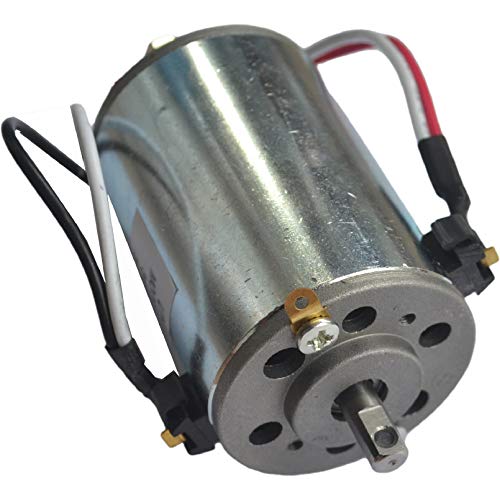
This high-voltage wind turbine generator is a robust option for experiments requiring a higher output. It supports DC 120V operation at about 3500 RPM, with front and rear ball bearings for smoother rotation and longer service life. The power output can be used for a variety of DIY energy projects, from charging small battery packs to powering simple DC devices in wind-rich environments. The unit’s metal housing and precision components provide a durable platform for extended demonstrations or field testing in a controlled lab setting.
When integrating this motor into a project, ensure proper insulation and safety measures for higher voltage operation. Use appropriate load resistance and a rectification path if converting to a DC load. This model is especially attractive for users aiming to demonstrate wind-to-electric energy generation at a scale that truly feels tangible, without needing a large turbine assembly.
DC Motor Wind Turbine Generator Power Supply 3500rpm DIY (DC 120V)
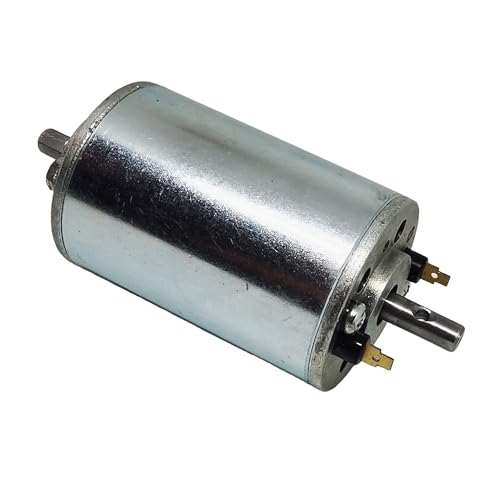
This RIYIN model emphasizes a compact, DIY-friendly wind turbine generator with a 3500 RPM rating and a 120V DC output. Its design focuses on versatility for various wind speeds, enabling experiments across different load profiles. The robust metal housing and carefully engineered internals support repeated testing and hands-on learning about generator efficiency, voltage regulation, and energy conversion dynamics. It suits classroom demos and maker projects where a reliable, mid-range wind turbine capability is desired.
As with any 120V setup, safety considerations are essential. Use a proper enclosure and ensure all connections are insulated. Combine this motor with simple rectification circuitry and a small, safe load to illustrate how wind speed translates into electrical power. The product’s build quality makes it a dependable option for ongoing demonstrations or experiments outside a formal lab environment.
EUDAX DIY DC Power Micro Motor Wind Turbine Generator Blades Model
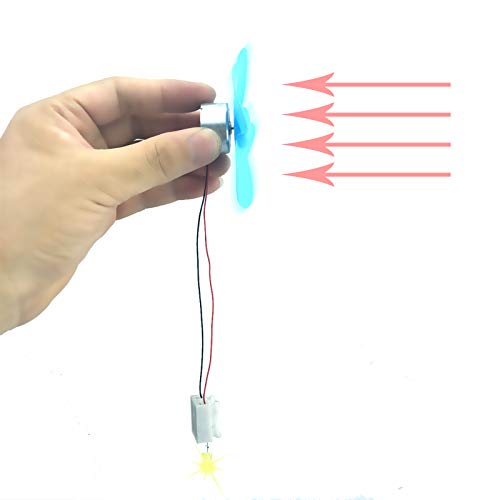
This micro-motor wind turbine generator is ideal for teaching demonstrations and small-scale experiments. It presents a color-silver design and supports voltages of 3V, 4.5V, and 12V with corresponding RPMs of 1500, 2500, and 6500. The device is well-suited for hands-on classroom activities where students observe how speed influences voltage generation and LED illumination. It can be integrated into compact wind tunnels or tabletop projects, providing a tangible example of energy conversion in action.
Educators and hobbyists may pair this micro system with a simple gearing option or a small wind source to illustrate dynamic responses to changing wind conditions. The compact form factor makes it easy to incorporate into display boards or experimental kits, serving as a stepping stone to larger wind-energy projects.
EUDAX Mini Generator Motors (Metal Motor Holder)
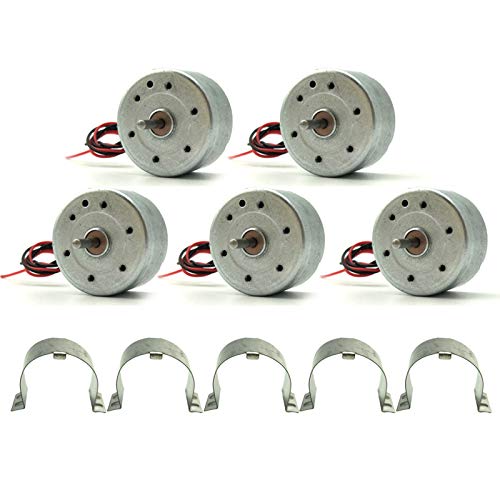
This variant mirrors the plastic-housing version but uses a metal motor holder for added durability. It shares the same voltage range (DC 3V – 12V) and RPM spectrum (1500 – 6500 RPM) with precise dimensions for compact integration. The sturdier metal holder makes it a better choice for projects that require more robust mounting or frequent handling, such as demonstration kiosks, classroom stations, or outdoor exhibits. The motor’s compact size aligns well with small turbines, wind tunnels, or hand-crank experiments where reliable mechanical support is important.
In terms of educational value, this model offers a stable platform to teach concepts like load matching, mechanical-to-electrical energy conversion, and the effects of shaft diameter and mounting height on vibration and performance. When paired with LEDs or simple resistive loads, students can observe direct evidence of energy conversion efficiency across varying wind or crank speeds.
Buying Guide: Key Purchase Considerations
When selecting a DC motor wind generator for a project, consider the following factors to ensure the best fit for your goals.
- Voltage and RPM: Align motor voltage ranges with your intended load and power goals. Higher RPM motors often deliver more predictable voltage increases with wind speed, but require careful gearing and load management.
- Mechanical Form Factor: Choose a size and mounting arrangement that suits your workspace. For classrooms or desktops, compact motors with simple brackets reduce setup friction.
- Propeller and Gear Options: Multi-vaned props or standard propellers affect wind capture efficiency. In beginner kits, a variety of propellers helps illustrate how design changes impact output.
- Mounting and Durability: Metal housings and sturdy motor holders are preferable for long-term experiments or frequent demonstrations, especially outdoors or in busy classrooms.
- Safety and Insulation: Higher-voltage configurations require appropriate insulation, strain relief, and protective enclosures. Always implement safe wiring practices and limit exposure to live connections.
- Expandability: Kits that include mounting brackets, connecting wires, and LEDs enable quick demonstrations and scalable experiments, making them suitable for progressive learning paths.
- Cost and Availability: Consider whether a multi-pack kit offers better value for repeated experiments or classroom use, versus single-motor units for focused projects.
Choosing the right model depends on the intended application: educational demonstrations benefit from complete kits with accessories; hobby projects may prioritize compact size and ease of assembly; and higher-voltage units suit more ambitious DIY energy experiments. Regardless of choice, these DC motor wind generators provide hands-on opportunities to observe the core principles of energy conversion, wind power, and practical electronics in action.